
Robotics Engineering, BS
Academics
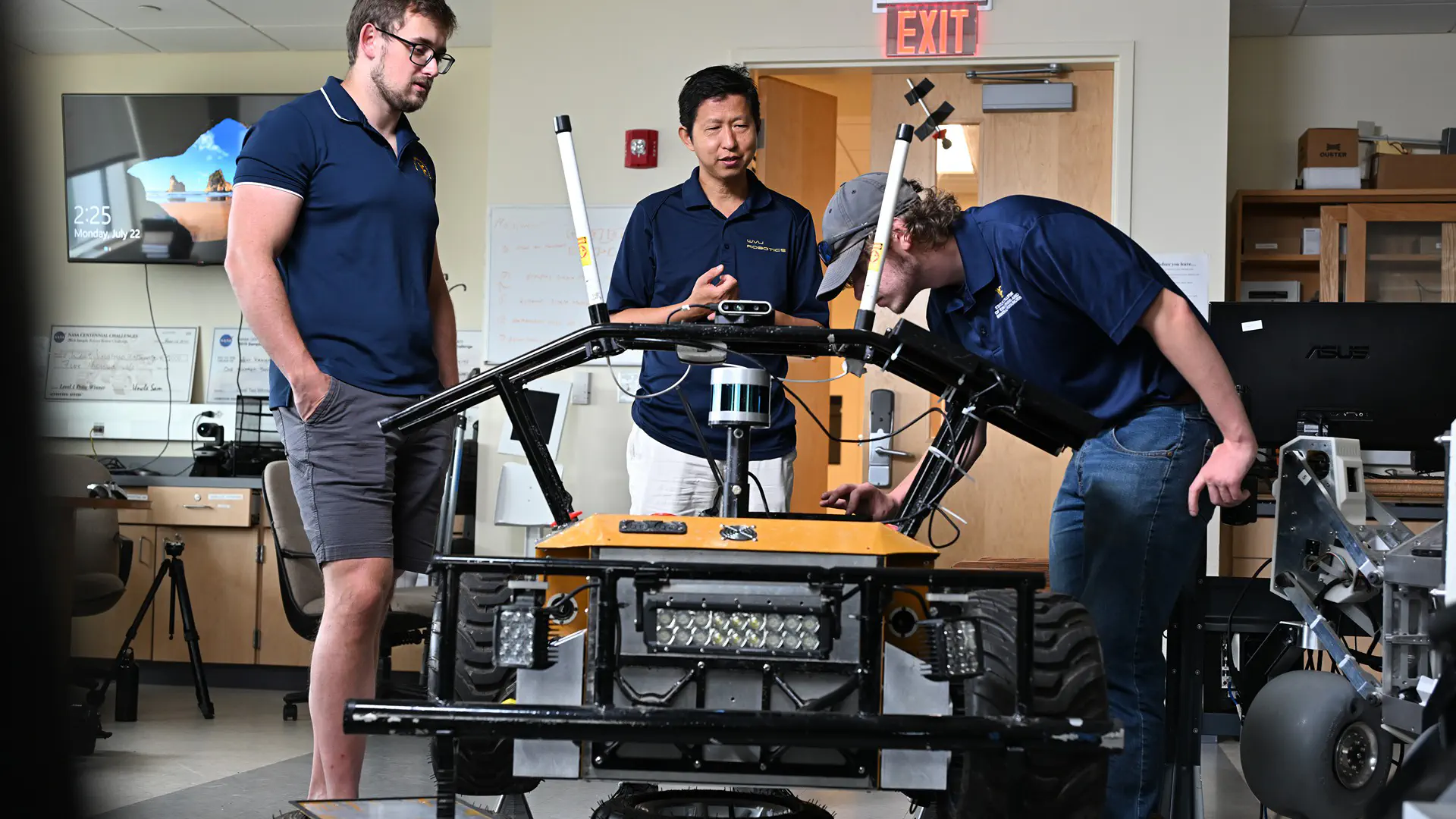
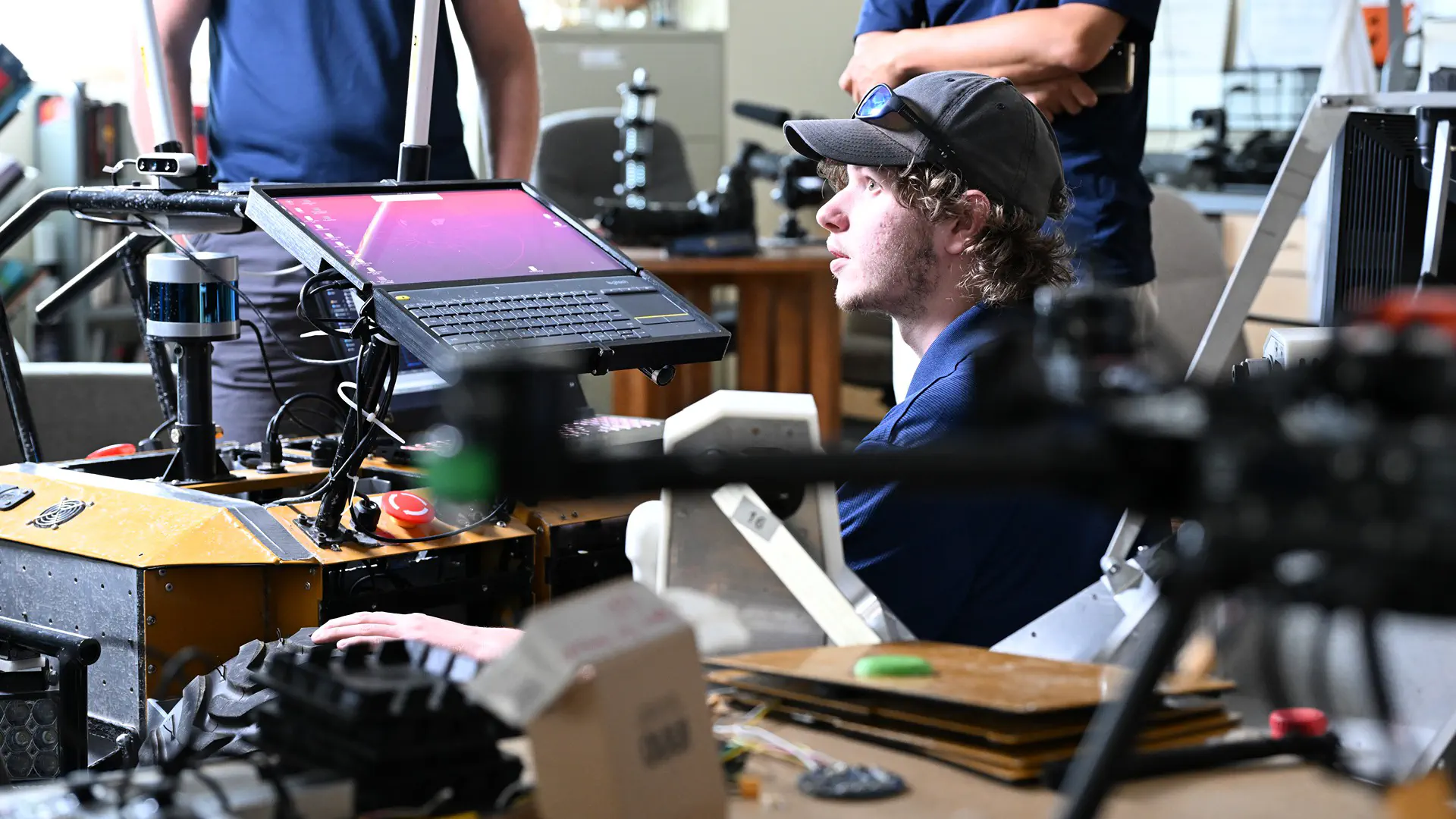
- Our program is interdisciplinary giving students a strong foundation across mechanical systems, computer science, and general engineering systems. Students will learn the fundamentals of robotics systems, mobile robotics, robotic manipulators, and robot autonomy.
- The program is designed for students to pursue a dual major in either computer science or 1 of 3 engineering degree options.
- 7 robotics faculty research labs, providing students with undergraduate research opportunities through the research apprenticeship program.
- Students receive hands-on experience from Day 1 and can join 1 of the 4 robotics international competition teams, as a freshman.
- The competition teams have over a decade of experience and earned over 20 placement awards and multiple 1st-place finishes including a world championship.
- Industrial capstone project that pairs students with a company to work and solve real world problems using robots and mechatronic devices they design and implement.
- It’s a field for creative thinkers, problem solvers, and innovators ready to lead in a rapidly evolving technological landscape. From this program, students can go on and work for SpaceX, Blue Origin, NASA, John Hopkins, Tesla, General Electric, General Motors, Amazon, Northrup Grumman, Carnegie Robotics, and more.
- Students are drawn to Robotics Engineering because it’s one of the fastest growing fields worldwide. The World Economic Forum report estimates a 30% increase in the job sector for robotics by 2027.
Mechatronics
MAE 211 + 211 Lab
Learn a selection of mechanical and electronic components and the integration of these components into complex systems with hands-on laboratory and design experiments.
Microprocessor Systems
CPE 310 + 310 Lab
Learn the theory and design of microprocessors: organization and architecture of modern processors; integration of microprocessors with RAM, ROM, and I/O devices; machine language, assembly language, and software development.
Mobile Robotics
ROBE 412
Learn topics in mobile robotics; methods of locomotion; common mobile robot sensors, state estimation, and navigation algorithms; path planning and obstacle avoidance methods; robot decision making and control processes; and mobile robot systems design.
Robotic Manipulators
ROBE 413
Explore the fundamentals of robotic manipulators including forward and inverse kinematics, mechanics, modeling, and control. Introduction to robot motion planning and robot programming.
Robotics Club
Students can join the Robotics Club or 1 of the 4 competition teams.
STEM Career Fair
Statler College hosts a STEM Career Fair with 300 employers in attendance because companies want to hire WVU grads.
Grad School Options
Students can attend grad school at WVU and study mechanical engineering, aerospace, computer science, electrical engineering, and focus their research on robotics.
Statler Ambassador Program
The Statler Ambassador program consisted of Statler College Student Representatives who serve as a resource for prospective students to ask questions and as outreach counselors for K-12 enrichment events including robotics.
Student Advisory Council
Student Advisory Council which is composed of presidents and vice presidents of the Statler College organizations to be a voice for the student body.
Undergraduate Research Opportunities
Undergraduate research opportunities through the Research Apprenticeship Program, Summer Undergraduate Research Experience, and Research Experience for Undergraduates.
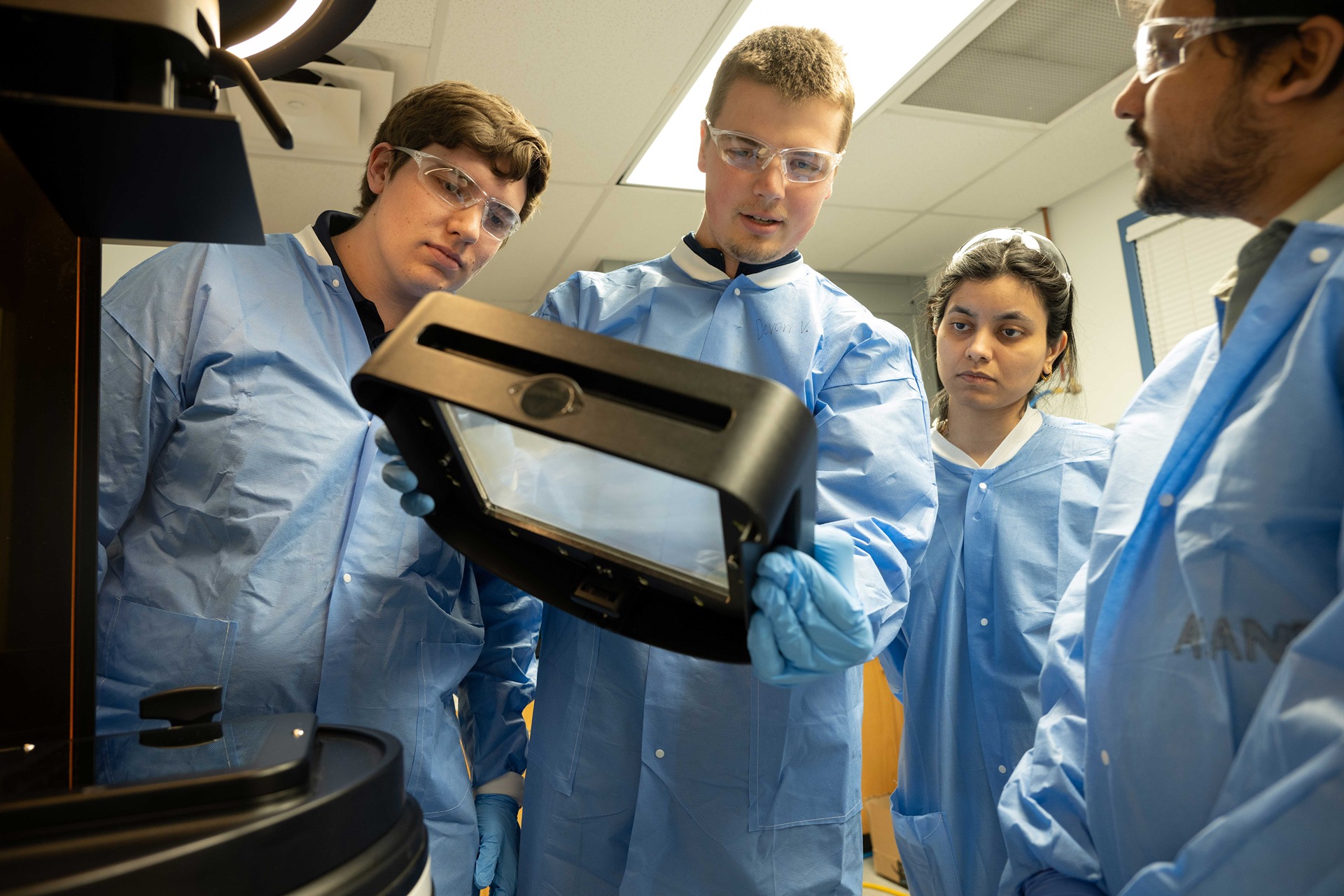
Biomimetic Robotics Lab
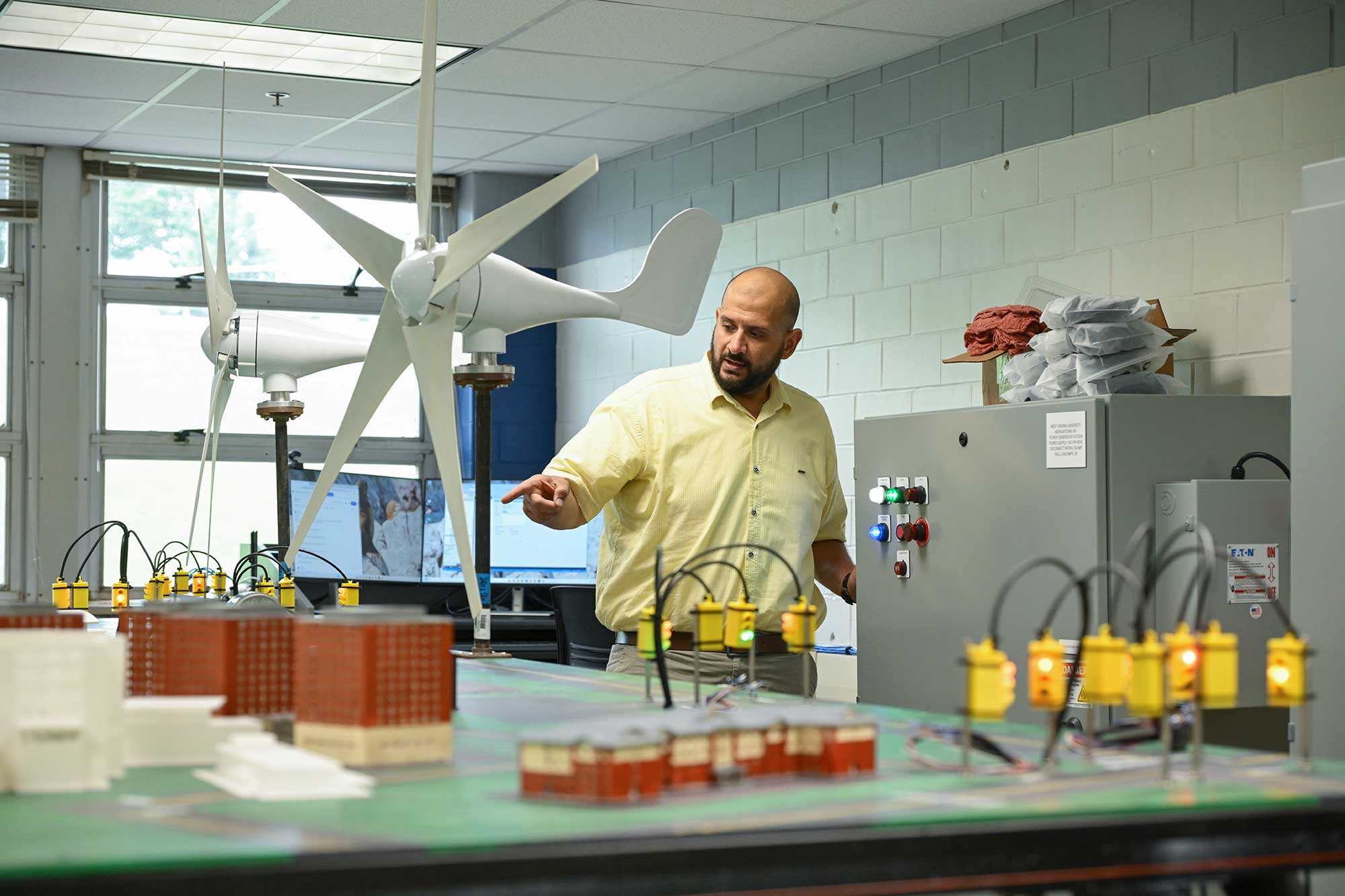
Critical Infrastructures Security Lab
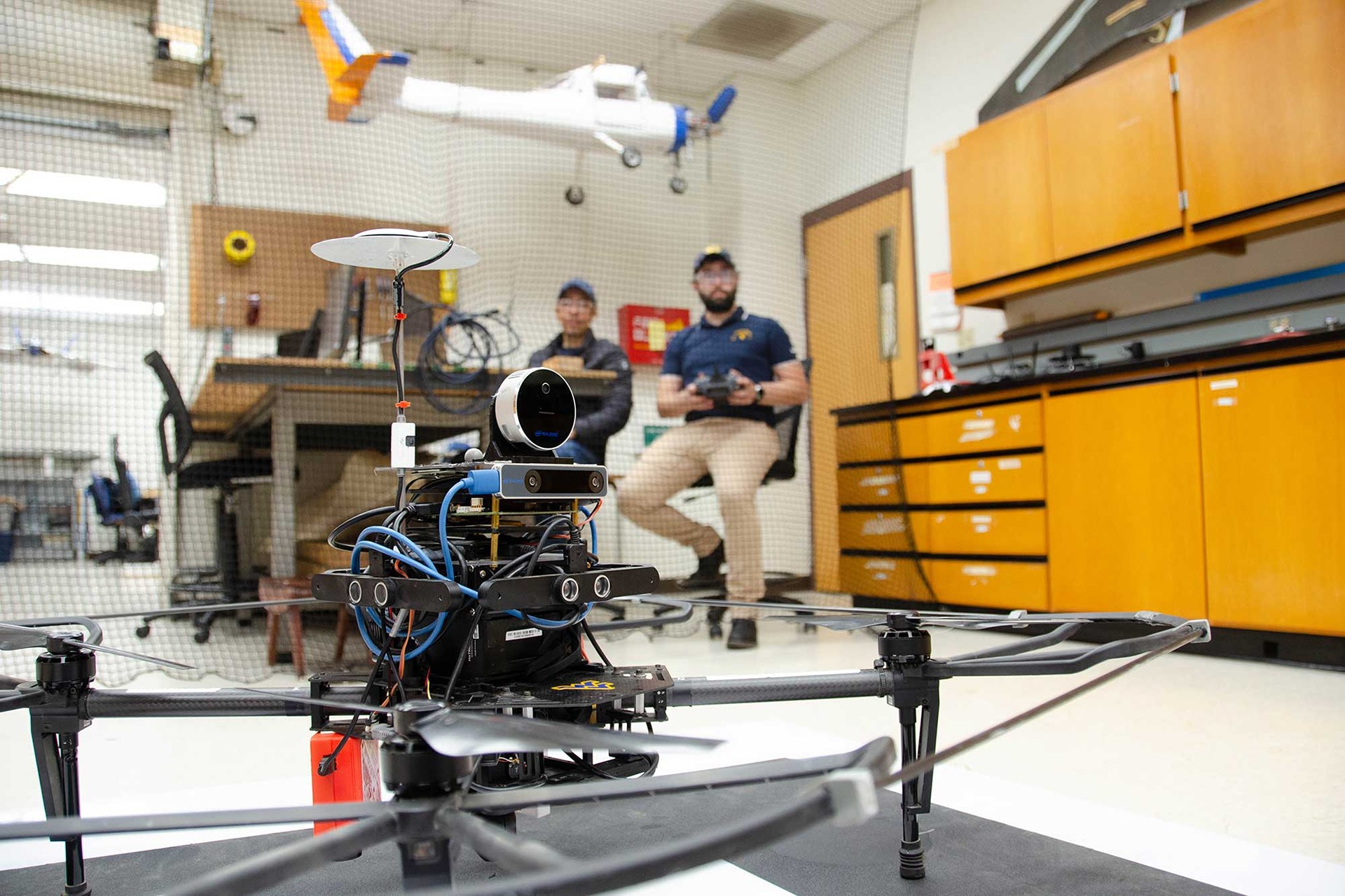
Field and Aerial Robotics Lab
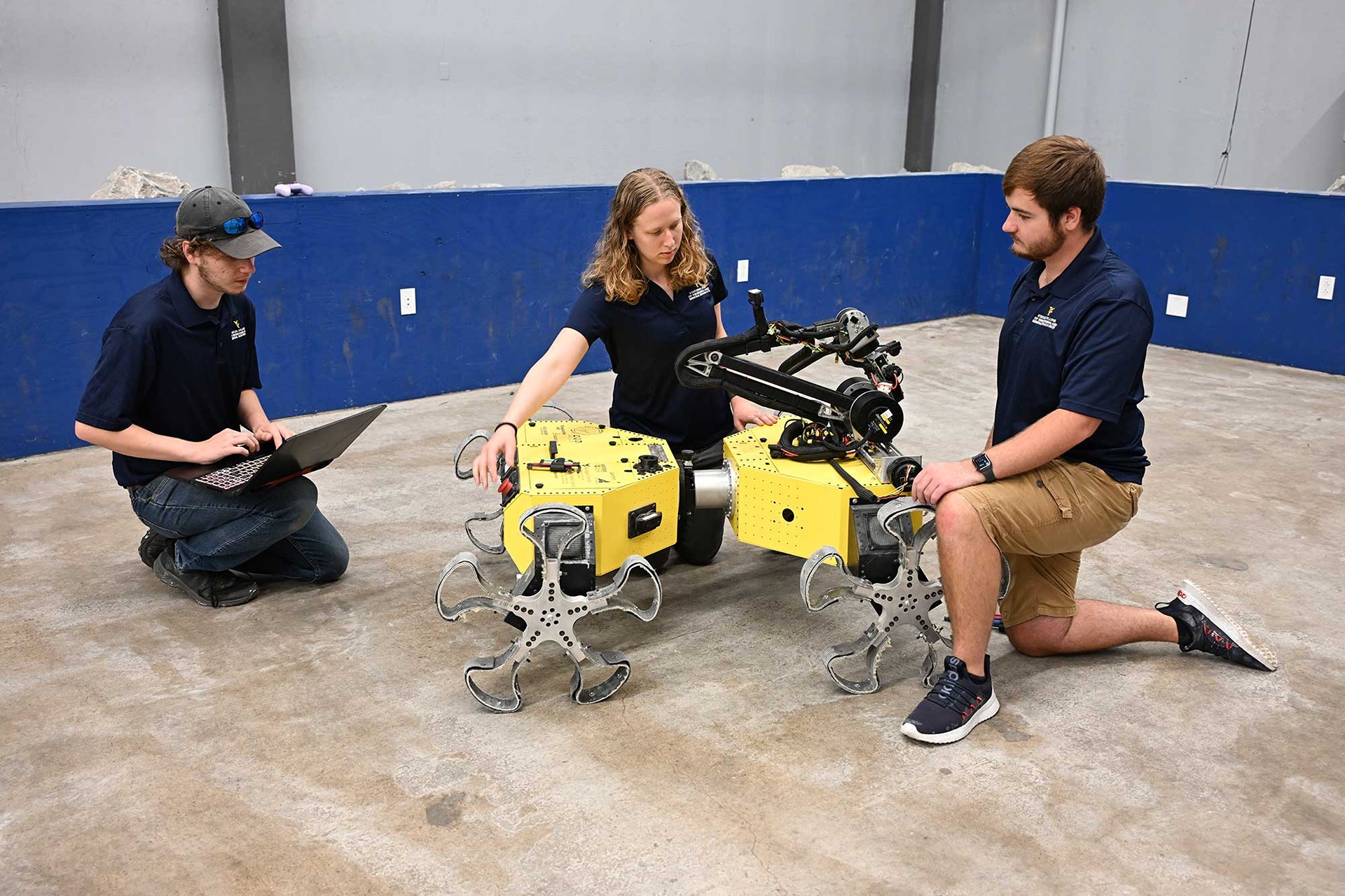
Indoor Motion Capture Lab
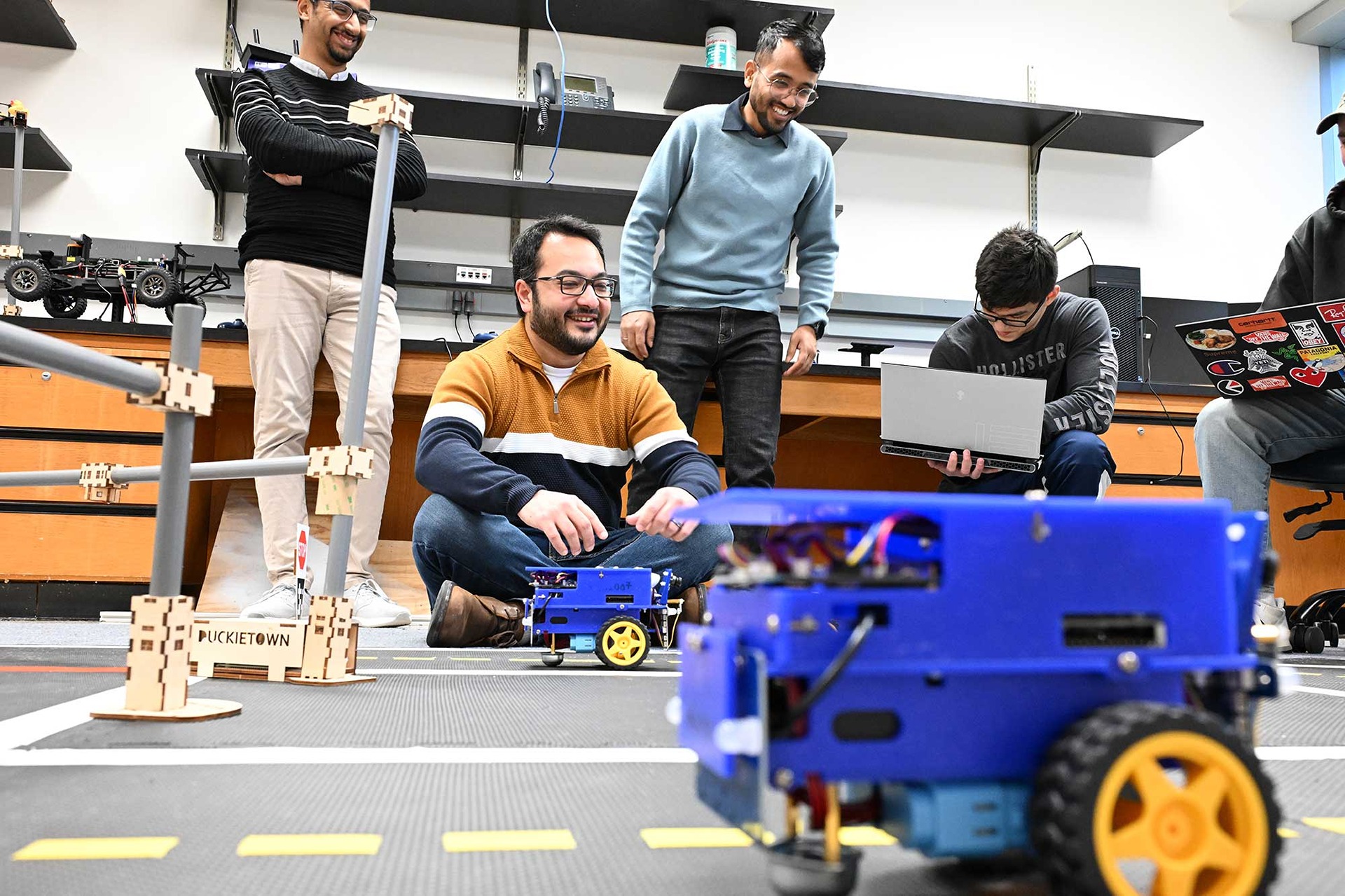
Intelligent Cyber Physical Systems Lab (F1Tenth)
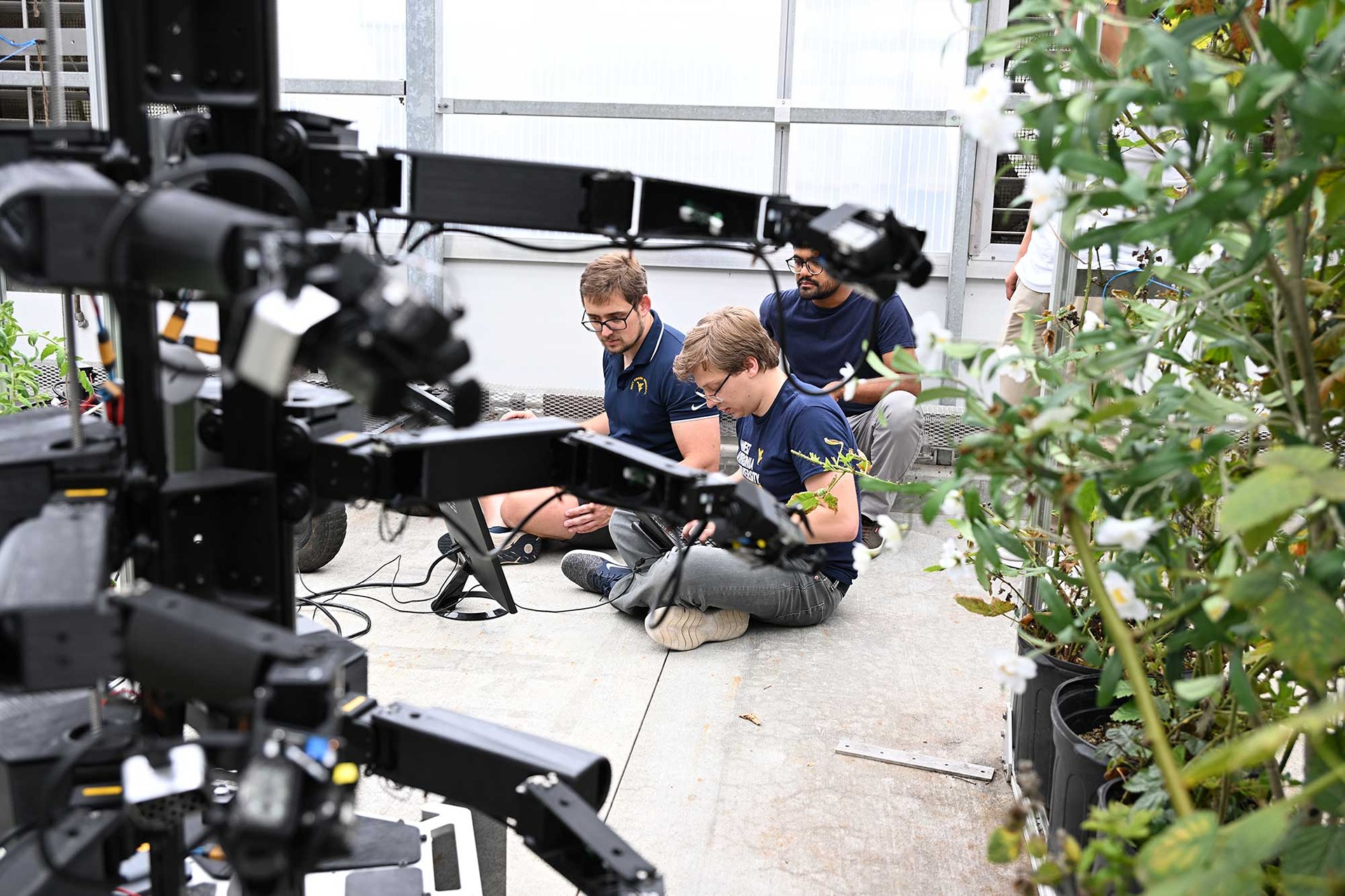
Interactive Robotics Lab
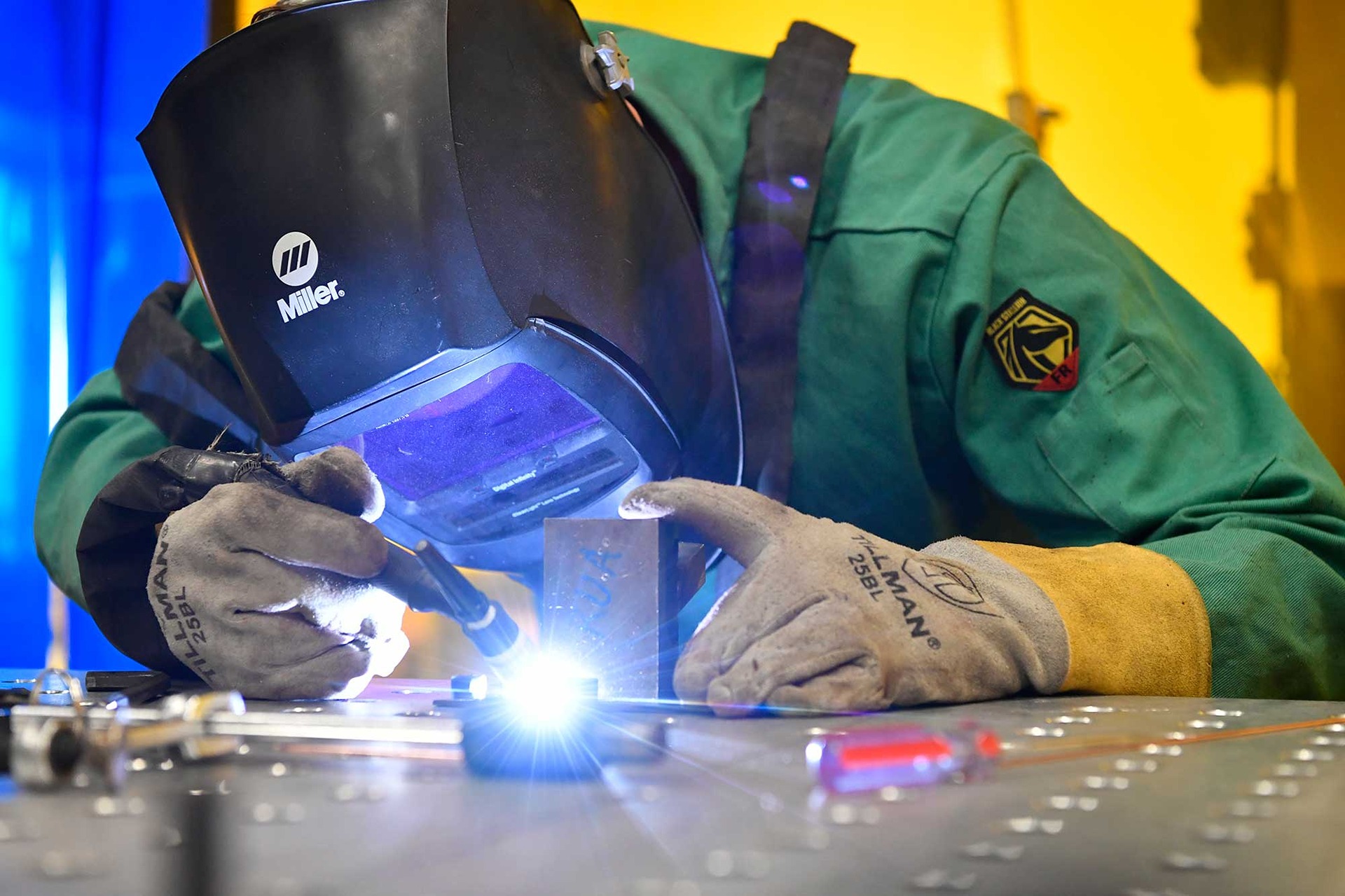
Lane Innovation Hub
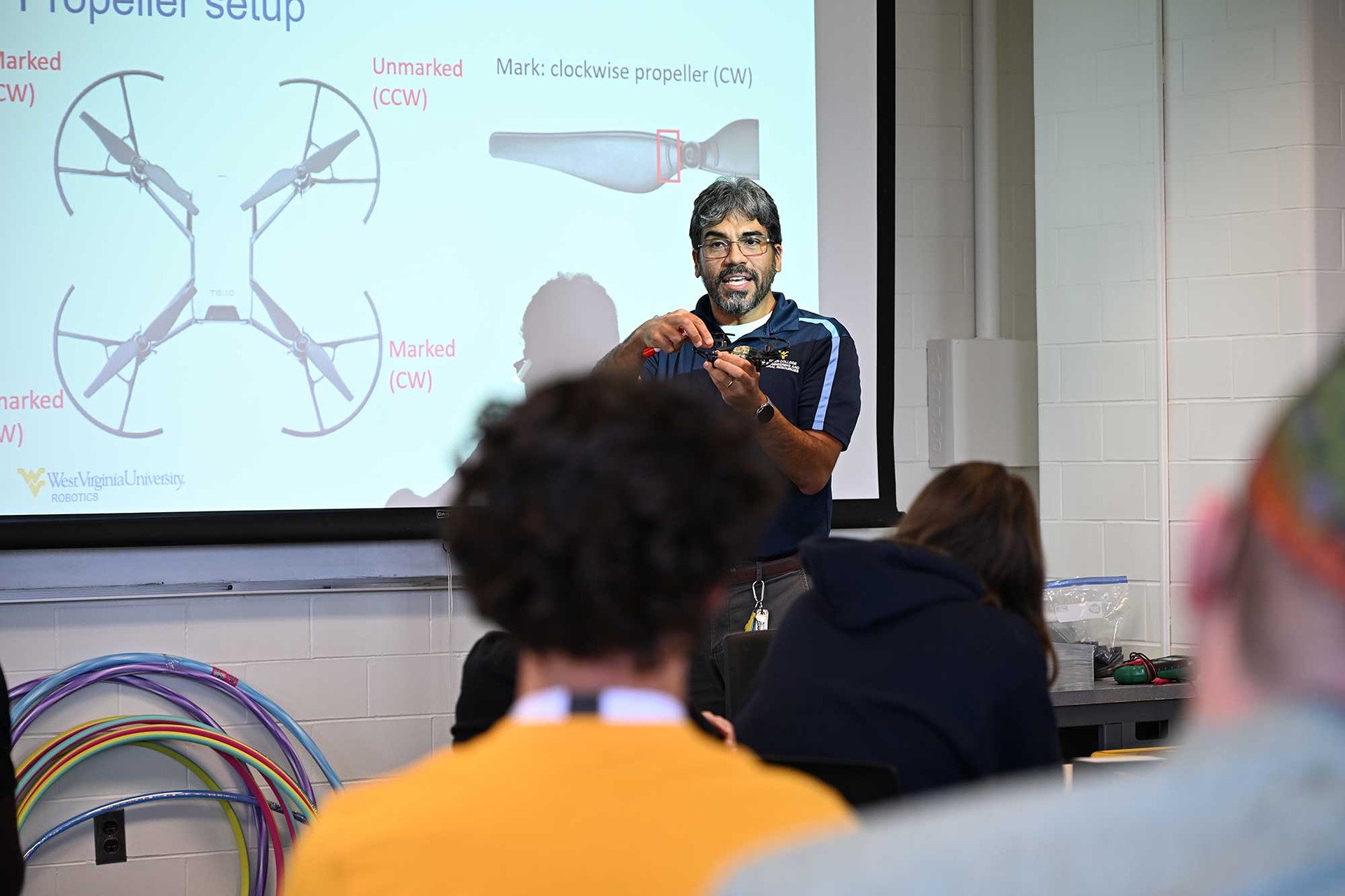
Mechatronics Lab
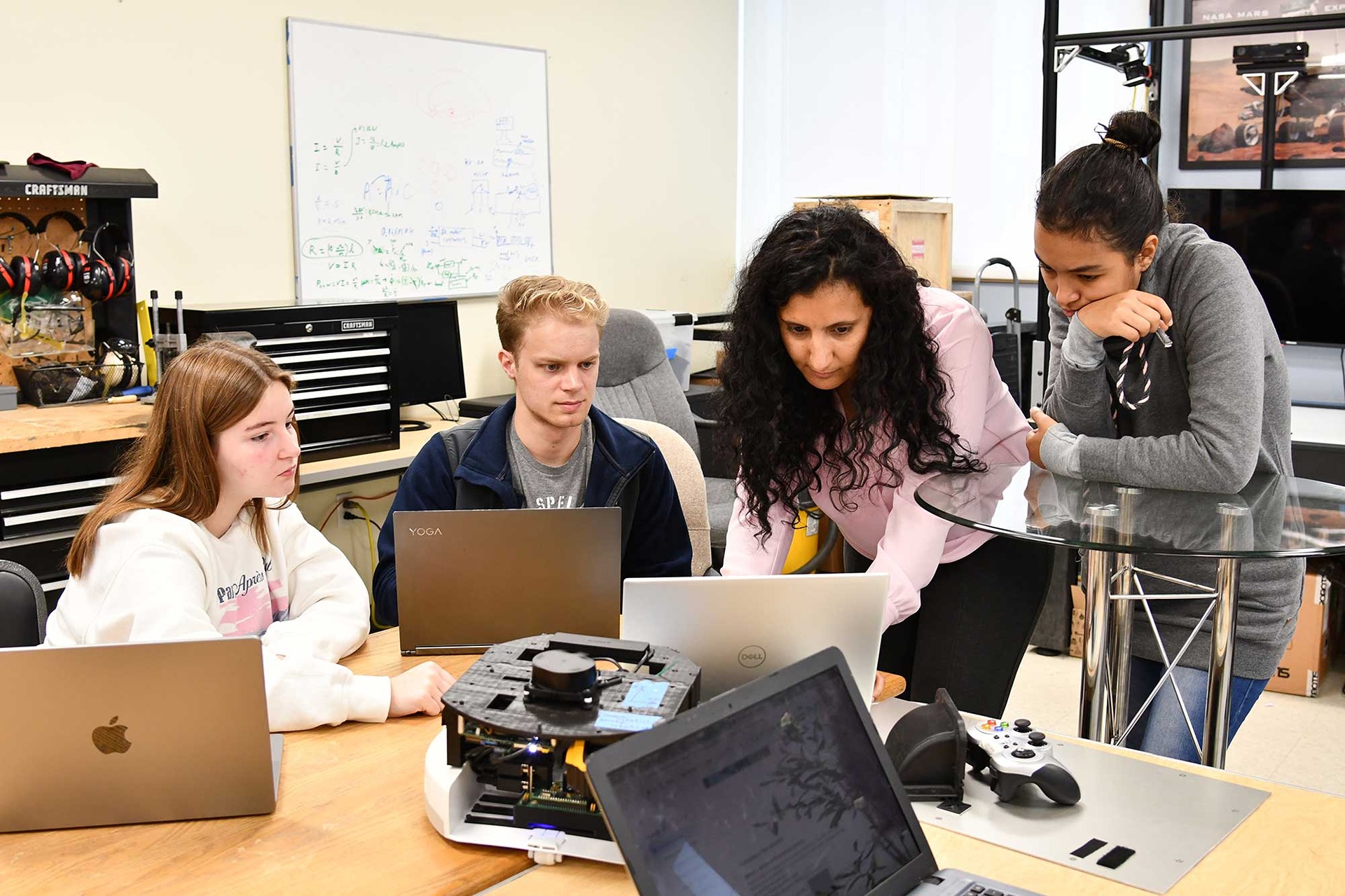
Mobile Robotics Lab
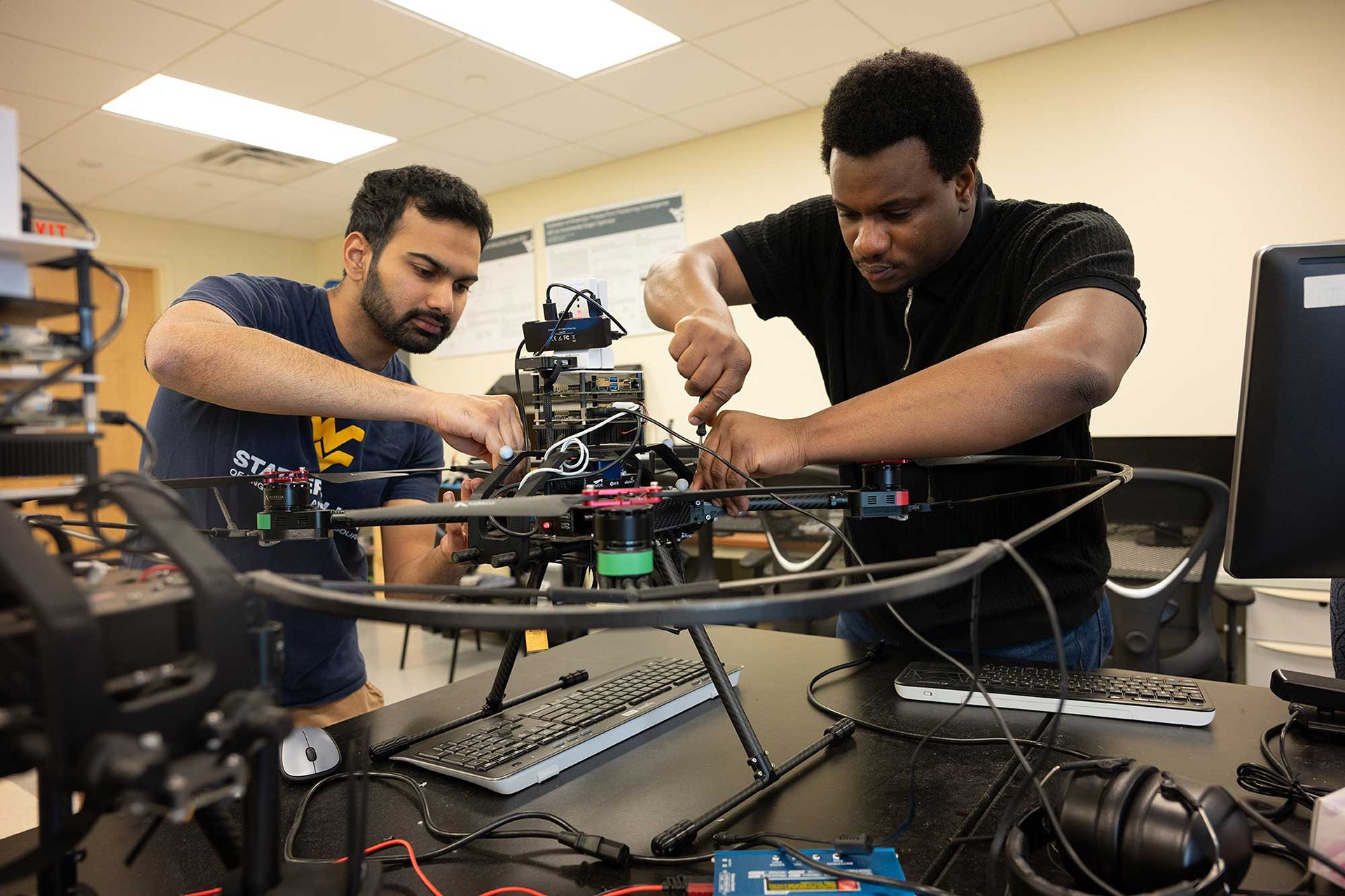
Navigation Lab
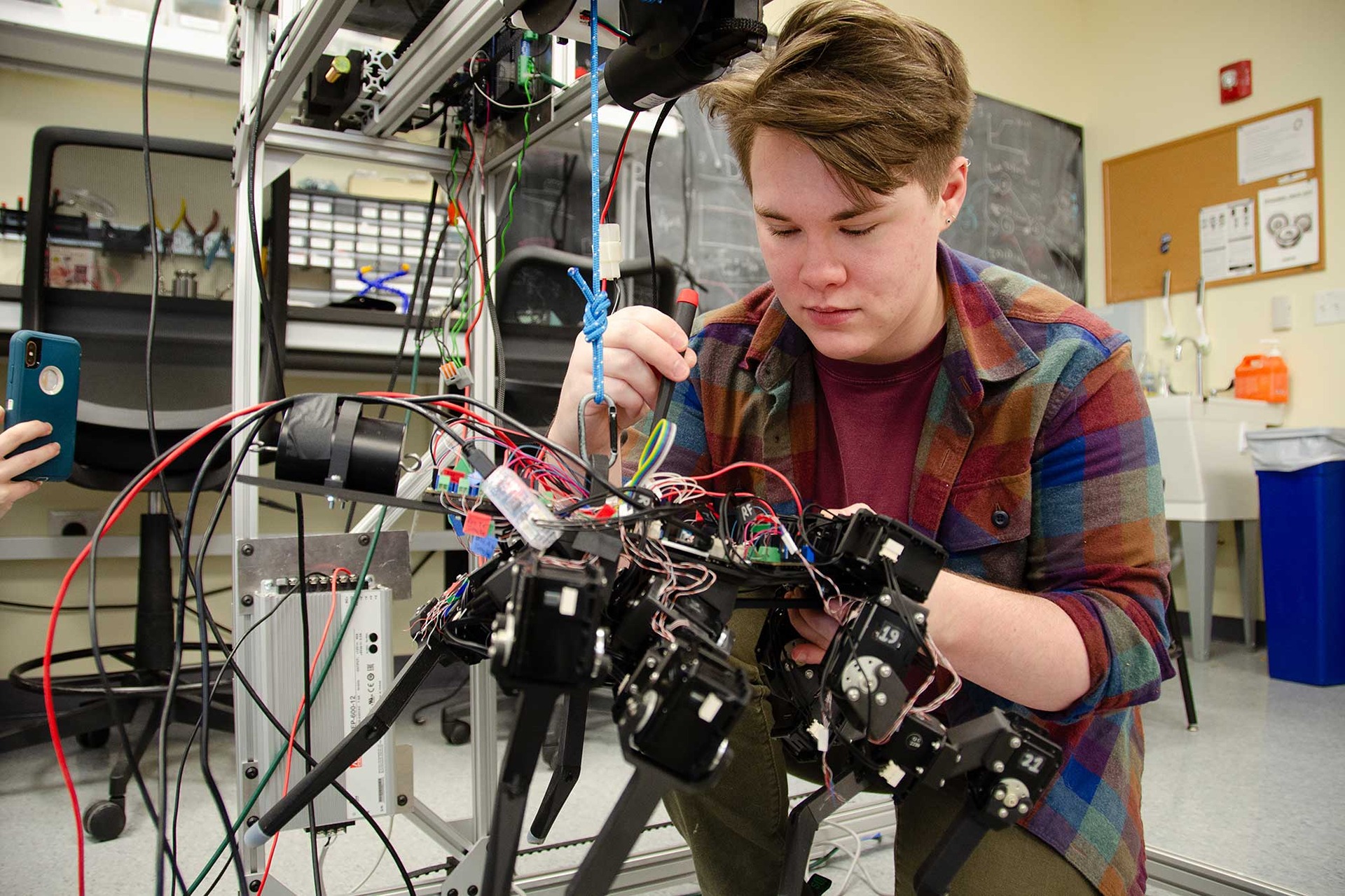
Neuro-Mechanical Intelligence Lab
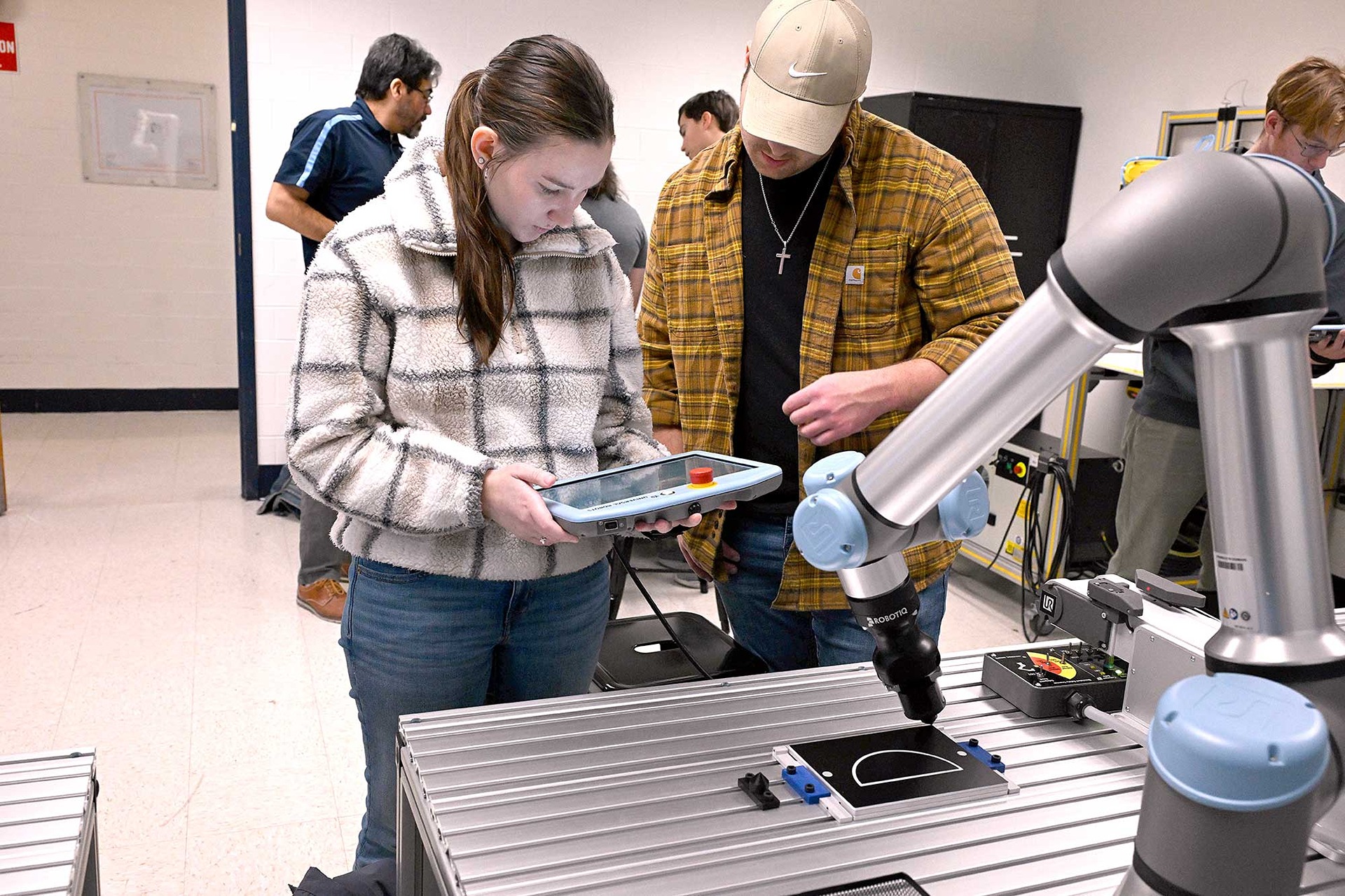
Robotics Manipulators Lab
A community that inspires, supports, and leads
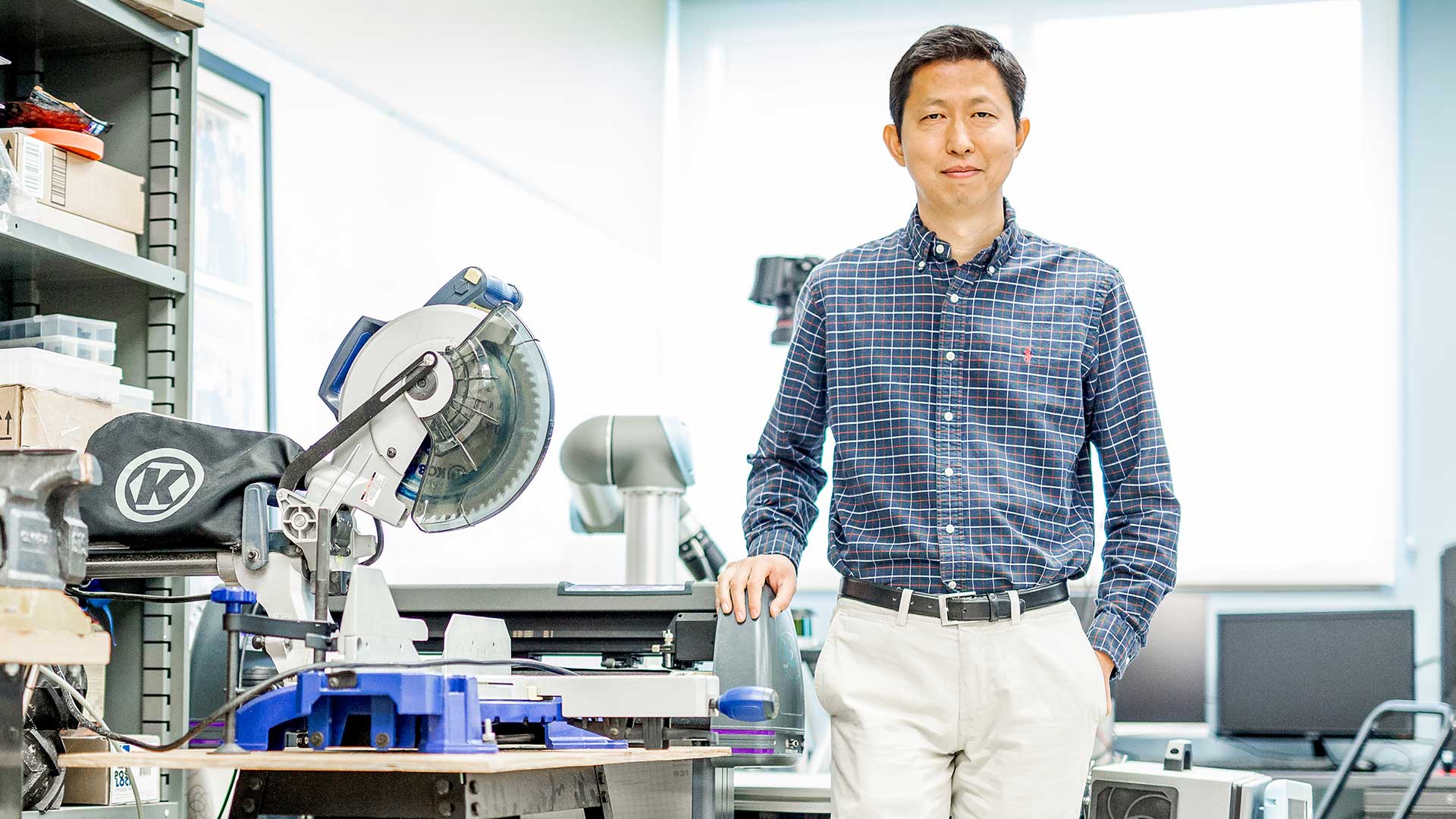
The Experimental Tourist
"I’m looking for an environment where I can try new things and different ideas and explore them with students. That's what motivates me."
The Experimental Tourist
"I’m looking for an environment where I can try new things and different ideas and explore them with students. That's what motivates me."
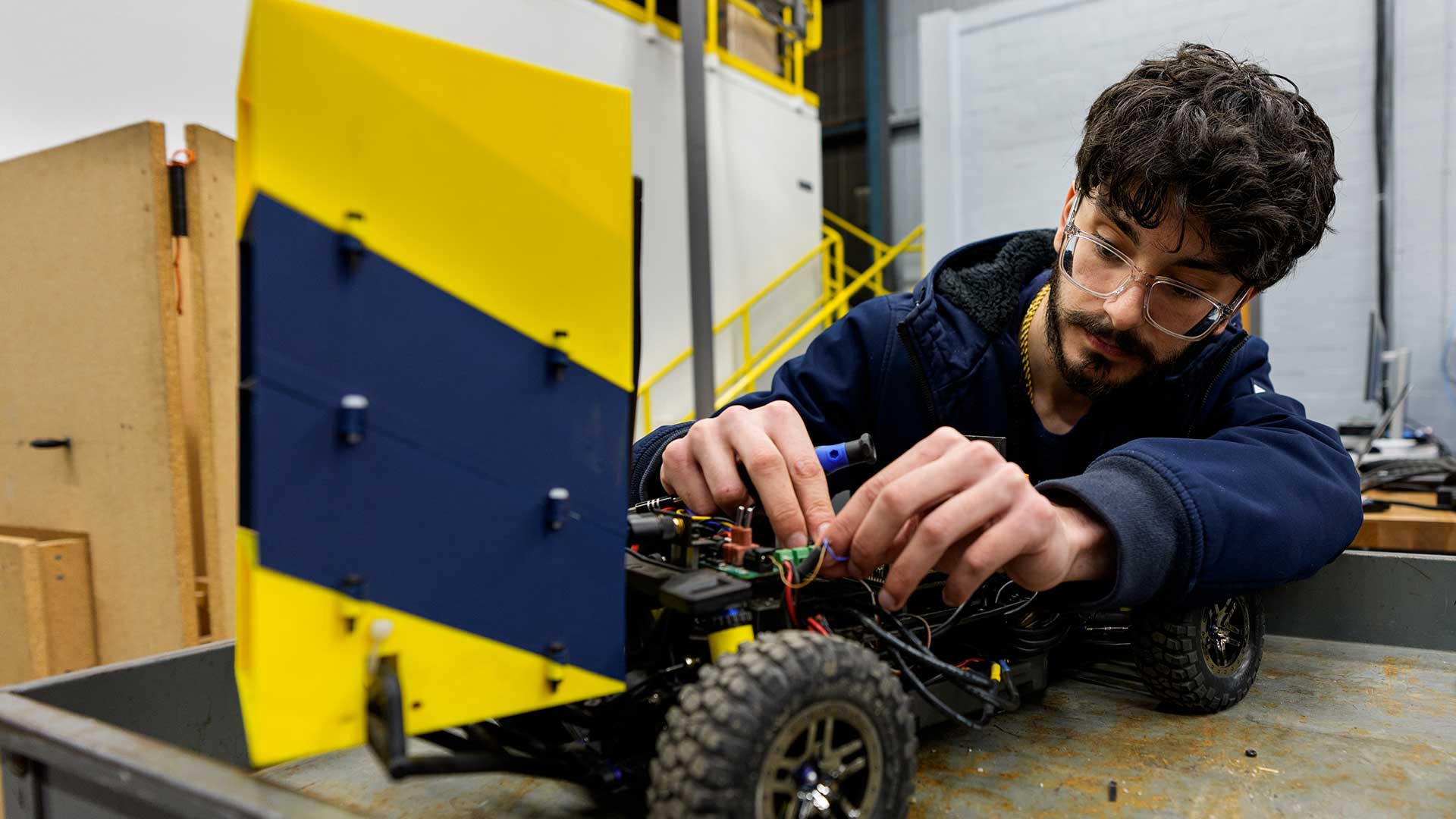
Pedal to the Medal
The WVU RoboRacer team builds race cars that have minds of their own.
Pedal to the Medal
The WVU RoboRacer team builds race cars that have minds of their own.
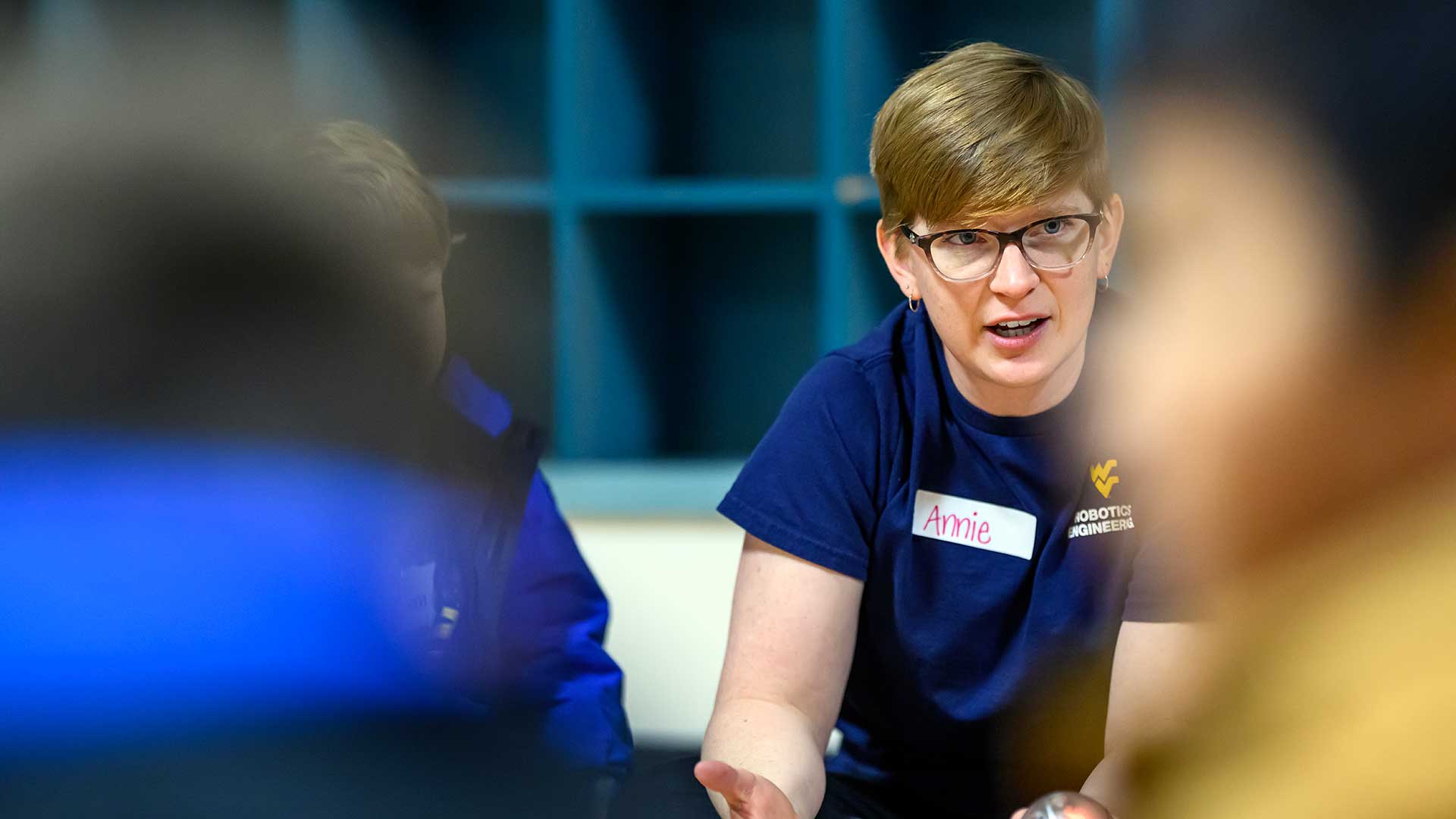
Inspiring young minds with robotics engineering
"I want youth to get the opportunity to do some coding, some building, and some design, so that they know what an engineer is and that it is an option for a really good career."
Inspiring young minds with robotics engineering
"I want youth to get the opportunity to do some coding, some building, and some design, so that they know what an engineer is and that it is an option for a really good career."
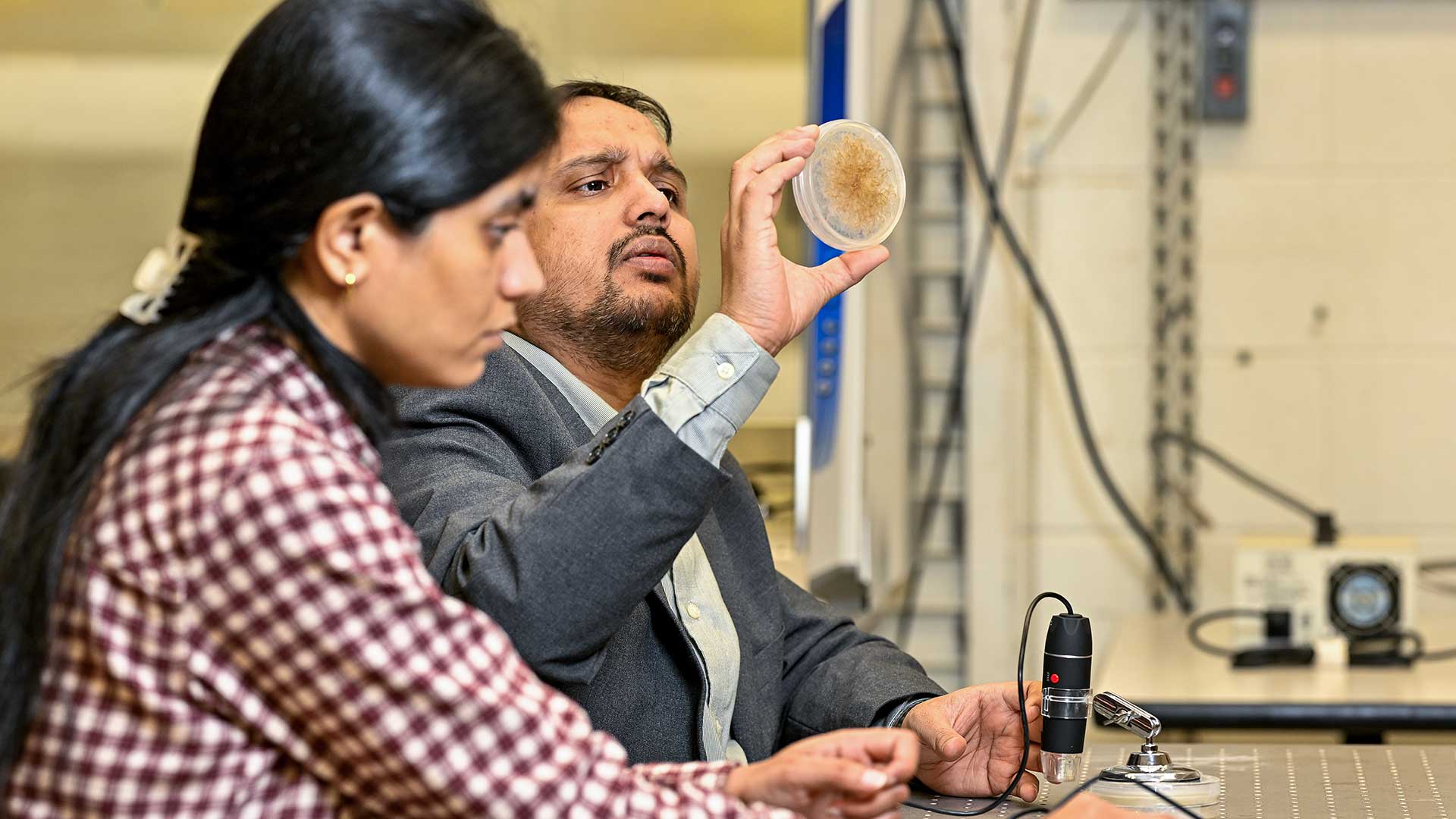
Faculty Feature: Anand Mishra
"I am grateful to be a part of a strong robotics community that emphasizes interdisciplinary collaboration while fulfilling the land-grant mission to serve communities and industry."
Faculty Feature: Anand Mishra
"I am grateful to be a part of a strong robotics community that emphasizes interdisciplinary collaboration while fulfilling the land-grant mission to serve communities and industry."
Request Info
Want to know more about Robotics Engineering at WVU? Fill out our request form to receive more information.
Visit
Experiencing campus is the best way to see if WVU is the right fit. Choose from in-person and virtual options.