

Respiratory Therapy, BSRT
Blending a robust curriculum with innovative simulation facilities and practical experience in the field, our students learn extensively across all specializations of respiratory therapy and benefit from hands-on clinical opportunities in West Virginia’s largest health system, WVU Medicine.
With a critical demand for respiratory therapists in the state of West Virginia due to a growing community with respiratory disorders and the rapid expansion of healthcare organizations, our program is designed to provide the skills and expertise needed to become valued, knowledgeable, and capable clinicians across all respiratory care practice areas.
Your Degree Plan
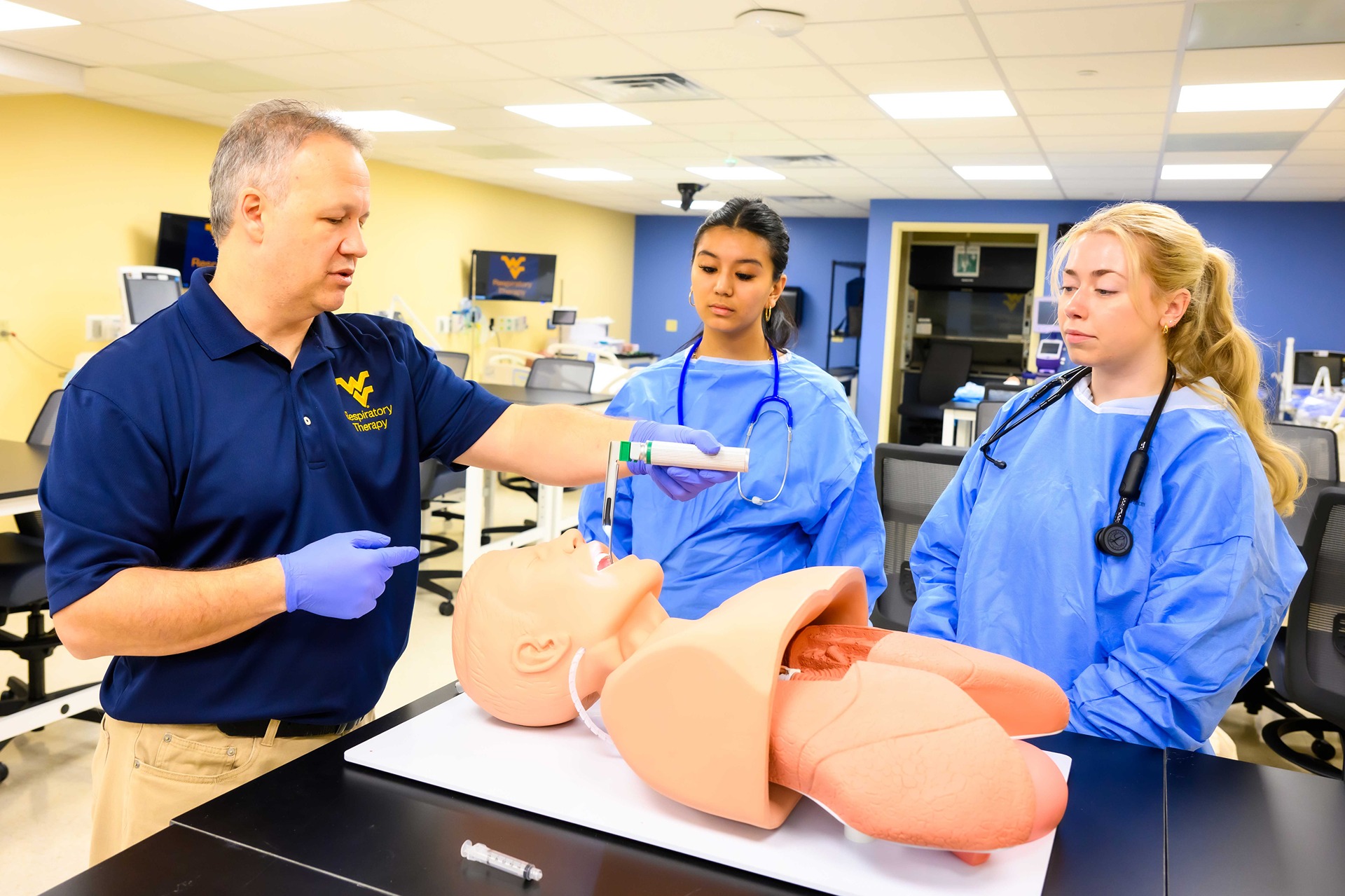
With a strong emphasis on hands-on experience in the laboratory and through clinical placements, our curriculum prepares you for immediate employment or further study. While granting of the Bachelor of Science (BSRT) degree is not contingent on passing any external certification or licensure examination, the RT program also prepares graduates to sit for the Therapist Multiple-Choice (TMC) Examination and the Clinical Simulation Examination (CSE), given by The National Board for Respiratory Care (NBRC) and leading upon successful completion to the designation of Registered Respiratory Therapist (RRT).
The first 2 years of study consist of a pre-professional curriculum where students complete prerequisite coursework, while the last 2 years consist of the Respiratory Therapy professional curriculum. The pre-professional curriculum can be completed at the WVU Morgantown campus, one of the WVU regional campuses, or any regionally accredited college or university. Prerequisites are outlined under Indirect Admission Pathway requirements, and include anatomy and physiology, biology, chemistry, psychology, communication, and other general education requirements.
An Introduction to Respiratory Therapy
RT 301
Hemodynamic and Intensive Care Principles and Practices
RT 400
Advanced Application and Theories in Mechanical Ventilation
RT 420
The application of mechanical ventilation concepts, theories and principles is among the most important responsibilities for respiratory therapists to master for their patients. This course will present an immersive experience which serves to prepare, examine, and synthesize advanced analytical theories and applications of mechanical ventilation. This course presents innovative interventions and strategies to maximize patient outcomes receiving mechanical ventilation support.
Interdisciplinary Science, Leadership, Management and Education in Respiratory Therapy
RT 430
This course examines theories and concepts promoting the advancement and optimization of the respiratory therapy professional. Areas to be covered include interdisciplinary science, leadership roles, management strategies, respiratory education, and evidence-based practice.
Honors
Expand your curiosity and enhance your curriculum through the WVU Honors College. Two programs are offered: Honors Foundations and Honors in Action.
The WVU Difference
What sets this program apart?
- Our students enjoy the unique opportunity to benefit from a 1:1 student-to-ventilator ratio.
- The demand for respiratory therapists nationwide is growing. The Bureau of Labor Statistics estimates a 14% growth in the field by 2031.
- The WVU Respiratory Therapy Program is 1 of only 2 BSRT programs in West Virginia.
Learn by Doing
Get involved outside the classroom.
As a Respiratory Therapy student, you’ll learn to perform clinical skills like:
- Managing ventilators and hemodynamic monitoring
- Observing critical care patients
- Assessing and adjusting patient treatment modalities
- Performing sleep studies and quality pulmonary diagnostics testing in acute and outpatient facilities
Careers and Outcomes
How does this degree prepare students for a career?
Respiratory Therapists
Has a Bright Outlook
Median Salary: $80,450
Possible Job Titles: Certified Respiratory Therapist (CRT), Registered Respiratory Therapist (RRT), Respiratory Care Practitioner (RCP), Respiratory Therapist (RT)
Admission Requirements
To be admitted to the Respiratory Therapy major, first-time freshmen must meet WVU's first-time freshman admission requirements. Interested in transferring? Review the transfer admission requirements.
Requirements for direct admission to Respiratory Therapy for test-optional students
You must meet the following requirements:
- High School GPA: 2.75
Tuition and Aid
How much does Respiratory Therapy at WVU cost? And how can you save?
Tuition and Fees
Estimated rates are available on our tuition website. Anyone who is not a current West Virginia resident, including international students, will be charged non-resident rates.
Ways to Save
Beyond scholarships, here are other ways to reduce your cost of attending WVU.
Financial Aid
The most important step toward funding your future with financial aid for the Respiratory Therapy, BSRT is submitting the Free Application for Federal Student Aid, or FAFSA.
Start at Another WVU Campus
You can start your career with WVU at another campus and transfer to WVU Morgantown.
Transfer Articulation Agreements
To simplify the transfer process, we have formal agreements with certain institutions. These agreements outline the courses you should take to prepare for transferring to WVU.
Review the full list of transfer articulation agreements to see if your institution is listed.
Request Info
Want to know more about Respiratory Therapy at WVU? Fill out our request form to receive more information.
Visit
Experiencing campus is the best way to see if WVU is the right fit. Choose from in-person and virtual options.