

Public Health Sciences, BS
In this program, you will gain knowledge and experience in public health principles, epidemiology, biostatistics, social and behavioral sciences, emergency preparedness, public health policy formulation and analysis, and project management.
If you want to make a difference by improving and protecting the health and well-being of the people around you, this major is for you.
Your Degree Plan
Introduction to Public and Community Health
PUBH 101
This course will provide students with an overview of the principles and practice of public and community health. Students will learn about the history, core function, and essential services of public health, as well as engage in discussions about current public health events and issues.
Global Perspectives of Public Health
PUBH 201
This introduction to global public health will strengthen students' perspectives and understanding of disease prevention and treatment issues in westernized and developing/underdeveloped countries. Topics include health disparities, economic/political structures/systems impacting health, maternal and child health (including family planning), socio-cultural factors affecting health care delivery, and the global burden of infectious and chronic diseases, injuries, and disasters.
Social Determinants of Health
PUBH 202
The purpose of this course is to provide an introduction to the social factors/determinants that influence health. Theoretical and methodological approaches to the study of social determinants will be discussed from a social ecological perspective. The course is designed to help students develop basic literacy regarding social concepts and processes that influence health status and health disparities.
Issues in Environmental Health
PUBH 243
Provides an overview of environmental and occupational issues relating to air, water, and solid waste as they relate to human health. Basic environmental health concepts, technologies, and underlying data will be examined to better understand local, national, and global solutions to environmental health problems.
Emergency Preparedness for Public Health
PUBH 334
This course provides an overview of the dimensions of disasters and emergencies through the lens of Public Health professionals with special focus on the rural environment and uses the Homeland Security Exercise Evaluation Program (HSEEP) model for the final exercise. Students completing this course will also complete several FEMA certifications during the course.
Public Health Project Management
PUBH 338
Introduces students to the basics of project management: the process of initiating, planning, executing, controlling, and closing out a project. Project leadership is explored in the context of building effective project teams and maintaining stakeholder relationships. Concepts include developing and monitoring budgets, developing Gantt charts, reporting, working with stakeholders, flow charts, and more.
Introduction to Health Policy
PUBH 331
This course provides an overview of the inner workings of health care policy making, from the legislative process to socioeconomic impacts, with both historical and modern perspectives. Students will explore factors that shape the United States health care system and policy, such as values, models, and stakeholders, and compare them to other countries for international context.
Accelerated BS/MPH Program
Public Health Sciences offers the option to earn a bachelor’s and master’s degree in an accelerated time frame.
Honors
Expand your curiosity and enhance your curriculum through the WVU Honors College. Two programs are offered: Honors Foundations and Honors in Action.
The WVU Difference
What sets this program apart?
- Dynamic advising, small class sizes, and extracurricular activities.
- Only accredited school of public health in West Virginia.
- Unique opportunities to study first-hand public health issues in the center of Appalachia, a region with a history of health disparity and heavy industry.
- Faculty collaborate on national and international research and service projects that provide valuable opportunities for students.
- Faculty specialty areas include cardiovascular health, diabetes self-management, occupational injuries, environmental exposures, mindfulness, childhood obesity, violence and injury prevention, food insecurities, and substance abuse.
- 1 of only 67 schools of public health to receive national accreditation by the Council on Education for Public Health.
- 1 of 5 schools housed at WVU Health Sciences. WVU is among the few institutions nationwide that support medical, dental, nursing, and pharmacy care, as well as advanced medical research and education.
- Established in 2012, the School of Public Health was the first new school at WVU in 50 years.
- The School of Public Health has a long history of collaborating with agencies and organizations at the local, state, national, and international level.
- School of Public Health students take 2 career preparation courses and complete a required internship. Our in-house career development office offers 1-on-1 career counseling among other resources, such as a dedicated public health job board and networking opportunities.
- 93% of Public Health grads are working in their field or continuing their education.
Learn by Doing
Get involved outside the classroom.
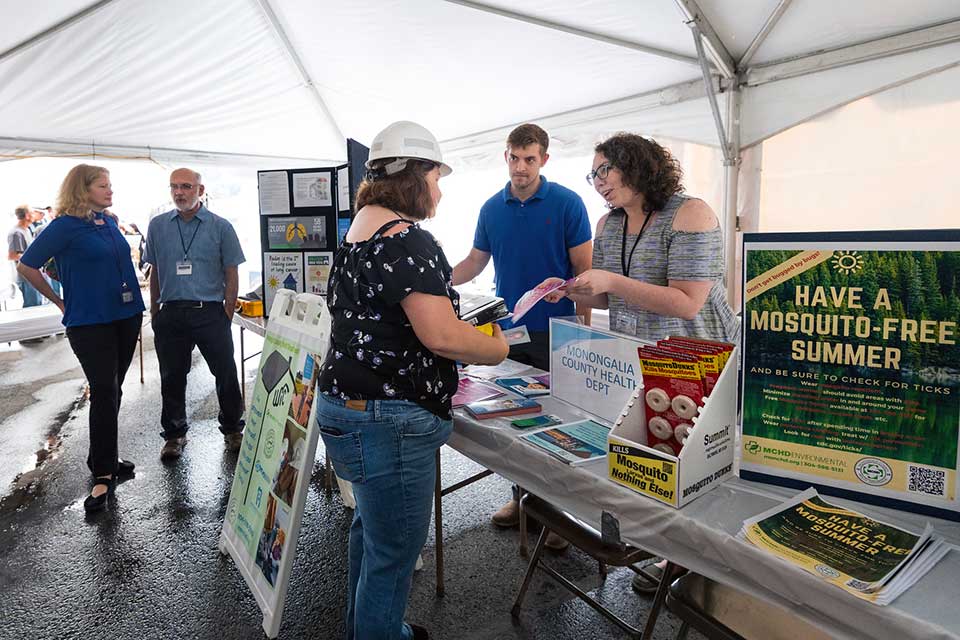
Every public health sciences student is required to complete an applied field placement in a local or regional agency or institution where they can put their classroom lessons to work. All students engage with community partners, gain experience in the workplace, and demonstrate acquisition of competencies.
Partner organizations include:
- American Heart Association
- Child advocacy centers
- Department of Health and Human Services
- Libera, Inc.
- Local health departments
- Mon Health Medical Center
- National Institute for Occupational Safety and Health
- Pantry Plus More
- Peak Health
- West Virginia Area Health Education Centers
- West Virginia Bureau for Public Health
- West Virginia Perinatal Partnership
- WVU Center for Excellence in Disabilities
- WVU Health Affairs Institute
- WVU Medicine
View all of the student organizations you can join.
Careers and Outcomes
How does this degree prepare students for a career?
Environmental Science and Protection Technicians, Including Health
Has a Bright Outlook
Median Salary: $49,495
Possible Job Titles: Environmental Health Officer (EHO), Environmental Technician (Environmental Tech), Sanitarian, Soil Lab Technician (Soil Laboratory Technician)
Medical and Health Services Managers
Has a Bright Outlook
Median Salary: $117,960
Possible Job Titles: Clinical Director, Health Information Management Director (HIM Director), Health Information Manager (HIM Manager), Nursing Director
Emergency Management Directors
Median Salary: $86,130
Possible Job Titles: Emergency Management Director, Emergency Management System Director (EMS Director), Emergency Planner, Public Safety Director
Environmental Compliance Inspectors
Median Salary: $78,420
Possible Job Titles: Enforcement Officer, Environmental Inspector, Environmental Protection Specialist, Environmental Quality Analyst
Biostatisticians
Has a Bright Outlook
May Require Graduate Degree
Median Salary: $103,300
Possible Job Titles: Biometrician, Biostatistician, Research Scientist, Statistical Scientist
Epidemiologists
Has a Bright Outlook
Median Salary: $83,980
Possible Job Titles: Epidemiologist, Infection Control Practitioner (ICP), Nurse Epidemiologist, Research Epidemiologist
Environmental Scientists and Specialists, Including Health
Has a Bright Outlook
Median Salary: $80,060
Possible Job Titles: Environmental Programs Specialist, Environmental Protection Specialist, Environmental Scientist, Environmental Specialist
Occupational Health and Safety Specialists
Has a Bright Outlook
Median Salary: $83,910
Possible Job Titles: Industrial Hygiene Consultant, Industrial Hygienist, Safety Consultant, Safety Specialist
Health Education Specialists
Has a Bright Outlook
Median Salary: $63,000
Possible Job Titles: Clinical Instructor, Health Education Specialist, Health Educator, Public Health Educator
Where graduates are working
- State public health agencies
- Healthcare providers
- Local and regional health departments
- National and global health organizations
- Emergency preparedness and management agencies
- Disaster response agencies
- Managed care organizations
- Educational institutions
- Environmental agencies
- Occupational health and safety organization
- Nonprofit organizations
Areas of graduate study
Graduates have pursued advanced degrees in:
- Public Health
- Health Administration
- Epidemiology
- Medicine
- Law
- Social Work
- Occupational Therapy
- And more
Admission Requirements
To be admitted to the Public Health Sciences major, first-time freshmen must meet WVU's first-time freshman admission requirements. Interested in transferring? Review the transfer admission requirements.
Tuition and Aid
How much does Public Health Sciences at WVU cost? And how can you save?
Tuition and Fees
Estimated rates are available on our tuition website. Anyone who is not a current West Virginia resident, including international students, will be charged non-resident rates.
Ways to Save
Beyond scholarships, here are other ways to reduce your cost of attending WVU.
Financial Aid
The most important step toward funding your future with financial aid for the Public Health Sciences, BS is submitting the Free Application for Federal Student Aid, or FAFSA.
Start at Another WVU Campus
You can start your career with WVU at another campus and transfer to WVU Morgantown.
Transfer Articulation Agreements
To simplify the transfer process, we have formal agreements with certain institutions. These agreements outline the courses you should take to prepare for transferring to WVU.
Review the full list of transfer articulation agreements to see if your institution is listed.
Request Info
Want to know more about Public Health Sciences at WVU? Fill out our request form to receive more information.
Visit
Experiencing campus is the best way to see if WVU is the right fit. Choose from in-person and virtual options.