
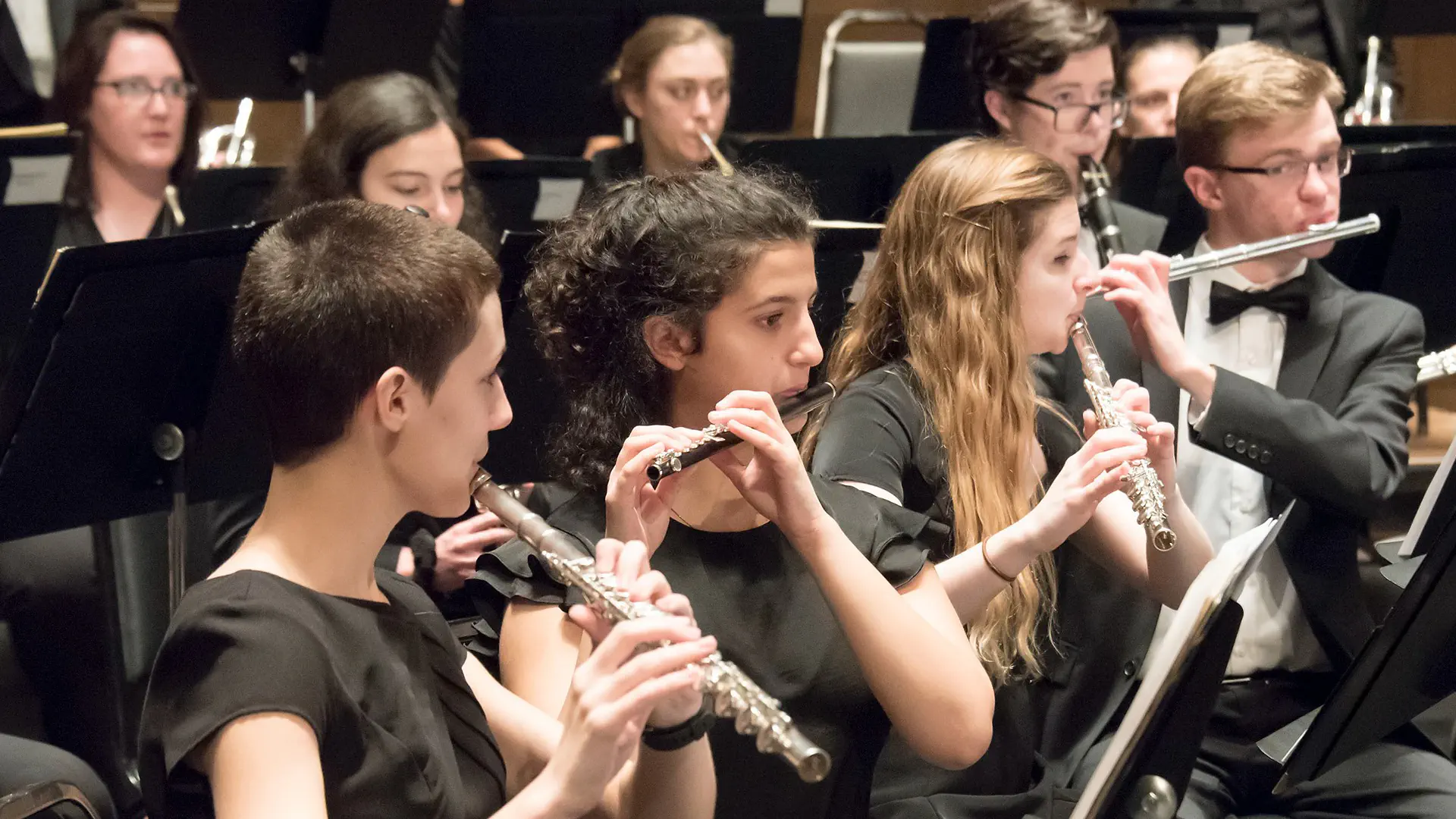
Music Performance, BM
Our Performance curriculum includes weekly lessons, chamber music coaching, and participation in large ensemble rehearsals. You’ll develop a portfolio approach to career development through courses in entrepreneurship, musician’s health and wellness, music business and industry, recording technology, community engagement, social justice, and arts management. You’ll also have many opportunities to collaborate with peers and join music student organizations, enriching your overall musical experience.
Upon graduation, your diverse set of marketable skills will include:
- Effective communication through performance
- Exceptional memory capabilities
- Proficiency in music computer programs
- Strong pattern recognition abilities
- Skill in improvisation and analytical thinking
Acceptance to the Music Performance Program requires admission to WVU and a successful audition. Your audition also may qualify you for a School of Music scholarship.
Your Degree Plan
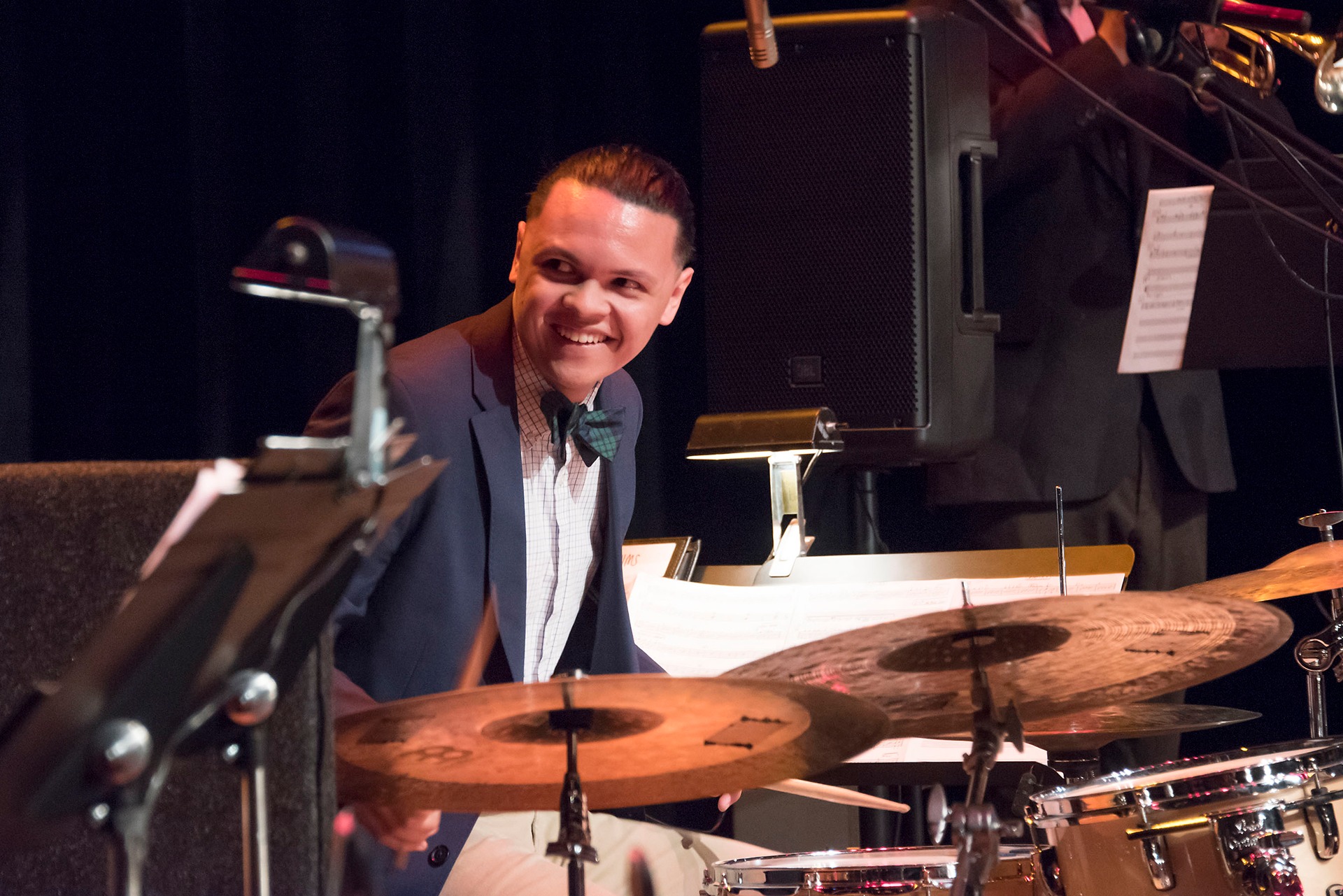
As a Music Performance student, you will learn to:
- Perform with facility, self-expression, and concert success on your primary instrument or voice. For voice students, this includes appropriate use of foreign languages and diction.
- Demonstrate artistic proficiency and flexibility as a performer and collaborator in varied settings, including chamber ensembles and large conducted ensembles.
- Demonstrate ability to apply knowledge of compositional form, historical context, performance practices, extended techniques, nontraditional notation, and current issues to musical performance.
- Apply the necessary skills to maintain your physical and mental health while creating a career of sustainability and longevity.
You will have many opportunities to play solo recitals, chamber music performances, and participate in large music ensembles.
Studio Master Class
MUSC 400
A weekly master class in which private students of one performance instructor gather to perform for each other, receive positive and constructive feedback from the instructor and other students, and explore pedagogy along with other aspects of music making.
American Popular Music
MUSC 113
Introduction of history and development of American popular music.
Hip Hop Nation: Musical and Conceptual Foundations of a Cultural Revolution
MUSC 151
In this course, we will investigate the origins of Hip Hop music and culture. We will explore the 5 Elements of Hip Hop (DJ'ing, emceeing, b-boying/b-girling, writing/graffiti, and knowing). We will investigate Hip Hop through multiple critical lenses as a musical genre, but also as an important and lasting socio-cultural phenomenon.
Music in Appalachia
MUSC 118
Survey of traditional instrumental and vocal music of southern Appalachia. History, style characteristics, and performance techniques involving live and recorded examples emphasizing those found in West Virginia.
Film and Video Game Composition
MUSC 459
Media composers are storytellers. Whether in film, television, podcasts, or video games, music and sound bring our digital worlds to life. This class explores approaches to producing work digitally for linear and non-linear mediums, emphasizing interdisciplinary collaboration with game designers, programmers, film directors, and other creative partners.
Music of Africa
MUSC 470
Traditional music of selected areas of Africa south of the Sahara with particular reference to West Africa. The diverse musical cultures with emphasis on historical background, instruments, ensembles, forms, styles, and music in its social context.
Promoting the Arts and Culture
ART 444
Provides a framework for effective promotion of non-profit performing arts, visual arts and service organizations in the cultural arts industry. Identifies the tactical side of commercially advancing the arts including effective implementation of arts-field-specific promotional programs and initiatives. Develops an awareness of arts organizations in the current social, cultural, and commercial environments.
Social Media Strategy
JRL 432
This course examines how social media channels can be utilized to meet the goals of corporate, non-profit, political, and issue based outreach messaging.
Instrumental
Piano
Voice
Honors
Expand your curiosity and enhance your curriculum through the WVU Honors College. Two programs are offered: Honors Foundations and Honors in Action.
The WVU Difference
What sets this program apart?
- The Creative Consultants program, which pairs you with accomplished alumni mentors for invaluable insights, advice and support.
- Professional development resources available to attend conferences, concerts, and other professional opportunities.
- Opportunity to participate in chamber music as a freshman.
- Weekly performance opportunities.
- Numerous student leadership opportunities, both inside the applied studio and in student organizations.
- Faculty members are active music professionals who bring their real-world expertise into their classrooms.
Learn by Doing
Get involved outside the classroom.
- WVU Student Chapter of American String Teachers Association
- WVU Student Chapter of the American Choral Directors Association
View all of the student organizations you can join.
- Excellence in executive skills: time management, long-term project planning, goal-setting
- Ability to work and communicate well with colleagues
- Ability to work alone and exceed expectations
- Understanding how to practice and improve for your unique circumstance
- High-level artistic expectations and performance skills
- Networking and community building
- Entrepreneurial mindset
Careers and Outcomes
How does this degree prepare students for a career?
Music Directors and Composers
Median Salary: $63,670
Possible Job Titles: Choir Director, Conductor, Music Composer, Music Director
Musicians and Singers
Possible Job Titles: Choir Member, Musician, Singer, Violinist
Career options
The Bachelor of Music in Performance provides training and experience for private teaching and a variety of work as a freelance musician in multiple genres and prepares you for further study at the graduate level.
Further your education
WVU graduate programs to consider:
- MM in Music Education
- MM in Performance
- MM in Conducting (Band, Choral, or Orchestral)
- MA in Musicology, Music Theory, or Music Business and Industry (Online)
- DMA in Performance
Places and Spaces
See where you’ll study, research, and create.
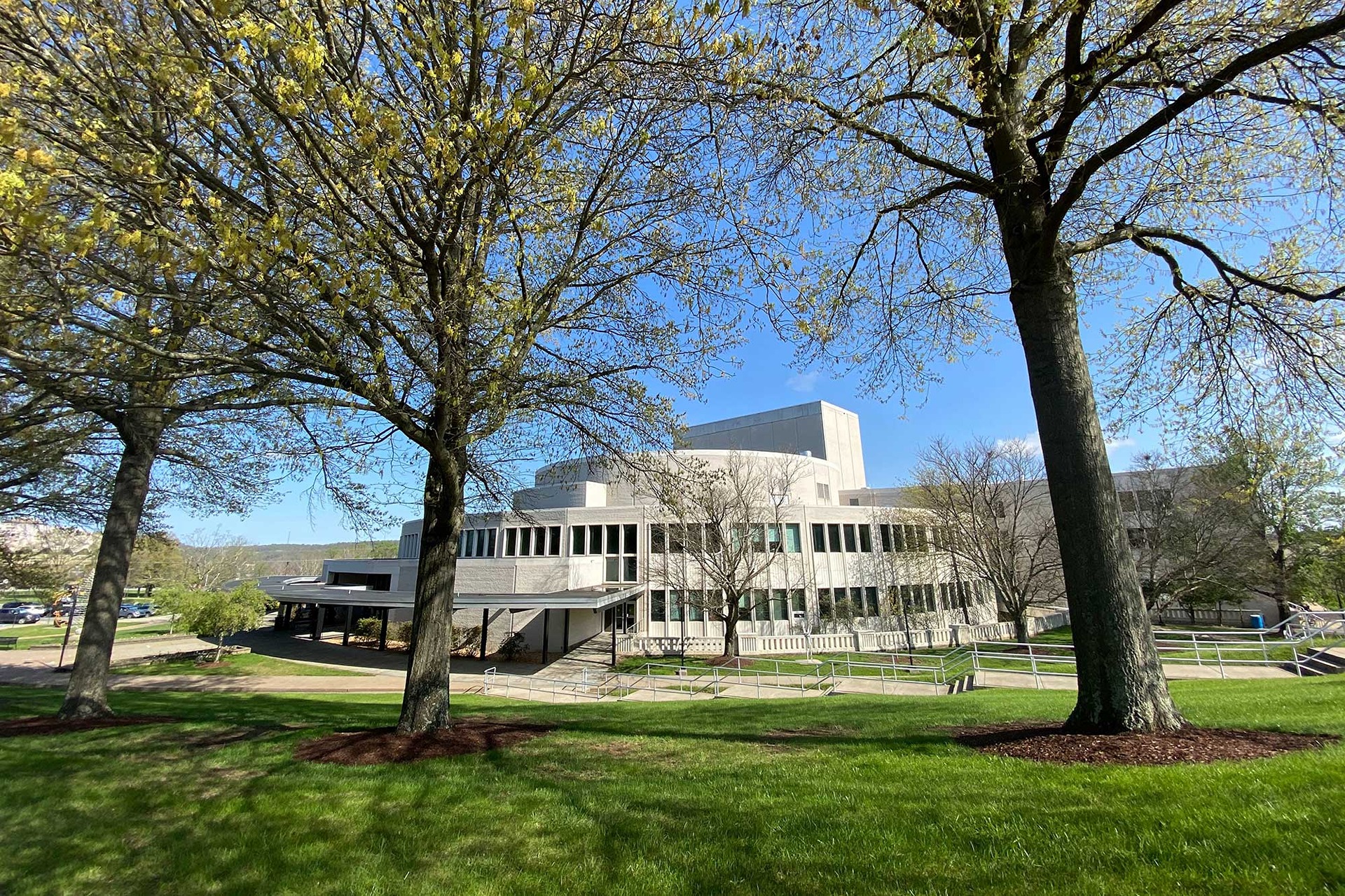
Canady Creative Arts Center
Virtual Tour
It’s the next best thing to being here. Virtually tour our campus and residence halls.
Student Life
You'll experience epic traditions, quality academics, and a supportive community that feels like home.
Visit
See WVU in person and start imagining life as a Mountaineer.
Admission Requirements
To be admitted to the Music Performance major, first-time freshmen must meet WVU's first-time freshman admission requirements. Interested in transferring? Review the transfer admission requirements.
Tuition and Aid
How much does Music Performance at WVU cost? And how can you save?
Tuition and Fees
Estimated rates are available on our tuition website. Anyone who is not a current West Virginia resident, including international students, will be charged non-resident rates.
Ways to Save
Beyond scholarships, here are other ways to reduce your cost of attending WVU.
Financial Aid
The most important step toward funding your future with financial aid for the Music Performance, BM is submitting the Free Application for Federal Student Aid, or FAFSA.
Start at Another WVU Campus
You can start your career with WVU at another campus and transfer to WVU Morgantown.
Transfer Articulation Agreements
To simplify the transfer process, we have formal agreements with certain institutions. These agreements outline the courses you should take to prepare for transferring to WVU.
Review the full list of transfer articulation agreements to see if your institution is listed.
Request Info
Want to know more about Music Performance at WVU? Fill out our request form to receive more information.
Visit
Experiencing campus is the best way to see if WVU is the right fit. Choose from in-person and virtual options.