

Music Education, BM
As a Music Education student, you can expect a wide range of musical experiences, including instrumental and vocal performance, composition, conducting, and music technology. You’ll blend academic coursework with teaching experiences in University and public school classrooms to build confidence and refine your instructional techniques.
When you graduate, you’ll leave with a comprehensive understanding of music education, as well as these marketable skills:
- High level of musicianship
- Ability to teach students of all ages and abilities effectively
- Interpersonal skills
- Knowledge of current music education trends
- Oral and written communication skills
Acceptance to the Music Education Program requires admission to WVU and a successful audition and interview. Your audition also may qualify you for a School of Music scholarship.
Your Degree Plan
The Music Education plan of study consists of courses in these areas:
- General Education: Courses that balance professional specialization in music, such as writing, humanities, and fine arts, social and behavioral sciences, and natural sciences and mathematics.
- Musicianship: Courses that increase skills as a musician, such as principal performance studies, ensembles, voice, piano, music theory (aural and written), music listening, music history, conducting and arranging.
- Education: Courses that develop knowledge of teaching, learning and schools, including Introduction to Music Education and educational psychology.
- Pedagogy: Courses that develop skills as a teacher and performer of various secondary instruments, such as woodwinds, recorder, brass, guitar, strings, percussion, and voice.
- Methods: Courses that develop skills as a teacher in each of the 3 major areas of Music Education (instrumental music, vocal music, and general music), including clinical experiences.
- Capstone Experience: A 2-week preparatory seminar and a 14-week supervised teaching internship in K-12 schools requiring successful integration of the knowledge and demonstration of the skills acquired throughout the undergraduate experience.
Double Major in Music Education and Music Performance
An optional program can be arranged for students who wish to pursue majors in both Performance and Music Education. Admission to this rigorous program is by written consent of the coordinator of the appropriate performance area and the coordinator of Music Education after you have completed 2 semesters.
Honors
Expand your curiosity and enhance your curriculum through the WVU Honors College. Two programs are offered: Honors Foundations and Honors in Action.
The WVU Difference
What sets this program apart?
- 100% employment rate for recent graduates.
- The only program in the region to offer courses in instrument repair.
- Real-world experience in K-12 schools beginning sophomore year.
- WVU is fully accredited by the Higher Learning Commission.
- The WVU School of Music is fully accredited by the National Association of Schools of Music.
- WVU is accredited by the Council for the Accreditation of Educator Preparation.
Learn by Doing
Get involved outside the classroom.
View all of the student organizations you can join.
Careers and Outcomes
How does this degree prepare students for a career?
Elementary School Teachers, Except Special Education
Median Salary: $62,340
Possible Job Titles: Classroom Teacher, Elementary School Teacher, Elementary Teacher, Teacher
Middle School Teachers
Median Salary: $62,970
Possible Job Titles: Language Arts Teacher (LA Teacher), Math Teacher (Mathematics Teacher), Science Teacher Teacher
Secondary School Teachers
Median Salary: $64,580
Possible Job Titles: English Teacher, Mathematics Instructor (Math Instructor), Social Studies Teacher, Teacher
Music Directors and Composers
Median Salary: $63,670
Possible Job Titles: Choir Director, Conductor, Music Composer, Music Director
Musicians and Singers
Possible Job Titles: Choir Member, Musician, Singer, Violinist
Further your education
Your undergraduate degree in Music Education prepares you to enter the profession as a music educator, or to elevate your expertise by pursuing advanced studies in music. This versatile degree opens doors to a diverse range of graduate study options tailored to your interests and career goals.
Consider WVU’s graduate programs, which offer a wealth of opportunities for advanced study and professional growth:
- MM in Music Education
- MM in Performance
- MM in Conducting (Band, Choral, or Orchestral)
- MA in Musicology, Music Theory, or Music Business and Industry (Online)
Places and Spaces
See where you’ll study, research, and create.
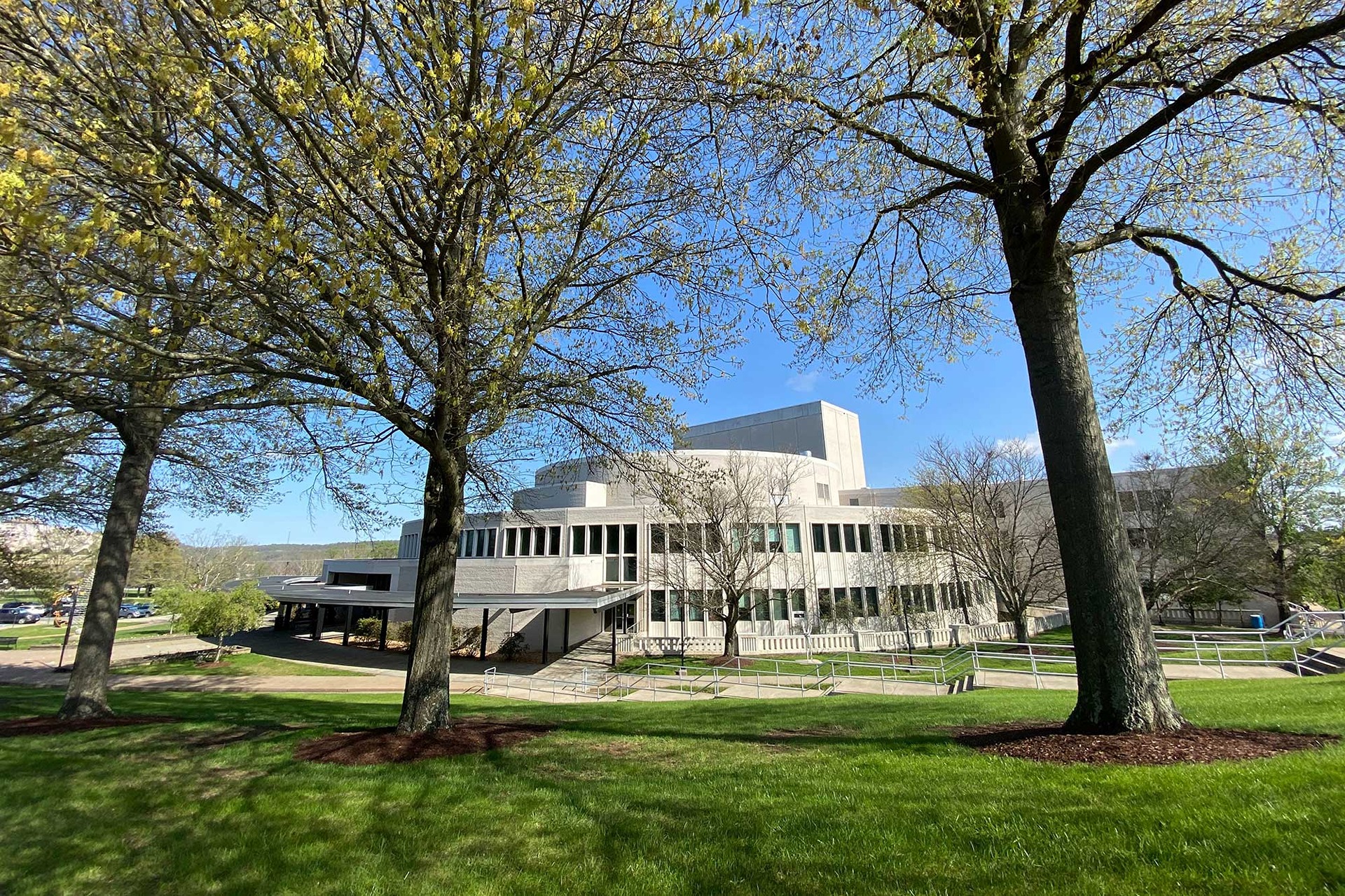
Canady Creative Arts Center
Virtual Tour
It’s the next best thing to being here. Virtually tour our campus and residence halls.
Student Life
You'll experience epic traditions, quality academics, and a supportive community that feels like home.
Visit
See WVU in person and start imagining life as a Mountaineer.
Admission Requirements
To be admitted to the Music Education major, first-time freshmen must meet WVU's first-time freshman admission requirements. Interested in transferring? Review the transfer admission requirements.
Tuition and Aid
How much does Music Education at WVU cost? And how can you save?
Tuition and Fees
Estimated rates are available on our tuition website. Anyone who is not a current West Virginia resident, including international students, will be charged non-resident rates.
Ways to Save
Beyond scholarships, here are other ways to reduce your cost of attending WVU.
Financial Aid
The most important step toward funding your future with financial aid for the Music Education, BM is submitting the Free Application for Federal Student Aid, or FAFSA.
Start at Another WVU Campus
You can start your career with WVU at another campus and transfer to WVU Morgantown.
Transfer Articulation Agreements
To simplify the transfer process, we have formal agreements with certain institutions. These agreements outline the courses you should take to prepare for transferring to WVU.
Review the full list of transfer articulation agreements to see if your institution is listed.
Request Info
Want to know more about Music Education at WVU? Fill out our request form to receive more information.
Visit
Experiencing campus is the best way to see if WVU is the right fit. Choose from in-person and virtual options.