
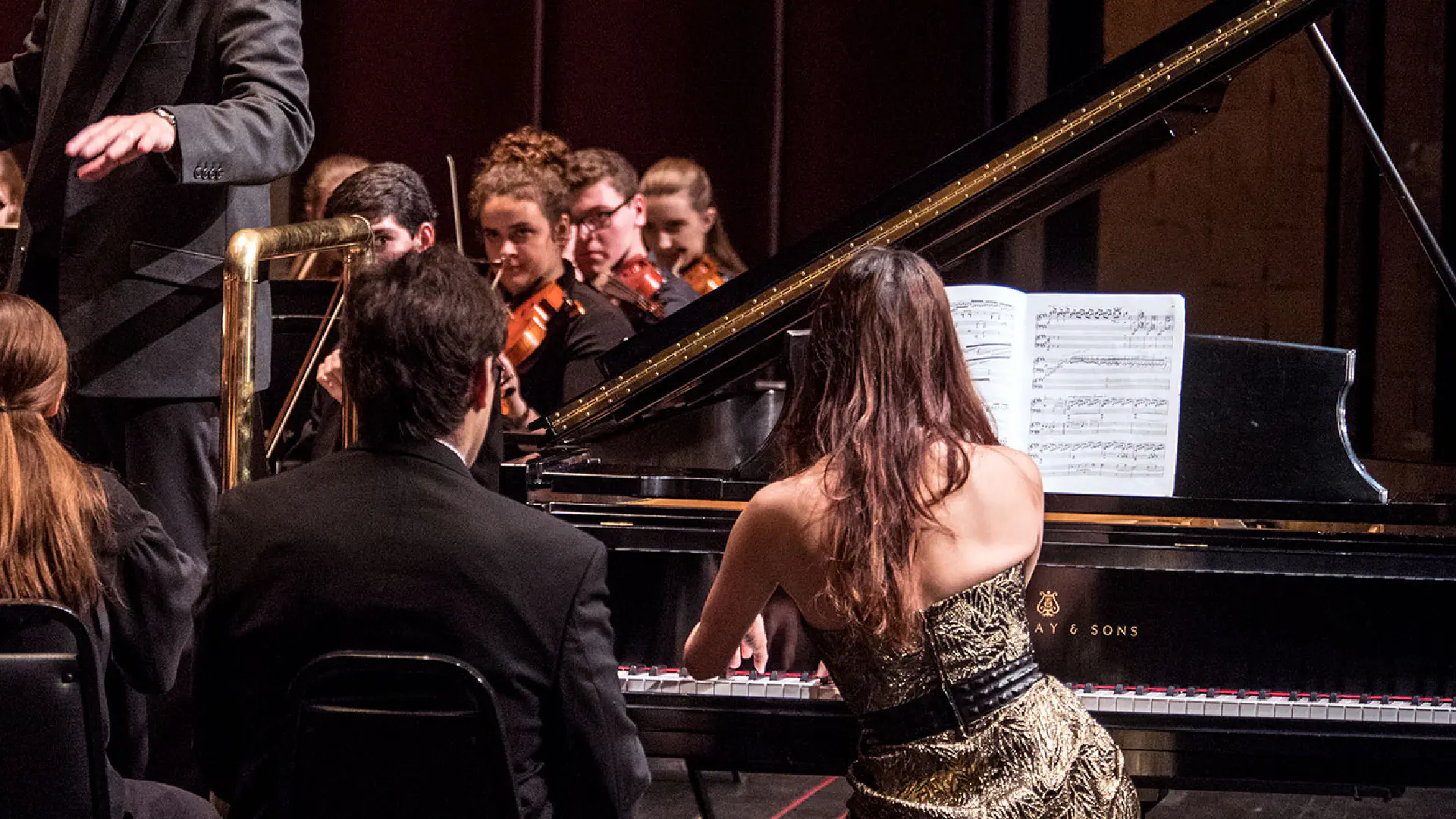
Music Composition, BM
As a Music Composition student, you’ll develop essential skills in:
- Music editing, copying, arranging, and transcribing to transform musical ideas into polished compositions.
- Organizing, promoting and managing public events to showcase your work and connect with audiences.
- Entrepreneurial aptitude to share your compositions with the world and forge your own path in the music industry.
- Audio engineering and recording studio management to bring your compositions to life with professional quality.
- Computer technology competency to harness the power of technology to enhance your compositions.
At WVU, we provide the platform for you to explore your passion for composition and develop the skills needed to thrive in today’s music landscape.
Acceptance to the Music Composition Program requires admission to WVU and a successful audition and portfolio review. Your audition also may qualify you for a School of Music scholarship.
Your Degree Plan
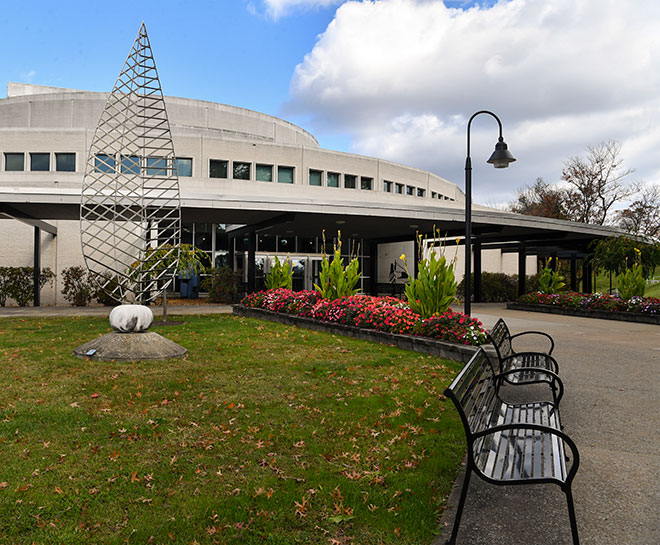
Our program is designed to equip you with the skills and knowledge to thrive as a composer in both acoustic and electronic styles. Your coursework will include:
- Private Composition Lessons: Composing is a combination of science and art. You’ll learn the science of counterpoint, harmony, form, texture, and melody. Your imagination takes craft and transforms it into beautiful artistry.
- Music Performance: You’ll continue studying your principal instrument or voice and perform in various musical ensembles throughout your undergraduate degree.
- Piano Skills: Even if piano isn’t your primary instrument, greater study of it will add depth to your musical toolkit and opens doors to new creative possibilities.
- Music Theory and Music History: Your required coursework will give you a solid foundation for placing your own musical creations in context.
- Capstone: Your capstone project will center on composition, allowing you to demonstrate your creative vision and artistic voice.
Music in World Cultures
MUSC 116
Examination of music from various cultures (e.g., Native America, South India, Japan, Africa) within their cultural contexts.
Introduction to Digital Audio Workstation
MUSC 336
Principles of Digital Audio Workstations. Students will be introduced to the key audio and MIDI concepts required to complete a DAW project from set-up to final mix-down.
Experiential Music Ensemble
MUSC 358
Small music ensemble that will explore a variety of global music. (May be repeated for a maximum of 8 credit hours.)
Popular Music Analysis Seminar
MUSC 364
This course examines the use of music in film and video games. Students analyze film and video game music with techniques learned in previous levels of theory and new techniques specific to this genre. They also utilize composition to get a hands-on understanding of how media composition works.
Songwriting: Composition and Analysis
MUSC 365
Students learn the craft of songwriting in this course. Students analyze selected songs from the 1700s to the present to understand the way the process of songwriting developed. They also study the ways in which the natural accents of speech and poetry line up with musical accents, learning how to effectively set text to music.
Honors
Expand your curiosity and enhance your curriculum through the WVU Honors College. Two programs are offered: Honors Foundations and Honors in Action.
The WVU Difference
What sets this program apart?
- Collaborate with students and faculty in the Game Design and Interactive Media Program.
- Hear your compositions come to life through performances by fellow students and ensembles.
- Access scores and compositions by Emmy and Grammy award-winning composer Jay Chattaway, a WVU alumnus best known for the Star Trek television series.
- Weekly private lessons for personalized guidance and mentorship from experienced faculty.
- World music exploration broadens your perspective and compositional palette.
- Guest artists, travel opportunities, conferences, and other professional experiences enrich your experience.
- Partnerships with regional arts organizations and international universities expand your network and perspective.
- Outreach opportunities to share your passion with diverse audiences.
- The Creative Consultants program, which pairs you with accomplished alumni mentors for invaluable insights, advice, and support.
- State-of-the-art facilities, like the Lyell B. Clay Concert Theatre and Bloch Learning and Performance Hall, are ideal for rehearsals, performances, and creative exploration.
Learn by Doing
Get involved outside the classroom.
- Library Resources: Explore a vast collection of printed and sound music resources at the Evansdale Library, including CD and LP collections. You’ll also have access to streaming music databases like Naxos Music Library, Met Opera on Demand, and Smithsonian Global Sound.
- State-of-the-Art Facilities: Canady Creative Arts Center rehearsal spaces, practice rooms, classrooms, and an electronic music laboratory provide an optimal environment for creativity and innovation.
- Private Lessons: Receive personalized instruction and guidance through private lessons in composition and on your major instrument, tailored to your individual goals and aspirations.
- Performance Opportunities: Showcase your musical talents and compositions through a wide variety of performance opportunities, including large ensembles, such as band, orchestra, choral, jazz, and opera, as well as smaller chamber ensembles spanning various musical genres.
View all of the student organizations you can join.
- Project Management and Leadership: Teamwork and collaboration, conflict resolution, decision making, budgeting, situational adjustment, attention to detail, accountability, and responsibility
- Communication: Ability to express an abstract idea jargon-free, effective/persuasive oral and written communication, public speaking, teaching/training, reaching diverse audiences
- Analytical and Critical Thinking: Multi-tasking, time management, data analysis, organizational skills, critical thinking and problem solving, collecting, analyzing and interpreting information, pattern recognition
- Personal and Emotional: Creativity, resilience/failure/open to constructive criticism, interpersonal skills, resourcefulness, empathy, adaptability, positivity, self-awareness, self-discipline, ability to listen well, flexibility, reflectiveness, emotional intelligence, patience/persistence/perseverance
Careers and Outcomes
How does this degree prepare students for a career?
Music Directors and Composers
Median Salary: $63,670
Possible Job Titles: Choir Director, Conductor, Music Composer, Music Director
Musicians and Singers
Possible Job Titles: Choir Member, Musician, Singer, Violinist
Self-Enrichment Teachers
Median Salary: $45,590
Possible Job Titles: Dance Instructor, Instructor, Martial Arts Instructor, Teacher
Freelance opportunities
Our graduates have the skills and creativity to thrive in the competitive world. They often enter successful careers as freelance composers and arrangers, working with a wide range of musical groups and organizations.
Graduate studies
Many of our alumni choose to pursue graduate degrees in music composition. Whether you aspire to delve deeper into your craft, explore new musical techniques or refine your artistic voice, you’ll graduate with a solid foundation for advanced studies in composition.
WVU graduate programs to consider:
Places and Spaces
See where you’ll study, research, and create.
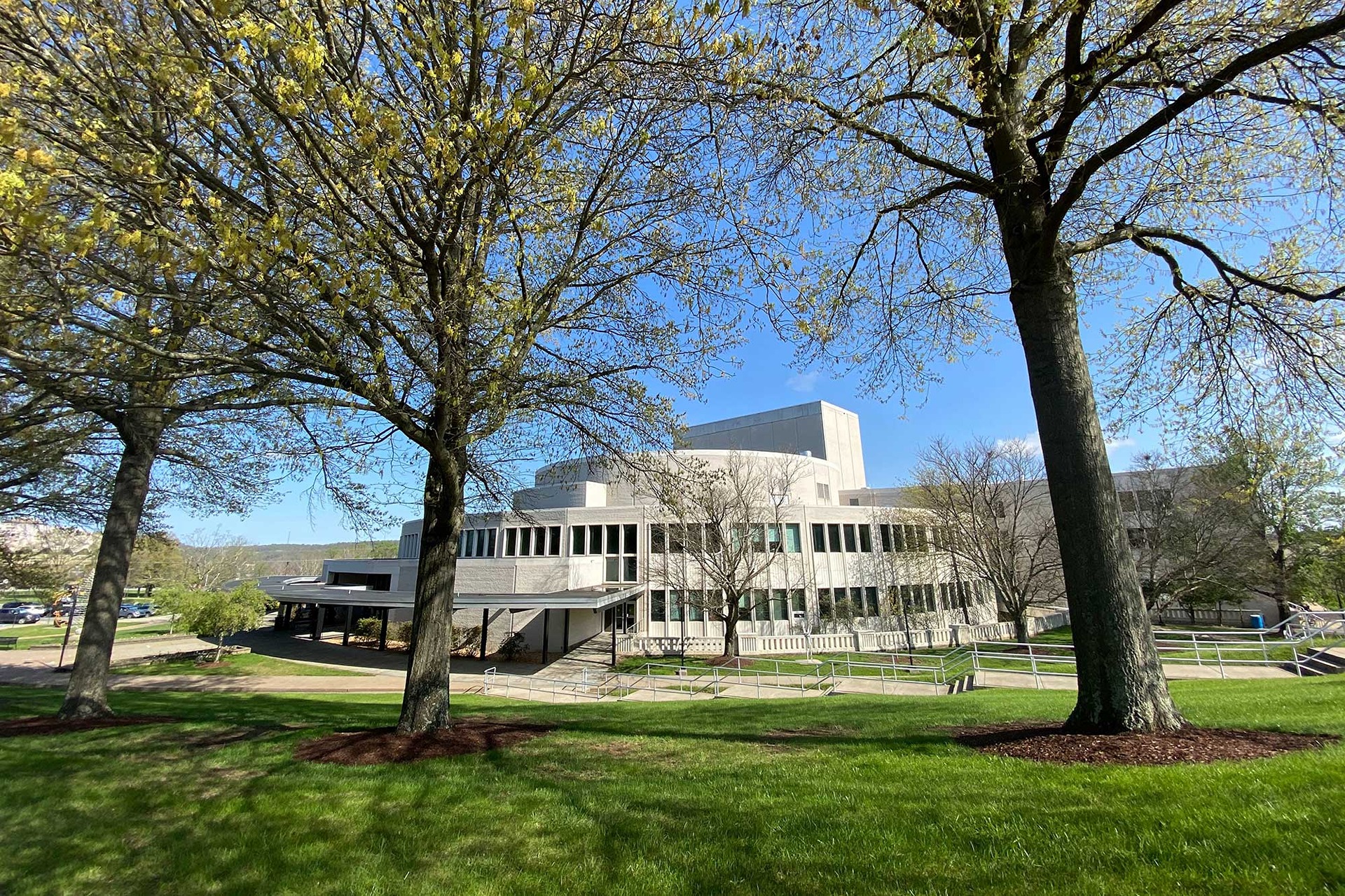
Canady Creative Arts Center
Virtual Tour
It’s the next best thing to being here. Virtually tour our campus and residence halls.
Student Life
You'll experience epic traditions, quality academics, and a supportive community that feels like home.
Visit
See WVU in person and start imagining life as a Mountaineer.
Admission Requirements
To be admitted to the Music Composition major, first-time freshmen must meet WVU's first-time freshman admission requirements. Interested in transferring? Review the transfer admission requirements.
Tuition and Aid
How much does Music Composition at WVU cost? And how can you save?
Tuition and Fees
Estimated rates are available on our tuition website. Anyone who is not a current West Virginia resident, including international students, will be charged non-resident rates.
Ways to Save
Beyond scholarships, here are other ways to reduce your cost of attending WVU.
Financial Aid
The most important step toward funding your future with financial aid for the Music Composition, BM is submitting the Free Application for Federal Student Aid, or FAFSA.
Start at Another WVU Campus
You can start your career with WVU at another campus and transfer to WVU Morgantown.
Transfer Articulation Agreements
To simplify the transfer process, we have formal agreements with certain institutions. These agreements outline the courses you should take to prepare for transferring to WVU.
Review the full list of transfer articulation agreements to see if your institution is listed.
Request Info
Want to know more about Music Composition at WVU? Fill out our request form to receive more information.
Visit
Experiencing campus is the best way to see if WVU is the right fit. Choose from in-person and virtual options.