
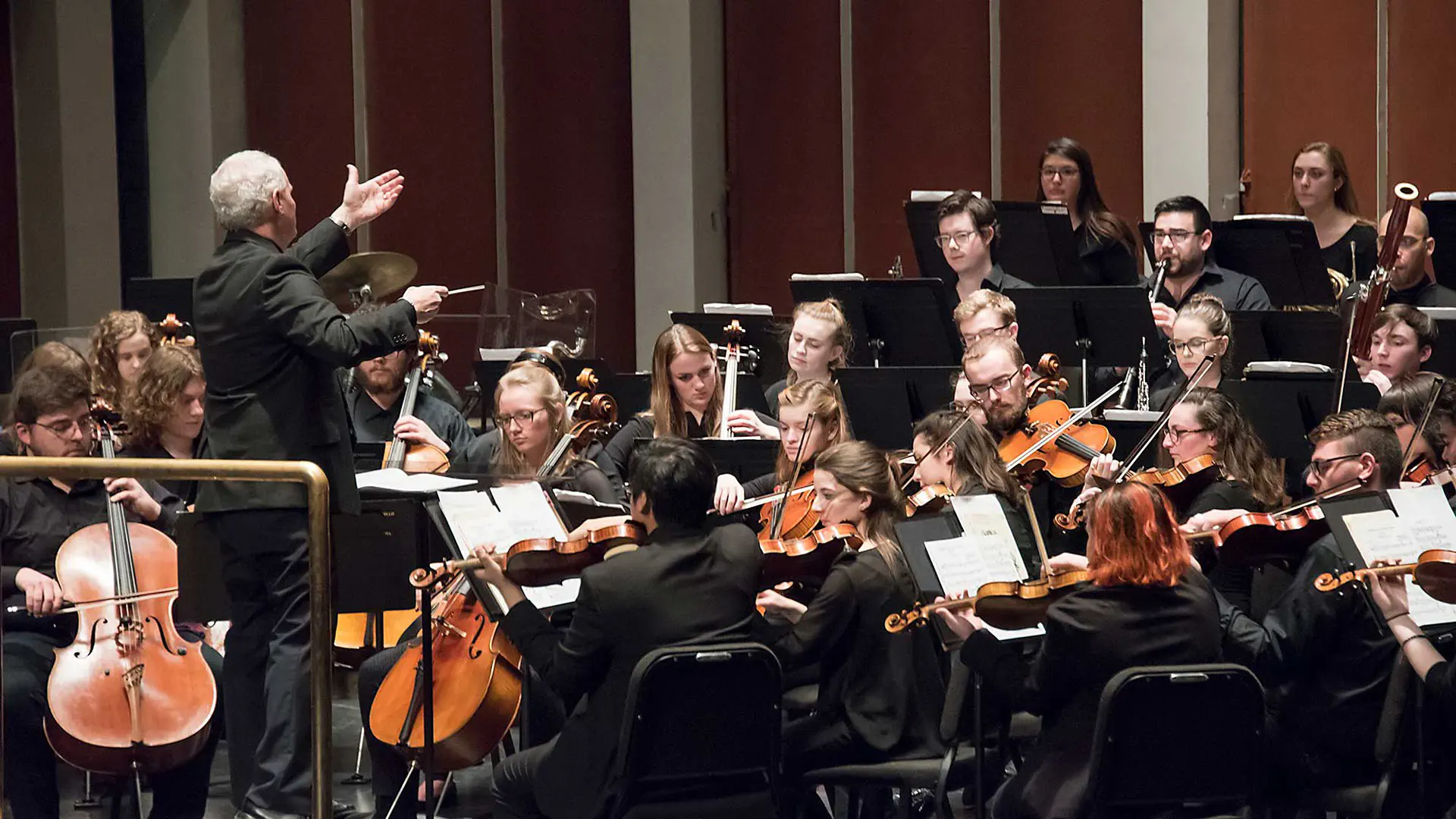
Music, BA
You’ll have the flexibility to pursue all of your academic passions. Many BA Music students choose to complement their music studies with an additional major or minor, while others explore WVU’s variety of liberal arts courses. With this degree, you’ll gain valuable skills that are highly sought after both within and outside of the arts industry.
BA Marketable Skills:
- Oral and written communication
- Teamwork
- Collecting, analyzing and interpreting information
- Self-management in projects
- Excellent memory capability
Acceptance to the Music Program requires admission to WVU and a successful audition. Your audition also may qualify you for a School of Music scholarship.
Your Degree Plan

Music in World Cultures
MUSC 116
Examination of music from various cultures (e.g., Native America, South India, Japan, Africa) within their cultural contexts.
Hip Hop Nation: Musical and Conceptual Foundations of a Cultural Revolution
MUSC 151
In this course, we will investigate the origins of Hip Hop music and culture. We will explore the 5 Elements of Hip Hop (DJ'ing, emceeing, b-boying/b-girling, writing/graffiti, and knowing). We will investigate Hip Hop through multiple critical lenses as a musical genre, but also as an important and lasting socio-cultural phenomenon.
Appalachian Music Ensemble
MUSC 363
Ensemble-based exploration of Appalachian musical traditions.
Songwriting: Composition and Analysis
MUSC 365
Students learn the craft of songwriting in this course. Students analyze selected songs from the 1700s to the present to understand the way the process of songwriting developed. They also study the ways in which the natural accents of speech and poetry line up with musical accents, learning how to effectively set text to music.
Introduction to Music Industry
MUSC 410
Introductory overview of the music industry's history, business, technology, and law. Students will gain essential understanding and skills necessary for professional involvement and progress in the music industry.
Arts Administration
ART 315
This course provides a practical approach to understanding arts management in not- for-profit organizations. Topics include facilities management, leadership, programming, audience development, board relations, and fundraising.
Capstone Experience
MUSC 492
The capstone experience requires you to combine performance, research and verbal communication. Recent students have conducted original research and offered performances of a wide range of musical compositions.
Honors
Expand your curiosity and enhance your curriculum through the WVU Honors College. Two programs are offered: Honors Foundations and Honors in Action.
The WVU Difference
What sets this program apart?
- Opportunities to collaborate with WVU music faculty on cutting-edge research projects.
- Diverse performance opportunities in your primary field and other musical traditions.
- Personalized advising to help you craft a customized path for your specific career goals.
- The Creative Consultants program, which pairs you with accomplished alumni mentors for invaluable insights, advice, and support.
Learn by Doing
Get involved outside the classroom.
- Project Management and Leadership: Teamwork and collaboration, conflict resolution, decision making, budgeting, situational adjustment, attention to detail, accountability, and responsibility
- Communication: Ability to express an abstract idea jargon-free, effective/persuasive oral and written communication, public speaking, teaching/training, reaching diverse audiences
- Analytical and Critical Thinking: Multi-tasking, time management, data analysis, organizational skills, critical thinking and problem solving, collecting, analyzing and interpreting information, pattern recognition
- Personal and Emotional: Creativity, resilience/failure/open to constructive criticism, interpersonal skills, resourcefulness, empathy, adaptability, positivity, self-awareness, self-discipline, ability to listen well, flexibility, reflectiveness, emotional intelligence, patience/persistence/perseverance
Careers and Outcomes
How does this degree prepare students for a career?
Music Directors and Composers
Median Salary: $63,670
Possible Job Titles: Choir Director, Conductor, Music Composer, Music Director
Musicians and Singers
Possible Job Titles: Choir Member, Musician, Singer, Violinist
Meeting, Convention, and Event Planners
Has a Bright Outlook
Median Salary: $59,440
Possible Job Titles: Conference Planning Manager, Conference Services Manager, Convention Services Manager (CSM), Events Manager
Historians
Has a Bright Outlook
May Require Graduate Degree
Median Salary: $74,050
Possible Job Titles: Historian, Historic Sites Registrar, Research Associate, Researcher
Technical Writers
Median Salary: $91,670
Possible Job Titles: Documentation Specialist, Information Developer, Technical Communicator, Technical Writer
Musical Instrument Repairers and Tuners
Median Salary: $45,320
Possible Job Titles: Banjo Repair Person, Luthier, Piano Technician, Piano Tuner
Career options
Critical thinking. Creativity. Interpretation. The skills you develop in our BA in Music degree prepare you for a wide range of professional fields, within the fine arts and beyond.
With that breadth, you can explore a variety of roles after graduation. Liberal arts graduates go on to work in numerous industries, including education, business, management, and sales, according to the US Bureau of Labor Statistics.
Graduate school options
Students who graduate with the BA in Music enter graduate school in musicology/ethnomusicology, music theory, music performance, and music education.
Recent graduates have enrolled in master’s and doctoral programs in a wide range of music and related fields at institutions such as the Ohio State University, the University of North Carolina at Chapel Hill, and the University of Oxford.
FAQs
Common questions and answers about Music.
Yes, all prospective students in the WVU School of Music are expected to audition. We believe that auditions provide us with valuable insights into your musical abilities and potential, allowing us to ensure that our program is the right fit for you.
Faculty members make music scholarship recommendations based on your audition.
Places and Spaces
See where you’ll study, research, and create.
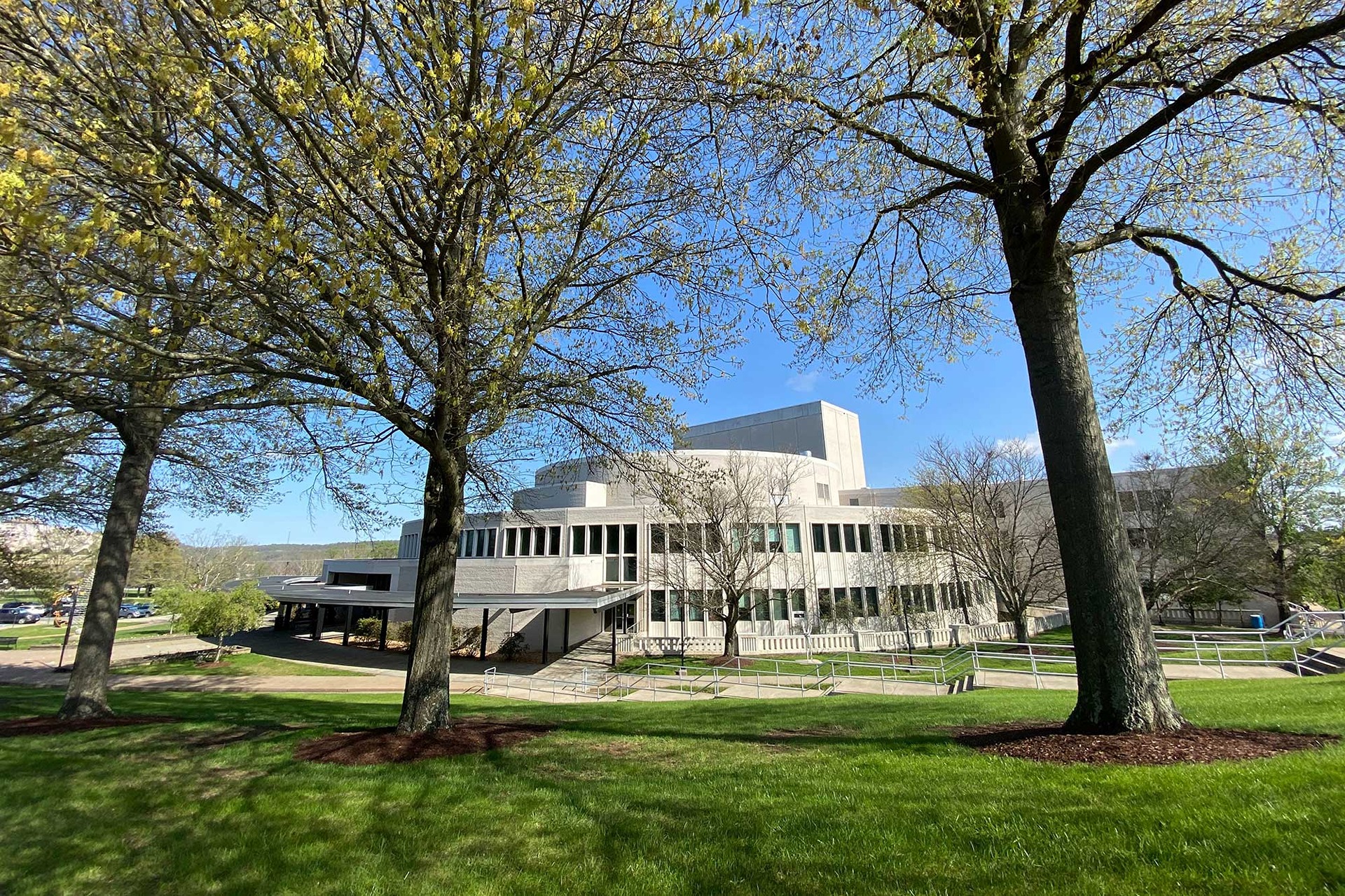
Canady Creative Arts Center
Virtual Tour
It’s the next best thing to being here. Virtually tour our campus and residence halls.
Student Life
You'll experience epic traditions, quality academics, and a supportive community that feels like home.
Visit
See WVU in person and start imagining life as a Mountaineer.
Admission Requirements
To be admitted to the Music major, first-time freshmen must meet WVU's first-time freshman admission requirements. Interested in transferring? Review the transfer admission requirements.
Tuition and Aid
How much does Music at WVU cost? And how can you save?
Tuition and Fees
Estimated rates are available on our tuition website. Anyone who is not a current West Virginia resident, including international students, will be charged non-resident rates.
Ways to Save
Beyond scholarships, here are other ways to reduce your cost of attending WVU.
Financial Aid
The most important step toward funding your future with financial aid for the Music, BA is submitting the Free Application for Federal Student Aid, or FAFSA.
Start at Another WVU Campus
You can start your career with WVU at another campus and transfer to WVU Morgantown.
Transfer Articulation Agreements
To simplify the transfer process, we have formal agreements with certain institutions. These agreements outline the courses you should take to prepare for transferring to WVU.
Review the full list of transfer articulation agreements to see if your institution is listed.
Request Info
Want to know more about Music at WVU? Fill out our request form to receive more information.
Visit
Experiencing campus is the best way to see if WVU is the right fit. Choose from in-person and virtual options.