
Landscape Architecture, BSLA
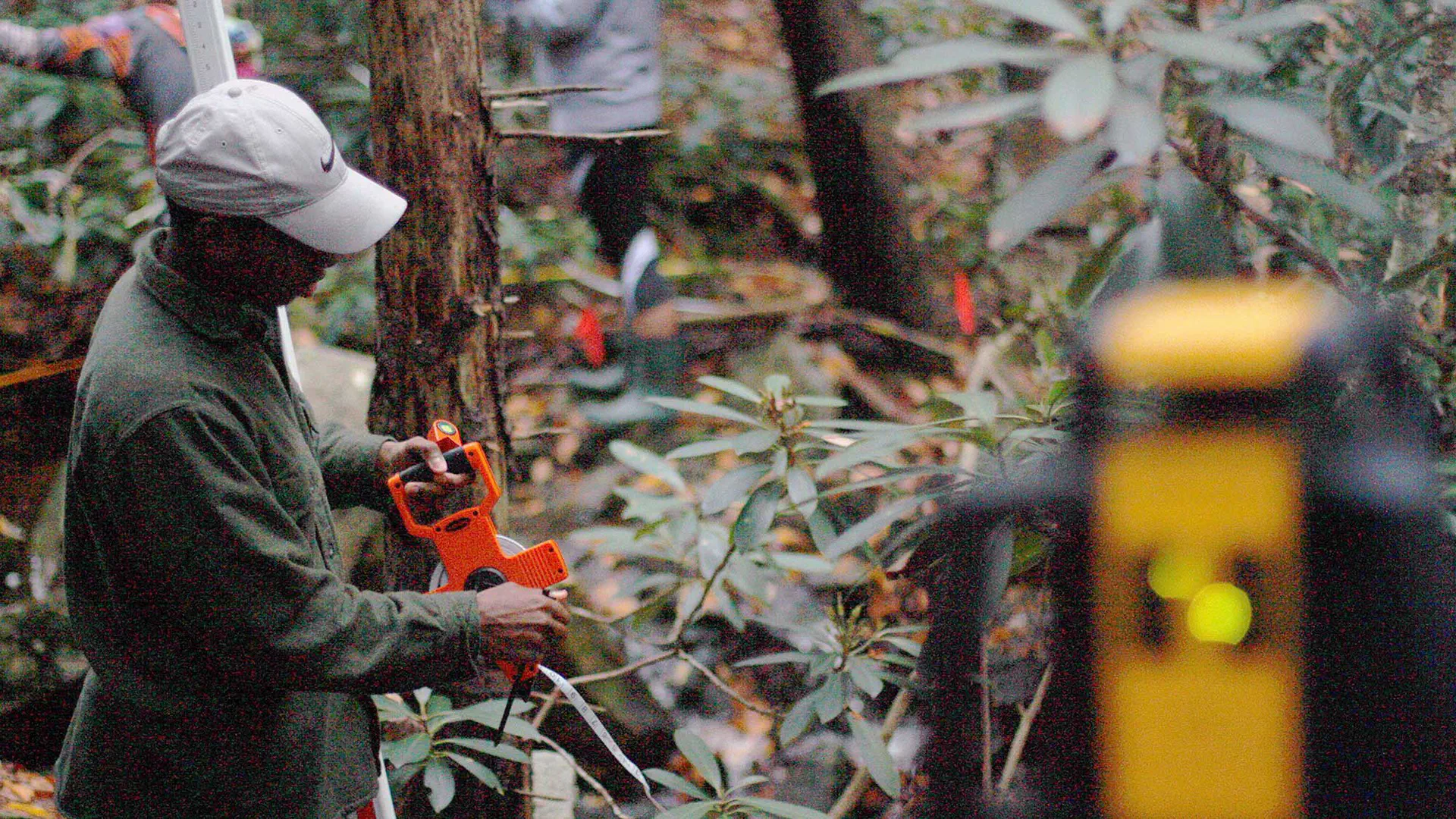
At WVU, the Landscape Architecture Program excels in teaching analytical planning, creative design, and technical construction knowledge grounded in community-led engagement.
Our 4-year program is unique, offering a blend of small class sizes and individual and group project-based learning that addresses contemporary subjects ranging from environmental sustainability to economic development. You’ll graduate with a degree that’s highly sought after by design consulting firms, governmental planning departments, construction firms, transportation planning agencies, and other employers.
For a peek inside our program, check out:
Student design and development plans for the Hill District in Pittsburgh
Community development in Montgomery, WV through the Fulcrum Project
@WVU_landarch on Instagram
Accreditation
The BSLA is accredited by the Landscape Architecture Accreditation Board of the American Society of Landscape Architects and leads to professional licensure in all 50 states and the District of Columbia.
Your Degree Plan
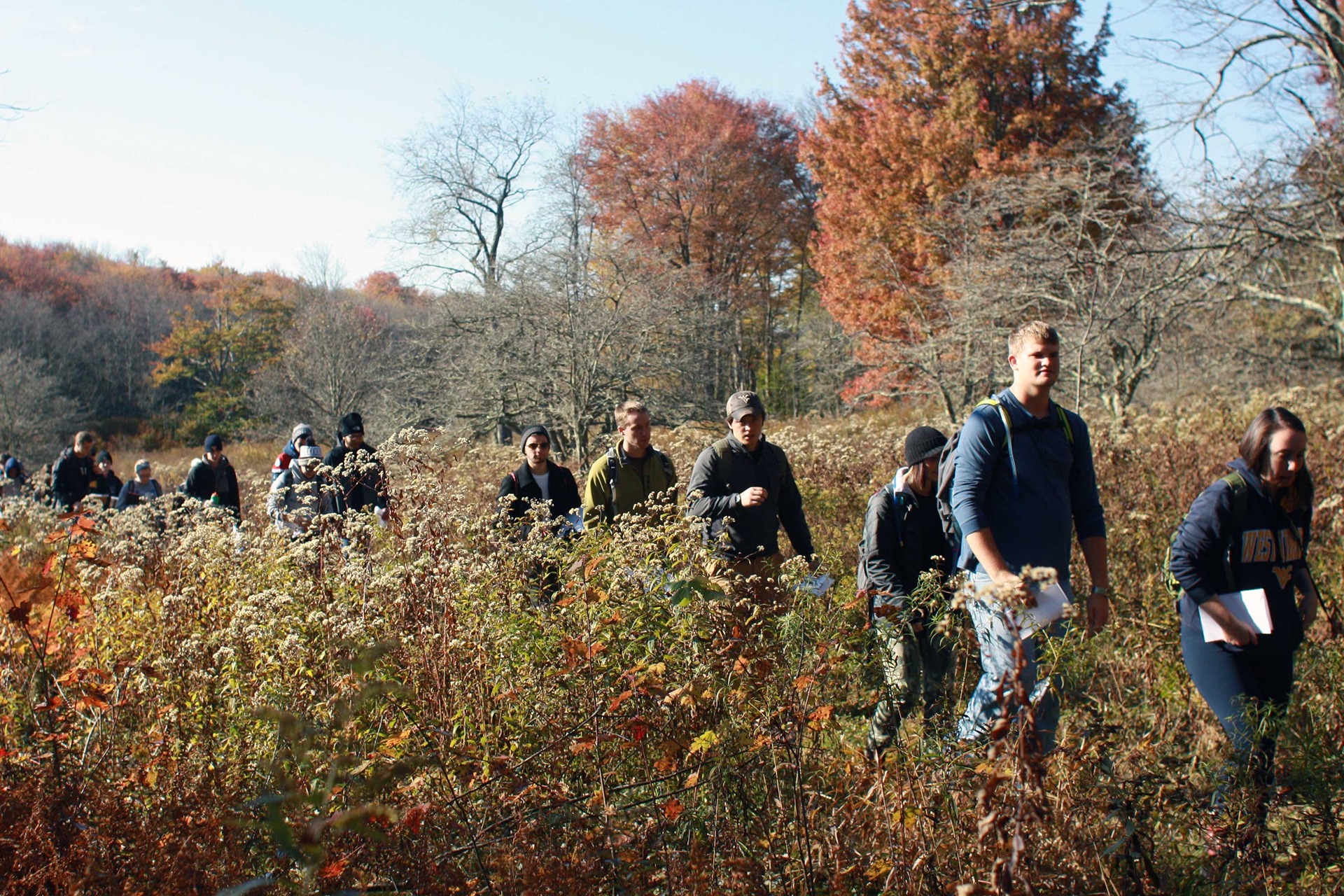
The Landscape Architecture curriculum is an 8-semester studio sequence, with new students beginning in the fall. The program is divided into 4 distinct years of education:
- First year: Landscape architectural graphics and communication
- Second year: Site design in three dimensions, planting design, construction materials, grading, and an introduction to geographic information systems (GIS)
- Third year: Construction, including site engineering, stormwater management, native plants, and restoration ecology; GIS-driven site analysis and design solutions; and community-based design in West Virginia
- Fourth year: Large-scale urban and regional design strategies, and a semester-long comprehensive senior design project
Check the plan of study for the full list of required courses.
Student Outcomes
The graduation rate, defined as the percentage of freshmen that ultimately graduate from the program, has been 56% (4- and 6-year) for the cohort starting in Fall 2017, 52% (4-year) and 57% (6-year) for the Fall 2018 cohort, and 48% (4- and 6-year) for the 2019 cohort.
The retention rate, defined as the percentage of freshmen that return for their sophomore year, has been 72% for the cohort starting in 2019, 58% for the 2020 cohort, 68% for the 2021 cohort, 60% for the 2022 cohort, and 69% for the 2023 cohort.
From academic year 2019-2020 to academic year 2023-2024, 87 degrees were awarded for an average of 17.4 degrees per year.
The BSLA program regularly surveys graduates in order to get a picture of their employment status post-graduation. From academic year 2019-2020 to academic year 2023-2024, 25 alumni are working in private practice and 1 is employed in landscape horticulture and design-build practice. They correspond to 65.2% and 22.2% of the respondents respectively.
Landscape Construction Materials and Methods
LARC 231
A study of materials used in landscape architectural construction with emphasis on methods of construction and the preparation of construction drawings for design implementation.
Planting Design Studio
LARC 261S
Study of planting design theory and practice, including uses of plants in site and environmental design, planting design techniques and preparation of planting plans, construction details, and technical specifications.
Landscape Architectural Design 3 Studio
LARC 351S
Site-design problems dealing with complex environmental systems emphasizing rural and urban design. Projects are integrated with landscape architectural construction.
Natural Systems Design Studio
LARC 360S
Study of native and naturalized plants of this region and their ecological tolerances, importance to site analysis, and use in planting design. (2-day field trip required.)
Introduction to Urban Design Issues
LARC 466
Community analysis methods, city and small town planning and management of community growth. The course focus is on understanding community and urban design issues and growth management.
Honors
Expand your curiosity and enhance your curriculum through the WVU Honors College. Two programs are offered: Honors Foundations and Honors in Action.
The WVU Difference
What sets this program apart?
- Accredited by the Landscape Architecture Accreditation Board of the American Society of Landscape Architects.
- Complete your degree in 4 years, a year less than many other landscape architecture programs.
- Only professionally-accredited landscape architecture and environmental design program in West Virginia.
- Opportunities for hands-on experience in communities across the state and region.
- Seniors complete a semester-long capstone project.
- Distinctive learning experiences that emphasize Appalachian small community design issues and environmental restoration.
- Small-school environment with all the resources of a large university. You’ll benefit from 1-on-1 faculty interactions and develop a close relationship with your faculty and peers.
Learn by Doing
Get involved outside the classroom.
Community Engagement Lab
Takes students and faculty from multiple disciplines to work on design projects requested by West Virginia communities. Projects include development of post-industrial landscapes, downtown revitalization, building redevelopment, trail development, beautification, wayfinding, and agricultural projects like farmers markets.
Western Europe Study Abroad Trip
A 3-week, faculty-led trip to Belgium, France, and the Netherlands that focuses on landscape architecture and horticulture.
View all of the student organizations you can join.
- Graphic, verbal, and written communication skills
- Design development methods and processes
- Working collaboratively across disciplines
- Problem-solving and critical thinking
Careers and Outcomes
How does this degree prepare students for a career?
Landscape Architects
Median Salary: $79,660
Possible Job Titles: Golf Course Architect, Land Planner, Landscape Architect, Landscape Planner
Construction Managers
Has a Bright Outlook
Median Salary: $106,980
Possible Job Titles: Concrete Foreman, Construction Area Manager, Construction Manager, Construction Superintendent
Environmental Restoration Planners
Has a Bright Outlook
May Require Graduate Degree
Median Salary: $80,060
Possible Job Titles: Coastal and Estuary Specialist, Habitat Restoration Specialist, Marine Habitat Resources Specialist, Restoration Ecologist
Urban and Regional Planners
May Require Graduate Degree
Median Salary: $83,720
Possible Job Titles: Community Development Planner, Planner, Planning Consultant, Planning Technician
Employers who hire our grads
We’re known for producing very technically proficient landscape architecture graduates who are adept at site grading, stormwater management and construction. Our students get great jobs when they graduate and are known for hitting the ground running in the workplace.
Popular employers for recent grads:
- SWA
- GAI
- Sasaki
- McHale Landscape Design
- Gateway Engineering
- EDSA
- Design Workshop
- Merritt Chase
Our grads also work for the National Forest Service, National Park Service, and state and local equivalents of those agencies.
Potential job titles
Graduates typically enter the workforce as landscape designers.
After a few years in the field, most grads are working as:
- Landscape Architects
- Project Managers
- Principals and/or Partners
- Firm/Company Owners
- Regional/Urban/Campus Planners
Meet Your Community
The Landscape Architecture family will inspire you.
Peter Butler

Professional Highlights
- Professor of Landscape Architecture and Extension Specialist in Landscape Architecture
- Director, School of Design and Community Development
- Research interests: cultural landscape research and planning, community design process, industrial landscape reclamation and interpretation, and design studio pedagogy
Vaike Haas

Professional Highlights
- Associate Professor of Landscape Architecture
- Licensed landscape architect in state of West Virginia
- Research and creative scholarship interests: promoting social equity and diversity in public greenspace
- Fulbright Grantee – Tallinn, Estonia (2008-2009)
Elisabeth “Lisa” Orr

Professional Highlights
- Program Coordinator and Associate Professor of Landscape Architecture
- Licensed landscape architect
- Owner and principal of Radish Studio, a landscape architecture practice in Pittsburgh
- Research interests: cultural landscapes in Appalachia, particularly cemeteries in West Virginia
Stefania Staniscia

Professional Highlights
- Associate Professor of Landscape Architecture
- Registered architect and landscape architect in Italy
- Research interests: cultural and vernacular landscapes particularly in territories that have undergone social and environmental injustices
Judith Wasserman

Professional Highlights
- Professor of Landscape Architecture
- Elected member, Board of the Council of Educators in Landscape Architecture
- Research interests: design of urban environments for active use and health, California modernism in landscape architecture, and place-making for cultural meaning

"Landscape architecture excites me due to its ability to help those in need. At WVU, our Landscape Architecture Program presents us with excellent service-learning opportunities that allow us to further our education and skills while using design to help Appalachian communities."
Belle Irwin

"Design has always been my lifelong passion, and WVU has provided the perfect platform to explore it through the Landscape Architecture Program. My 4 years here have been incredibly fulfilling, allowing me to find lifelong friendships and dive deeper into both self-discovery and the expansive realm of landscape architecture."
Hayden Swain

"I came into landscape architecture almost accidentally. During a campus tour of WVU, my guide asked if anyone was interested in Landscape Architecture. I was only vaguely aware of the field at the time — yet the moment my guide brought me into the Landscape Architecture studio I realized that I had found a perfect way to blend my creativity and love for nature. I had found my calling, and the rest is history."
Jacob A. Burns, PLA
Landscape Architect Manager at GAI Consultant’s Community Solutions Group
BS, Landscape Architecture, 2013

"Three years into my career, I look back on what first attracted me to landscape architecture. It began with noticing the world around me and realizing that everything — from the tiniest blades of grass to the largest structures — reflect decisions made by someone. WVU’s Landscape Architecture program taught me how to channel that curiosity into understanding, design, problem-solving, and creating real-world impact on our environmental and man-made spaces. The program is intensive and hands-on, like a trade, while also creative and analytical, pushing you to think in new ways and communicate your ideas. Since graduating, I remain proud to have chosen landscape architecture and WVU. Graduates of this program, like me, have countless pathways — across AEC industries, environmental disciplines, and beyond — to build meaningful careers of their own."
Morgan Clutter
Project Manager and Landscape Designer at Design Workshop
BS, Landscape Architecture, 2022

"WVU’s Landscape Architecture program prepared me to be technically sound immediately out of school while giving me the tools to work with teams on consultants on projects around the world. I not only recommend WVU Landscape Architecture students to other consultants, I have created my 9-person landscape architecture team with all WVU Landscape Architecture graduates."
Jim Christie, PLA
Principal, Civil & Environmental Consultants, Inc.
BS, Landscape Architecture, 1998
FAQs
Common questions and answers about Landscape Architecture.
4 years. The curriculum requires a rigorous 8-semester studio sequence that begins in the fall of your 1st year.
Many landscape architecture programs take 5 years to complete. Our program saves you time and money by allowing you to finish an accredited, professional degree in only 4 years.
Places and Spaces
See where you’ll study, research, and create.

Landscape Architecture Studios
Virtual Tour
It’s the next best thing to being here. Virtually tour our campus and residence halls.
Student Life
You'll experience epic traditions, quality academics, and a supportive community that feels like home.
Visit
See WVU in person and start imagining life as a Mountaineer.
Admission Requirements
To be admitted to the Landscape Architecture major, first-time freshmen must meet WVU's first-time freshman admission requirements. Interested in transferring? Review the transfer admission requirements.
Tuition and Aid
How much does Landscape Architecture at WVU cost? And how can you save?
Tuition and Fees
Estimated rates are available on our tuition website. Anyone who is not a current West Virginia resident, including international students, will be charged non-resident rates.
Ways to Save
Beyond scholarships, here are other ways to reduce your cost of attending WVU.
Financial Aid
The most important step toward funding your future with financial aid for the Landscape Architecture, BSLA is submitting the Free Application for Federal Student Aid, or FAFSA.
Start at Another WVU Campus
You can start your career with WVU at another campus and transfer to WVU Morgantown.
Transfer Articulation Agreements
To simplify the transfer process, we have formal agreements with certain institutions. These agreements outline the courses you should take to prepare for transferring to WVU.
Review the full list of transfer articulation agreements to see if your institution is listed.
Request Info
Want to know more about Landscape Architecture at WVU? Fill out our request form to receive more information.
Visit
Experiencing campus is the best way to see if WVU is the right fit. Choose from in-person and virtual options.