
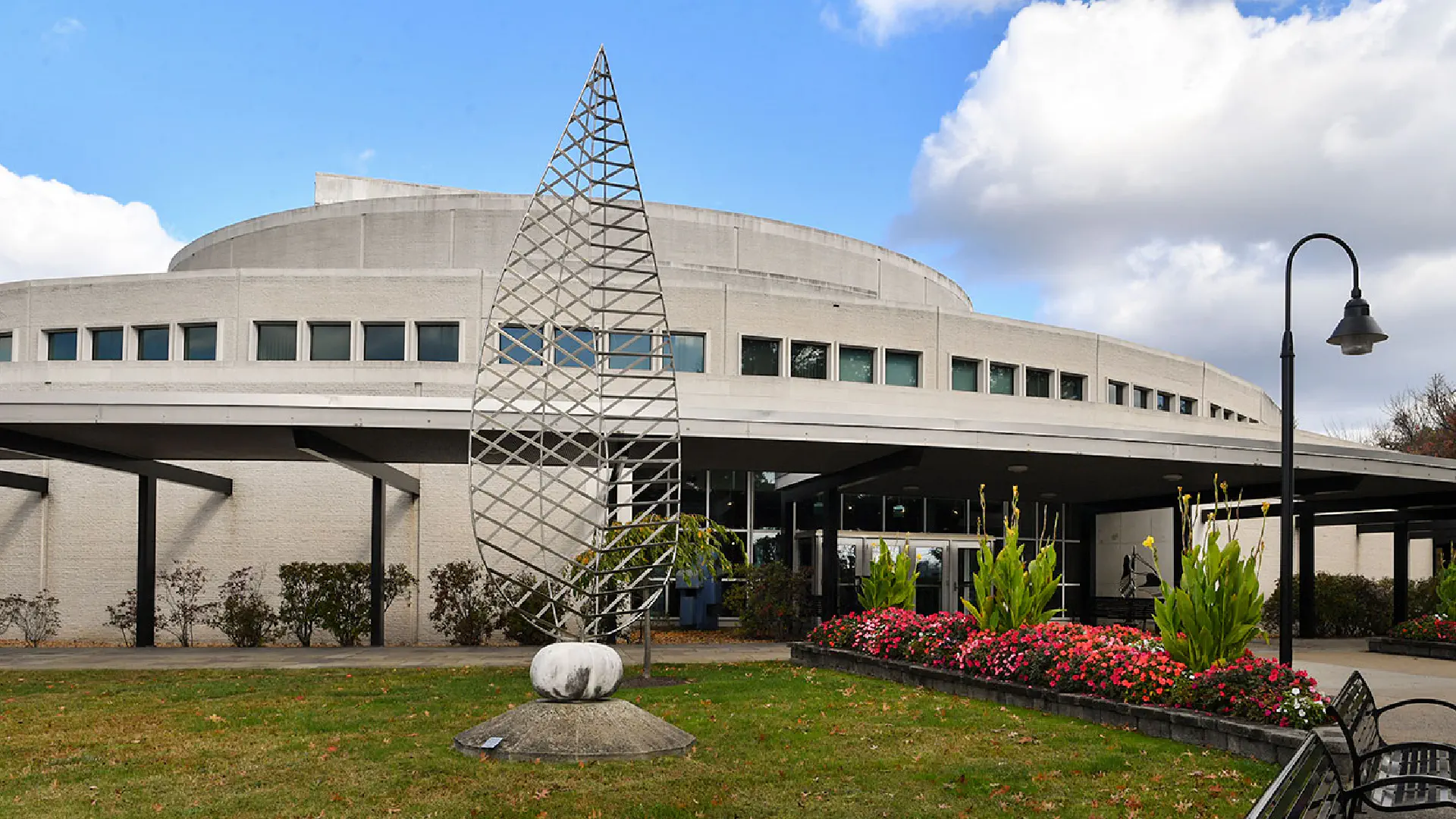
Journalism, MSJ
You may choose an area of emphasis in Advocacy and Public Interest Communication, Media Solutions and Innovation, Reporting and Writing, or Television.
Students have the opportunity to work with faculty on research projects and to participate in and help lead web-based, immersion journalism projects.
Your Degree Plan
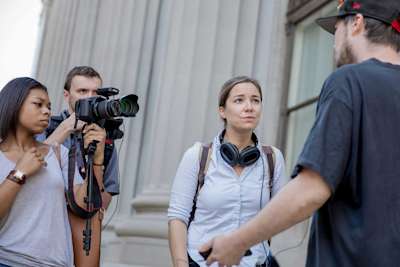
To graduate from WVU with a Master of Science in Journalism degree, you must complete a minimum of 30 semester hours of acceptable course credit. Students may take up to 6 credit hours toward a thesis or professional project. The full-time course load for MSJ students is 9 credit hours per semester. Typically, students complete their degrees in 2 years or less.
All MSJ students must successfully complete the following courses in this sequence:
- JRL 504 Mass Media and Society (3 hrs)
- JRL 520 Advanced Journalistic Writing and Research (3 hrs)
- JRL 528 Media Ethics and Law (3 hrs)
Nine additional credit hours should be taken in the Reed School of Media and Communications. Students may choose to pursue 1 of the optional areas of emphasis. All remaining credit hours may be taken outside of the School. Students should note that the majority of credits submitted for the degree must be in courses numbered 500 or above.
Coursework must be completed with a minimum grade point average of 2.75. The thesis and professional project are graded as S or U (satisfactory or unsatisfactory).
Except for thesis, professional project, and internship credit hours, no student will be permitted to take a course on a pass-fail or satisfactory-unsatisfactory grade basis without prior approval of the director of graduate studies.
Teaching/Research
The teaching/research track is generally a program for those who wish to pursue a PhD, to teach at the college/university level, and to conduct research in areas of mass communications.
Students in this track normally take research and theory courses both inside and outside the Reed School of Media and Communications, as well as social science courses. The program culminates in a thesis, which is a scholarly theoretical study of an important aspect of mass communications.
Professional
The professional track is designed primarily for those who wish to become excellent practitioners in some field of media and communications and who have less desire to teach or to become researchers. Students in the professional track normally take courses that will help them to become better practitioners.
Student may choose to pursue a professional project, which helps a student to extend their practical and theoretical knowledge about a given aspect of media and communications and should be a non-routine project on which the student could work as a professional.
Advocacy and Public Interest Communications
Media Solutions and Innovation
Reporting and Writing
Television
The WVU Difference
What sets this program apart?
- Very limited, highly competitive merit-based tuition waivers or graduate assistantships are available.
- Student media and organizations offer opportunities to engage in University activities and connect with other students and professionals nationwide.
- Through the 4+1 program, top-performing undergraduate students may enter the MSJ program in their senior year.
Learn by Doing
Get involved outside the classroom.
All students in the Master of Science in Journalism degree program must complete a thesis or professional project involving original work in the student’s area of interest or instead take coursework aimed toward preparing them for the profession and a comprehensive exam.
Students in the teaching-research track normally take research and theory courses both inside and outside of the Reed School of Media and Communications, statistics and social science courses. The student’s program culminates in a thesis, which is a scholarly study of an important aspect of mass communication.
Students in the professional track typically take communication and outside area courses that will help them become better practitioners. Students may produce a professional project, which helps them expand knowledge about a given aspect of mass communication and is a large-scale project on which the student might work as a professional.
There are many steps to writing a thesis, producing a professional project, or preparing for comprehensive exams. Students should consult with the School’s Associate Director/graduate liaison for additional details. Students select a Graduate Committee Chair, who will provide guidance on developing the initial idea into a preliminary thesis or professional project proposal. Once the proposal is complete, students must assemble a Graduate Committee, the governing body of the student’s thesis or project.
Careers and Outcomes
How does this degree prepare students for a career?
MSJ → PhD
Since the MSJ program was launched in 1961, a number of our graduates have earned doctoral degrees, many, if not most, through paid fellowships. Some have come home to teach at WVU, and others have gone on to make an impact on the future of the industry at institutions across the world, including, among others:
- DePaul University
- Michigan State University
- Ohio University
- Boise State University
- University of Hartford
Places and Spaces
See where you’ll study, research, and create.

Media Innovation Center
Virtual Tour
It’s the next best thing to being here. Virtually tour our campus and residence halls.
Student Life
You'll experience epic traditions, quality academics, and a supportive community that feels like home.
Visit
See WVU in person and start imagining life as a Mountaineer.
Requirements
To be eligible for admission into a graduate program at WVU an applicant must submit official, bachelor's degree transcripts from a regionally accredited institution and hold a GPA of at least 2.75. WVU operates decentralized admissions. Decentralized admissions allows each graduate program to set its own application requirements in addition to the University requirements.
Admission Requirements
Additional application considerations:
- GRE scores are optional for admission to the Applicants to the MSJ program. Students should have a cumulative undergraduate GPA of at least 2.75. However, a trajectory of increasing grades and/or professional experience will be considered in cases where the minimum GPA was not obtained.
- Writing sample: 3-5 examples of published work (academic research papers if not published). These may include journalistic products (for which links may be provided, if necessary) or a strong example of writing from undergraduate studies.
Applications that are incomplete or submitted after the deadline may be reviewed if openings remain.
International applicants must also submit the materials outlined by WVU Admissions.
Application Deadlines
Each graduate program sets their own terms for admission and application deadlines. Applicants should only apply for the admission term displayed below, although in some cases, applicants may be allowed to begin studies in the spring term.
Any questions regarding the application deadline should be directed to the graduate program representative, Associate Director Rita Colistra, rita.colistra@mail.wvu.edu.
- Fall term admission deadline: February 1 for first priority; however, applications may be received through May 1.
Request Info
Want to know more about Journalism at WVU? Fill out our request form to receive more information.
Visit
Experiencing campus is the best way to see if WVU is the right fit. Choose from in-person and virtual options.