
Journalism, BSJ
Journalism is a career and a calling. It’s telling real stories about real people that impact lives. Whether it is a breaking news story, a sports story or a documentary, journalists are charged with seeking the truth and making it known.
Through our flexible and hands-on curriculum, you will learn to write, report and produce content across media platforms; engage with a variety of audiences; and gain valuable real-world experience by working with actual clients.
In addition to our fundamental Journalism courses, you will also have the opportunity to take a variety of special topics courses, such as adventure travel writing, data journalism and visualization, health communications, magazine design, social media strategy, sports journalism, virtual and augmented reality, and environmental journalism.
Your Degree Plan
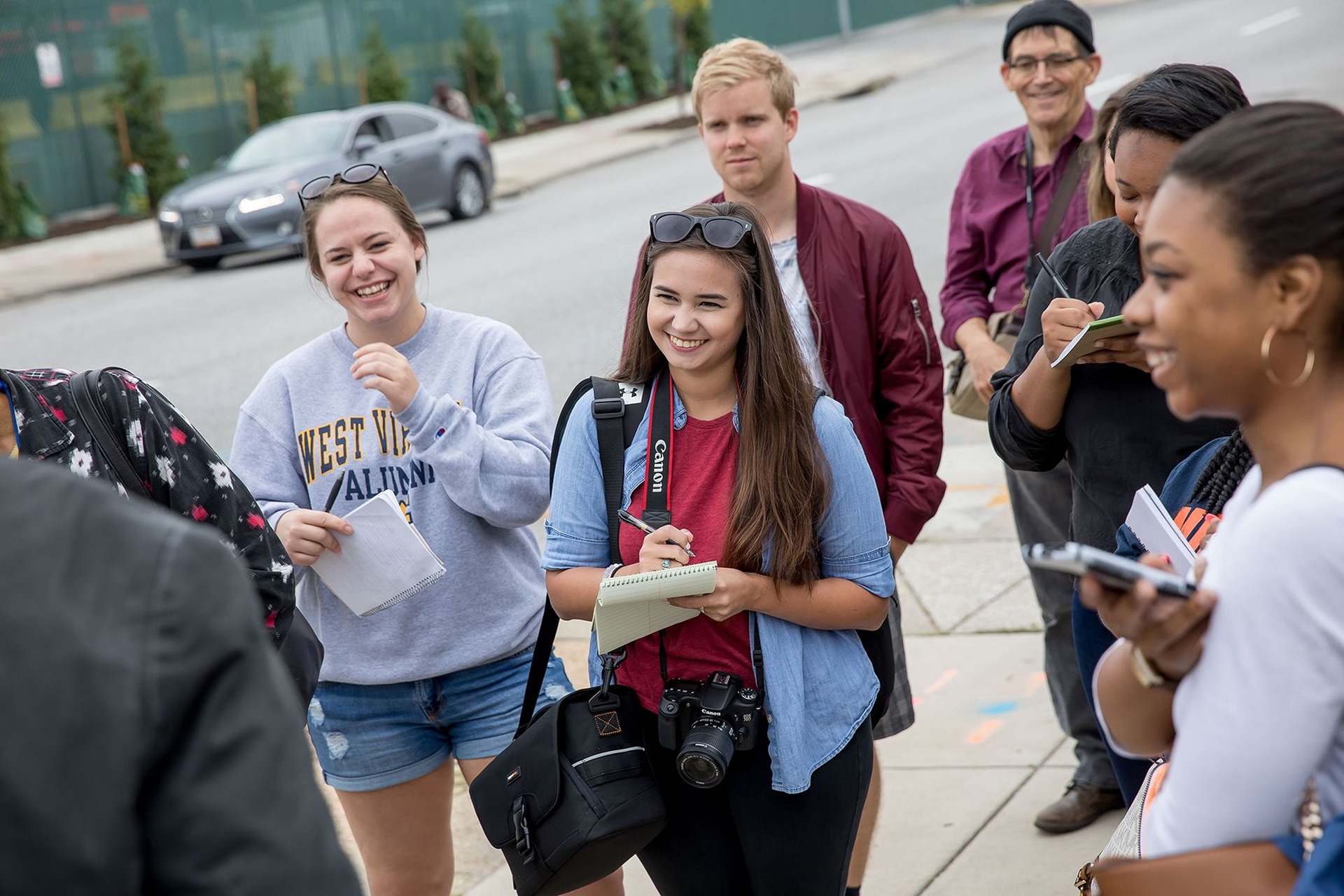
Journalism majors are required to take core courses in media writing, media tools and applications, media law and ethics, data and design, and beat reporting. You’ll choose from a variety of 1-hour skills courses like podcast producing or video editing, and select 2 journalism electives from courses including photojournalism, video reporting, and investigative reporting. By combining required courses and electives, you can specialize in a specific medium or design your own unique course of study.
All students must complete a capstone course in which they work in teams to produce multimedia stories and packages for a public audience. All coursework is done in the College’s modern facilities, giving students access to the latest digital technology and hands-on tools.
Journalism Major Requirements
Journalism majors earn a Bachelor of Science in Journalism degree upon successful completion of the program.
To graduate, all College of Media majors must complete a minimum of 120 credit hours. Journalism students complete:
- A media-focused 1st year seminar course
- General Education Foundations courses like English, math, and science
- Additional courses outside of the major including statistics, economics, and sociology
- Core media courses including writing and ethics
- Foundation courses in Journalism
- Journalism skills courses
- Journalism electives based on your interests
- Elective courses of your choosing
Introduction to Photojournalism
JRL 220
Learn basic techniques of journalistic photography, digital imaging, and editing. Students must have access to a film or digital camera.
Beat Reporting
JRL 318
Master the essentials of developing and covering a news beat. Students generate stories, cultivate sources, and discover their community.
Editing and Curation
JRL 319
Students develop the skills necessary to edit and design content for online and print media outlets.
Media Design
JRL 321
Media Ethics and Law
MDIA 328
An in-depth exploration of the complex ethical and legal media landscape, with an emphasis on key historical precedents, new cases and challenges related to emerging technology, digital disinformation, artificial intelligence, new problems in social media, and other current issues in journalism, public relations, and advertising.
Video and Audio News Writing
JRL 335
Gathering, researching, and evaluating facts; reporting and writing news for radio and television; editorial decision making and responsibility; broadcast news ethics.
Advanced Video Reporting and Producing
JRL 487
This course is run as an actual newsroom to teach students how to produce, gather, and report news. Students are assigned “beats,” and work individually and in teams to produce news for local broadcast. Students serve as the talent and/or technical crew during newscast tapings and learn how to promote their work and engage audiences via professional social media use.
Visual Storytelling for the Media
JRL 440
Develop practical and analytical skills in documentary production, including research, story development, scripting, and editing.
3+3 Law Program
This major is eligible for the 3+3 Law Degree Program that allows qualified students to earn a bachelor’s degree and law degree in 6 years instead of 7 years.
Accelerated BSJ/MSJ Program
Journalism offers the option to earn a bachelor’s and master’s degree in an accelerated time frame.
Honors
Expand your curiosity and enhance your curriculum through the WVU Honors College. Two programs are offered: Honors Foundations and Honors in Action.
The WVU Difference
What sets this program apart?
- Small class sizes with individualized attention.
- Robust student media with the award-winning Daily Athenaeum student newspaper and U92 student radio station.
- The Emmy award-winning “WVU News” student-produced broadcast news program streams on Pittsburgh’s KDKA-TV website and airs statewide on WV Public Broadcasting.
- PolitiFact partnership where professionals mentor students during live fact-checking events that are published on the org’s website.
- Funding available for study abroad and major market internships.
- WVU College of Creative Arts and Media allows for collaborations with Art and Design, Fashion Design and Merchandising, Music, and Theatre and Dance.
- One of only 115 journalism/communication programs accredited worldwide by the Accrediting Council on Education in Journalism and Mass Communications.
- Purpose Center - Discover your values and strengths to guide your educational path and personal journey.
Learn by Doing
Get involved outside the classroom.
Journalism majors can participate in hands-on reporting and immersion journalism projects, such as:
- WVU News - Learn to write, report, shoot, direct, anchor, edit, and produce a newscast, working alongside professionals in a modern, HD television studio. Covering events on campus and throughout the Morgantown community, the newscast streams on Pittsburgh’s KDKA-TV website, on the HD Media website and airs statewide on West Virginia Public Broadcasting and the City of Morgantown’s Public Access Channel.
- 100 Days in Appalachia - An independent, nonprofit news outlet initially incubated at the WVU Media Innovation Center. 100 Days is an open-source, co-publishing model and shares content from Appalachia’s diverse communities with regional, national, and international media organizations.
- The Daily Athenaeum - Official student newspaper at WVU. The DA was founded in 1887 and draws students from all disciplines to contribute original content for publication. Today, the DA is an award-winning 24/7 digital-first media organization that includes print, online, video, and podcasting.
- U92 - Since 1982, U92 The Moose, WWVU-FM is the source of new music and broadcaster development at West Virginia University. U92 plays a daily mix of fresh alternative music, along with news, sports, and specialty and curated genre shows.
- Society of Professional Journalists - WVU
- Association for Women in Sports Media
- Mirage Magazine
- National Association for Black Journalists
- RTNDA - Radio/Television Digital News Association
- Her Campus
- WVU Film Club
View all of the student organizations you can join.
Journalism students intern with companies like:
- The Washington Post
- TODAY
- CNN
- Fox News
- NPR
Careers and Outcomes
How does this degree prepare students for a career?
Search Marketing Strategists
Has a Bright Outlook
Median Salary: $76,950
Possible Job Titles: Digital Media Planner, Online Marketing Consultant, Paid Search Strategist, SEO Strategist (Search Engine Optimization Strategist)
Media Programming Directors
Has a Bright Outlook
Median Salary: $83,480
Possible Job Titles: News Director, Program Director (PD), Program Manager, Programming Director
Broadcast Announcers and Radio Disc Jockeys
Median Salary: $45,680
Possible Job Titles: Anchor, Announcer, News Anchor, Television News Anchor (TV News Anchor)
News Analysts, Reporters, and Journalists
Median Salary: $60,280
Possible Job Titles: Anchor, News Anchor, News Reporter, Reporter
Poets, Lyricists, and Creative Writers
Median Salary: $72,270
Possible Job Titles: Author, Freelance Writer, Novelist, Songwriter
Film and Video Editors
Median Salary: $70,980
Possible Job Titles: Editor, Film Editor, News Editor, Video Editor
Places and Spaces
See where you’ll study, research, and create.
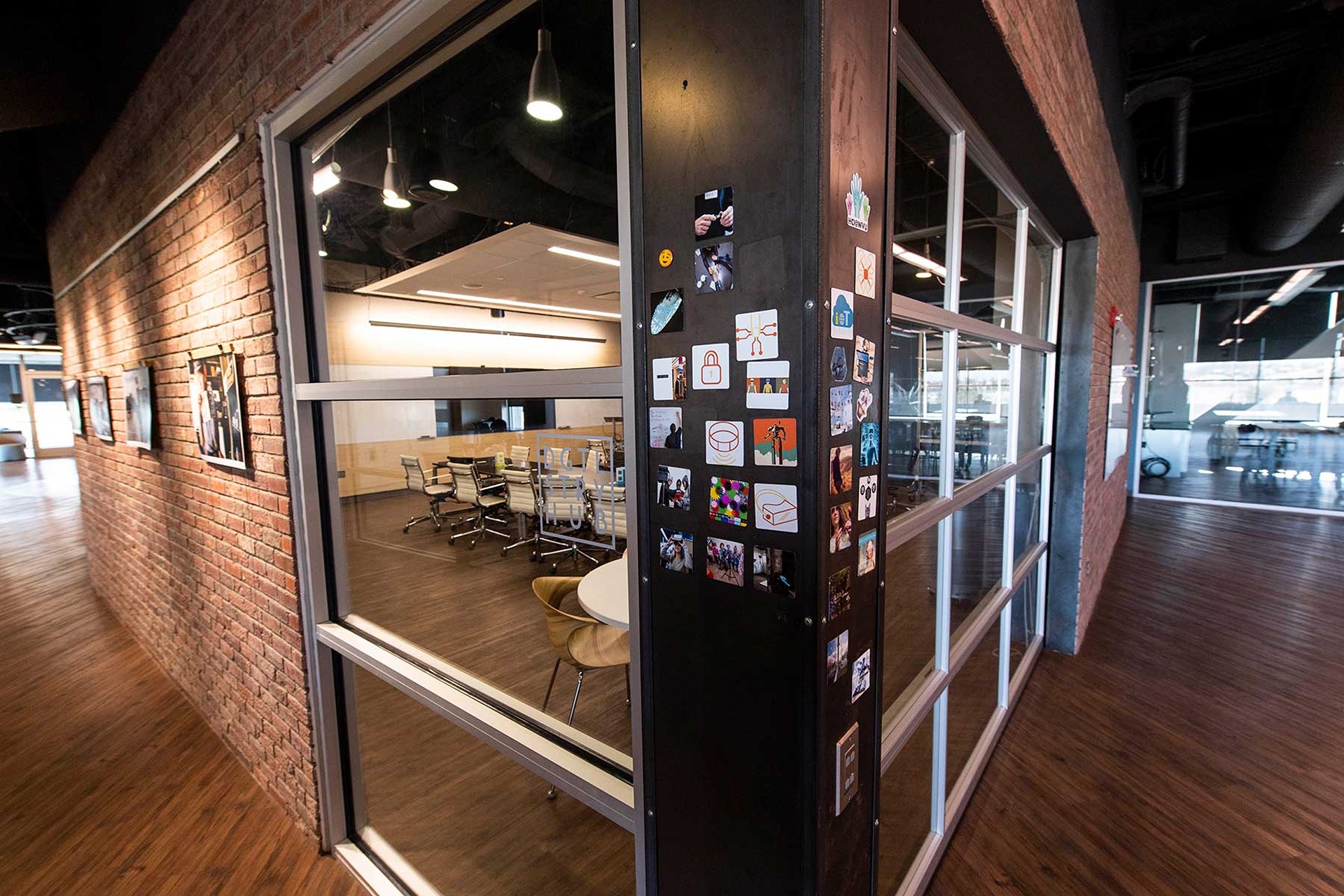
Media Innovation Center
Virtual Tour
It’s the next best thing to being here. Virtually tour our campus and residence halls.
Student Life
You'll experience epic traditions, quality academics, and a supportive community that feels like home.
Visit
See WVU in person and start imagining life as a Mountaineer.
Admission Requirements
To be admitted to the Journalism major, first-time freshmen must meet WVU's first-time freshman admission requirements. Interested in transferring? Review the transfer admission requirements.
Tuition and Aid
How much does Journalism at WVU cost? And how can you save?
Tuition and Fees
Estimated rates are available on our tuition website. Anyone who is not a current West Virginia resident, including international students, will be charged non-resident rates.
Ways to Save
Beyond scholarships, here are other ways to reduce your cost of attending WVU.
Financial Aid
The most important step toward funding your future with financial aid for the Journalism, BSJ is submitting the Free Application for Federal Student Aid, or FAFSA.
Ohio Tuition Reciprocity
As the result of a special agreement, students from Ohio who are fully admitted to Journalism can enroll at WVU and pay in-state tuition rates. Students must be admitted to both the University and this major.
Start at Another WVU Campus
You can start your career with WVU at another campus and transfer to WVU Morgantown.
Transfer Articulation Agreements
To simplify the transfer process, we have formal agreements with certain institutions. These agreements outline the courses you should take to prepare for transferring to WVU.
Review the full list of transfer articulation agreements to see if your institution is listed.
Request Info
Want to know more about Journalism at WVU? Fill out our request form to receive more information.
Visit
Experiencing campus is the best way to see if WVU is the right fit. Choose from in-person and virtual options.