
Immunology and Medical Microbiology, BS
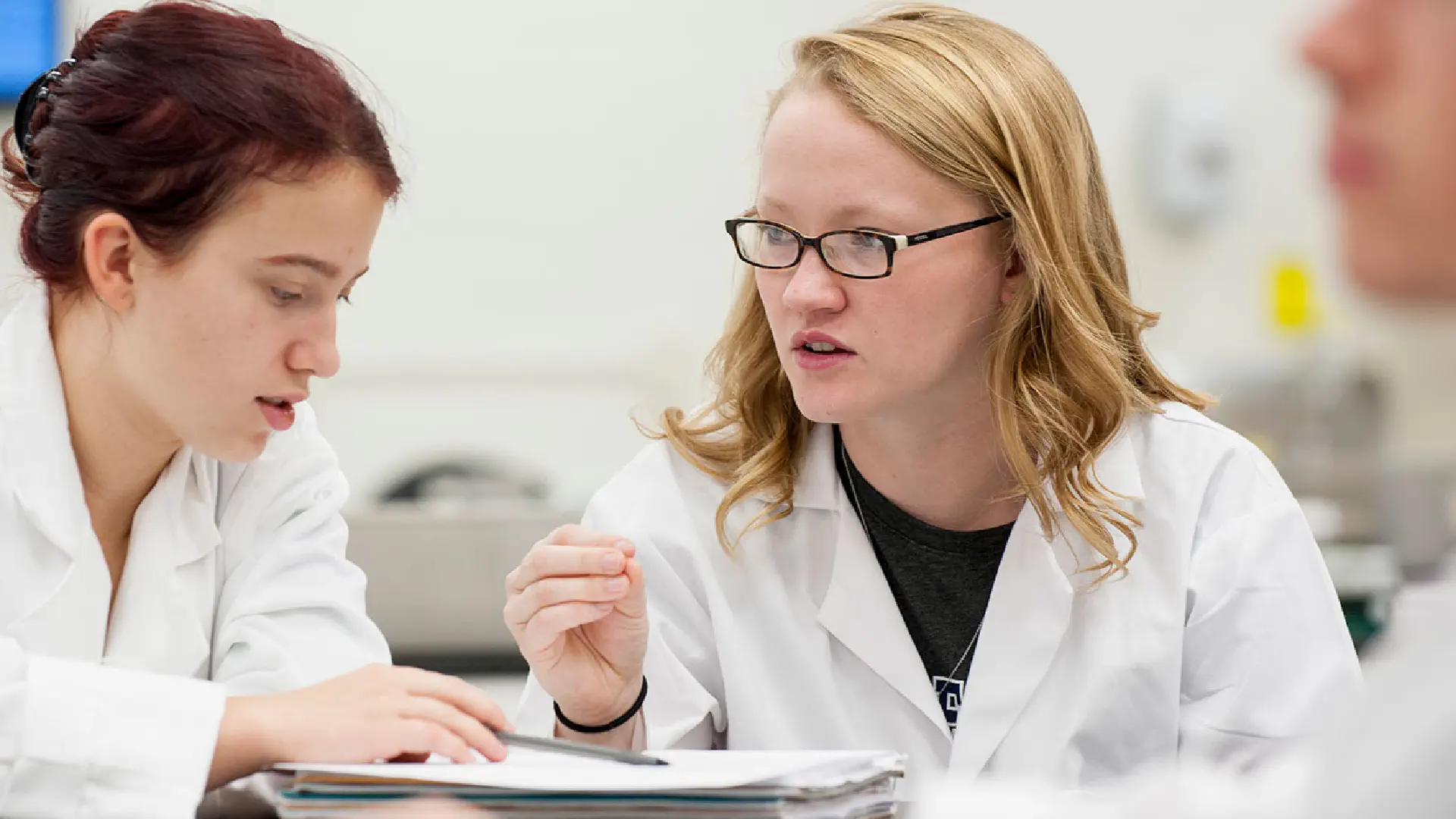
The Immunology and Medical Microbiology (IMMB) program will help you develop laboratory skills and knowledge needed to assess the function of the immune system and to safely cultivate and identify microorganisms that cause disease. The engaging, research-intensive curriculum puts you in the lab from your freshman year, providing an excellent foundation for medical, dental, veterinary, or graduate school, and careers in biotechnology, pharmaceuticals, public health, and more.
Our program fully integrates knowledge of the immune system with an excellent understanding of the mechanisms utilized by bacteria, viruses, fungi, and parasites to cause disease. You will develop the laboratory skills and knowledge needed to assess the function of the immune system and to safely cultivate and identify microorganisms that cause disease in mammals.
Your Degree Plan
WVU’s BS in IMMB curriculum is a unique combination of 2 disciplines: immunology and medical microbiology. Our coursework gives you thorough exposure to both disciplines and provides hands-on laboratory experience starting your freshman year.
Direct Entry Graduate Program
IMMB offers well-qualified students the option to gain direct entry into a PhD program, working with the same faculty mentor with whom the student has already built a professional relationship during undergraduate study.
Basic Medical Microbiology
IMMB 201
This course will explore broad aspects of introductory microbiology including microbial cell structure, growth, and metabolism, with an emphasis on microorganisms that cause disease.
Principles of Immunobiology
IMMB 276
Study of the basic concepts underlying the mechanisms of innate and adaptive immunity.
Microbial Genetics
IMMB 305
Molecular aspects of mutation, gene transfer mechanisms, genetic mapping, and genetic control using bacteria and bacteriophage systems as models.
Bacterial Pathogenesis
IMMB 310
Pathogenic bacteriology with an emphasis on the mechanisms of pathogenesis. Topics include microbial adherence, motility, toxin production and mechanisms, and normal flora and disease.
Scientific Integrity
IMMB 405
Discussion and review of topics addressing fundamental issues in maintenance of scientific integrity in biomedical research.
Molecular Immunobiology
IMMB 420
Study of the structure and function of the families of molecules employed by the immune system to recognize and initiate the immune response and the signaling pathways within the cell involved in the immune system.
Medical Virology
IMMB 470
Molecular biology of viruses that are important both biologically and medically. Includes a basic introduction to replication and genetics as well as current topics in moleclar virology.
Honors
Expand your curiosity and enhance your curriculum through the WVU Honors College. Two programs are offered: Honors Foundations and Honors in Action.
The WVU Difference
What sets this program apart?
- 1 of 2 undergraduate programs in the U.S. with a specialization in both medical microbiology and immunology.
- Only undergraduate immunology and microbiology degree in the U.S. that is housed fully in a school of medicine.
- IMMB students can apply for competitive research opportunities that allow them to work for 2+ years in a lab with the same faculty mentor, and frequently present their work during WVU’s undergraduate research symposia.
- As faculty at an R1 institution, our professors are noted in their field, but still committed to creating a welcoming, inclusive community that prioritizes mentorship.
- Opportunities to build professional relationships and engage in community service through membership in WVU’s student chapter of the American Society for Microbiology.
- As part of the WVU Health Sciences Center, you’ll enjoy invaluable opportunities for learning how to partner effectively with nursing, medicine, pharmacy, dentistry, public health, and allied health professionals-in-training.
Learn by Doing
Get involved outside the classroom.
In addition to the IMMB-specific research internship that allows students to work in the same research lab for 2+ years, WVU hosts 3 undergraduate research symposia each year. IMMB students and their faculty mentors are always well-represented, frequently as category winners and runners-up.
A sample of recent winning research projects is included below:
- Suppression of Periodontis-Induced Bone Erosion by Haloanilide Drug Candidate ELP-004 – Samantha Antol, Winner – Tie (Health Sciences and Community Health), Spring 2023
- Humoral Response of Mice Immunized with Lyme Vaccines – Joshua Hall, Winner (Health Sciences and Community Health), Fall 2022
- Optimization of Whole-Organ Tissue Clearing and Vessel Staining in Conjunction With Light Sheet Microscopy – Linda Ma, Winner (Health Sciences), Summer 2022
- Transcriptome Signature of Venetoclax: Implications in Multiple Myeloma Therapeutics – Rachel Mangano, Runner-Up (Health Sciences), Summer 2022
- Helicobacter pylori Evades the Inflammatory Response Within the Mouse Gastric Epithelium – Shrinidhi Venkateshwaraprabu, Runner-Up (Health Sciences), Summer 2022
- HSTA Alumni Association
- WVU Student Branch of the American Society for Microbiology
- Global Medical Brigades
- WVU Global Dental Brigades
- First2 Network: WVU Chapter
View all of the student organizations you can join.
Careers and Outcomes
How does this degree prepare students for a career?
Clinical Research Coordinators
Has a Bright Outlook
Median Salary: $161,180
Possible Job Titles: Clinical Program Manager, Clinical Research Coordinator, Clinical Trial Manager, Research Coordinator
Bioinformatics Technicians
Has a Bright Outlook
Median Salary: $71,490
Possible Job Titles: Bioinformatics Analyst, Bioinformatics Specialist, Biotechnician, Scientific Informatics Analyst
Biological Technicians
Has a Bright Outlook
Median Salary: $52,000
Possible Job Titles: Biological Technician, Laboratory Technician, Research Associate, Research Technician
Where our graduates work
Graduates from this major have gone to work at:
- Dartmouth
- Harvard Batista Lab
- Vanderbilt
- Viatris
- WV Innovation Center
- University of Pittsburgh
Further your education
Many alums of the IMMB program pursue graduate study in in-demand health careers, including epidemiology and other public health careers, bioinformatics, dentistry, medicine, veterinary medicine, microbiology, and more.
Admission Requirements
To be admitted to the Immunology and Medical Microbiology major, first-time freshmen must meet WVU's first-time freshman admission requirements. Interested in transferring? Review the transfer admission requirements.
Requirements for direct admission to the Immunology and Medical Microbiology program
You must meet the following requirements:
- High School GPA: 3.5
- ACT Math: 26
- SAT Math: 610
Tuition and Aid
How much does Immunology and Medical Microbiology at WVU cost? And how can you save?
Tuition and Fees
Estimated rates are available on our tuition website. Anyone who is not a current West Virginia resident, including international students, will be charged non-resident rates.
Ways to Save
Beyond scholarships, here are other ways to reduce your cost of attending WVU.
Financial Aid
The most important step toward funding your future with financial aid for the Immunology and Medical Microbiology, BS is submitting the Free Application for Federal Student Aid, or FAFSA.
Start at Another WVU Campus
You can start your career with WVU at another campus and transfer to WVU Morgantown.
Transfer Articulation Agreements
To simplify the transfer process, we have formal agreements with certain institutions. These agreements outline the courses you should take to prepare for transferring to WVU.
Review the full list of transfer articulation agreements to see if your institution is listed.
Request Info
Want to know more about Immunology and Medical Microbiology at WVU? Fill out our request form to receive more information.
Visit
Experiencing campus is the best way to see if WVU is the right fit. Choose from in-person and virtual options.