
Forest Resources and Conservation, BSF
With a Bachelor of Science in Forestry, you’ll address today’s most pressing challenges by balancing the demand for forest products with vital ecosystem services like carbon storage, clean water, wildlife habitats, and recreational areas.
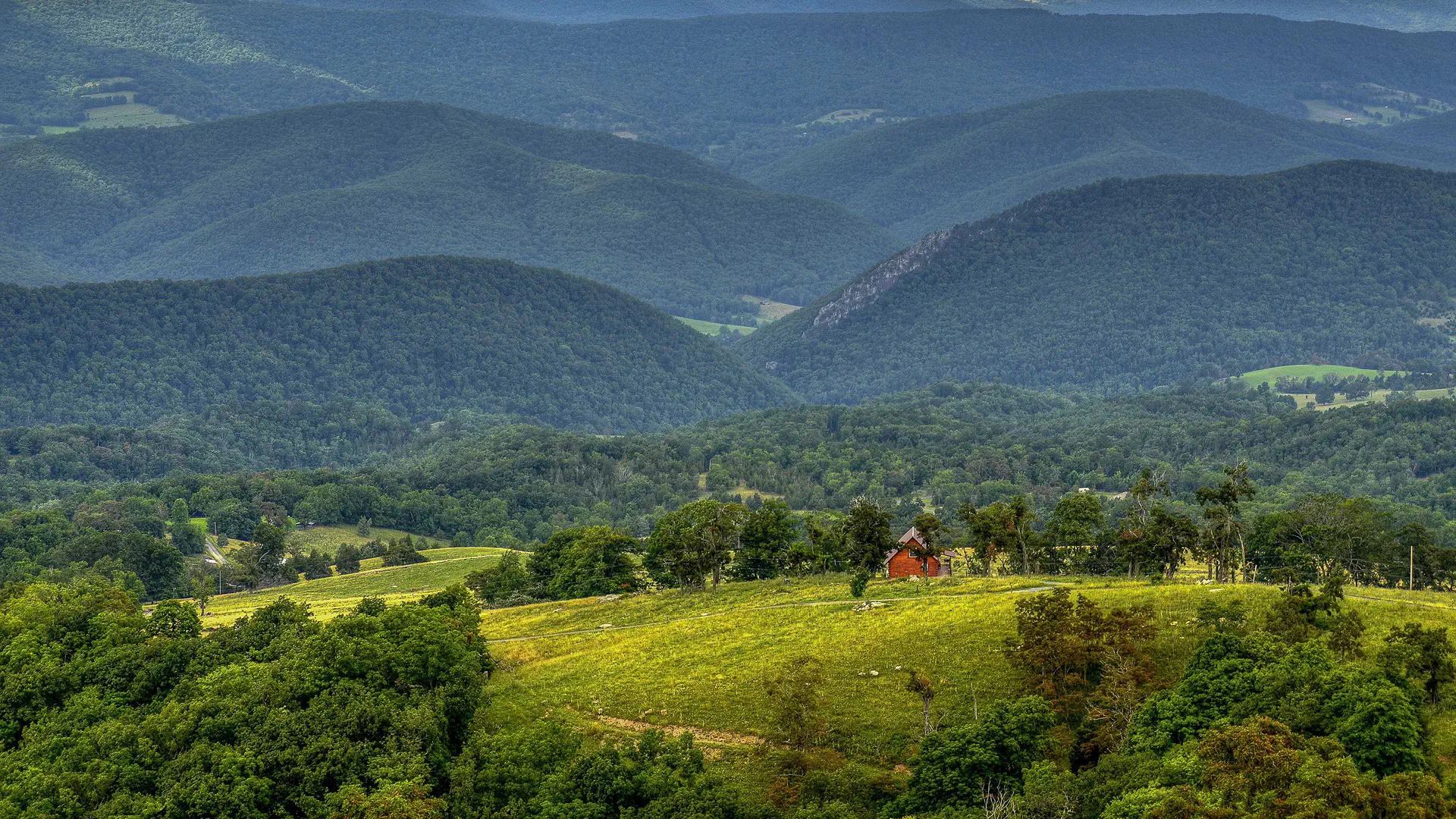
Experience hands-on learning in one of the most forest-rich states in the nation. The 7,650-acre University Research Forest and diverse West Virginia woodlands will be your outdoor classroom. Customize your curriculum with an area of emphasis — Ecosystem Conservation, Forest Management, or Sustainable Biomaterials — that aligns with your career goals.
Our program meets the highest standards through accreditation by the Society of American Foresters and the Society of Wood Science and Technology. With additional options like minors in Arboriculture and Sustainable Timber Construction or a certificate in River Conservation and Management, you can tailor your experience to stand out in the job market.
Connect with a strong network through the Forestry and Natural Resources Alumni Association and tap into its exclusive scholarships totaling $46,000 annually. Interested in urban tree care? An additional $8,000 in arboriculture scholarships are awarded each year.
Your Degree Plan
Forest Resources and Conservation students learn to:
- Quantify forest resources and ecosystem services.
- Grow and restore Appalachian hardwood forest to supply quality wood while protecting ecosystem integrity.
- Create strategic forest and wood utilization plans that are based on environmental, economic, and social sustainability.
- Critically reflect on knowledge and skills from across the curriculum and effectively communicate it to the public and stakeholders in forestry.
Dendrology
FNRS 205
Classification and silvical characteristics of North American forest trees.
Forest Ecology
FNRS 212
How forest ecosystems work: their role in the global ecosystem, variability of forests in space and time, forest structure and function.
Forest Mensuration
FNRS 222
Estimating volume and growth of trees and forest stands with emphasis on the mathematical and statistical techniques involved. Laboratories include practical field experience.
Wood Anatomy and Structure
FNRS 223
Anatomy and structure of commercial wood species of the U.S. Survey of basic properties of wood.
Forest Resources Management Field Practice
FNRS 300
Silvicultural Systems
FNRS 311
The theory and practice of controlling forest stand establishment, composition, structure, and growth. Systems include: reproduction methods, release operations, and intermediate treatments.
Principles of Forestry Economics
FNRS 330
Production, distribution, and use of forest goods and services. Emphasis on methods and problem solving techniques in the economic aspects of forestry.
Forest Management
FNRS 433
Principles of sustained yield forest management: organization of forest areas, selection of management objectives, application of silvicultural systems, and regulation of cut. Principles of sustainable forestry and ecosystem management.
Forest Resources Management Planning
FNRS 434
Integrated planning of long-term management of forest resources. Development of a management plan for an actual forest tract. Emphasis on biological, social, economic, and ethical considerations in decision-making.
Watershed Management
FNRS 444
(Primarily for forest management majors.) Influences of silvicultural practices and forest management activities on the hydrology of forested catchments.
Environmental Conservation
Forest Management
Grow Appalachian hardwood forests and supply quality wood for the future.
Sustainable Biomaterials
Honors
Expand your curiosity and enhance your curriculum through the WVU Honors College. Two programs are offered: Honors Foundations and Honors in Action.
The WVU Difference
What sets this program apart?
- The area of emphasis in Forest Management is accredited by the Society of American Foresters.
- The area of emphasis in Wood Innovation is accredited by the of Society of Wood Science and Technology.
- The wood products industry employs 1.6 million people nationwide.
- Connected with the Appalachian Hardwood Center.
- Academic credit for summer internships.
- Strong summer job/internship placement.
- Opportunity to attend a 4-week summer camp.
- Opportunity to work as an undergraduate teaching assistant or research assistant.
- Students attend annual conferences of the Society of American Foresters or the Society of Wood Science and Technology.
- Scholarships supported by endowments, industry partners, and our strong Alumni Association.
- Facilities include University Forest, located at Coopers Rock State Forest, and Evansdale Greenhouse.
- Field trip to visit forest-related companies.
- As the 3rd most forested state in the U.S., West Virginia’s forests serve as the outdoor classroom for students.
- Small-school environment with all the resources of a large university. You’ll benefit from 1-on-1 faculty interactions and develop a close relationship with your faculty and peers.
Learn by Doing
Get involved outside the classroom.
- Opportunities to work at the University Forest.
- Summer positions in faculty-led research projects in forestry, wood science, and wildlife and fisheries.
- Summer internships and jobs with industries.
View all of the student organizations you can join.
Careers and Outcomes
How does this degree prepare students for a career?
Foresters
Median Salary: $70,660
Possible Job Titles: Area Forester, Forester, Silviculturist, Timber Sales Administrator (Timber Sales Admin)
Forest and Conservation Workers
May Require Graduate Degree
Median Salary: $43,680
Possible Job Titles: Forest Ranger, Forestry Support Specialist, Tree Farmer, Tree Planter
Forestry and Conservation Science Teachers, Postsecondary
May Require Graduate Degree
Median Salary: $100,830
Possible Job Titles: Assistant Professor, Associate Professor, Forestry Professor, Professor
Natural Sciences Managers
Has a Bright Outlook
May Require Graduate Degree
Median Salary: $161,180
Possible Job Titles: Chemical Process Exploration Manager, Environmental Program Manager, Natural Sciences Manager, Research and Development Director (R and D Director)
Tree Trimmers and Pruners
Median Salary: $50,430
Possible Job Titles: Arborist, Groundsman, Tree Climber, Tree Trimmer
Sales Representatives, Wholesale and Manufacturing
Has a Bright Outlook
Median Salary: $66,780
Possible Job Titles: Outside Sales Representative, Sales Consultant, Sales Representative (Sales Rep), Salesman
Forest Fire Inspectors and Prevention Specialists
Has a Bright Outlook
Median Salary: $52,380
Possible Job Titles: Fire Management Officer, Fire Prevention Technician, Forest Officer, Forest Patrolman
Admission Requirements
To be admitted to the Forest Resources and Conservation major, first-time freshmen must meet WVU's first-time freshman admission requirements. Interested in transferring? Review the transfer admission requirements.
Tuition and Aid
How much does Forest Resources and Conservation at WVU cost? And how can you save?
Tuition and Fees
Estimated rates are available on our tuition website. Anyone who is not a current West Virginia resident, including international students, will be charged non-resident rates.
Ways to Save
Beyond scholarships, here are other ways to reduce your cost of attending WVU.
Financial Aid
The most important step toward funding your future with financial aid for the Forest Resources and Conservation, BSF is submitting the Free Application for Federal Student Aid, or FAFSA.
Ohio Tuition Reciprocity
As the result of a special agreement, students from Ohio who are fully admitted to Forest Resources and Conservation can enroll at WVU and pay in-state tuition rates. Students must be admitted to both the University and this major.
Start at Another WVU Campus
You can start your career with WVU at another campus and transfer to WVU Morgantown.
Transfer Articulation Agreements
To simplify the transfer process, we have formal agreements with certain institutions. These agreements outline the courses you should take to prepare for transferring to WVU.
Review the full list of transfer articulation agreements to see if your institution is listed.
Request Info
Want to know more about Forest Resources and Conservation at WVU? Fill out our request form to receive more information.
Visit
Experiencing campus is the best way to see if WVU is the right fit. Choose from in-person and virtual options.