
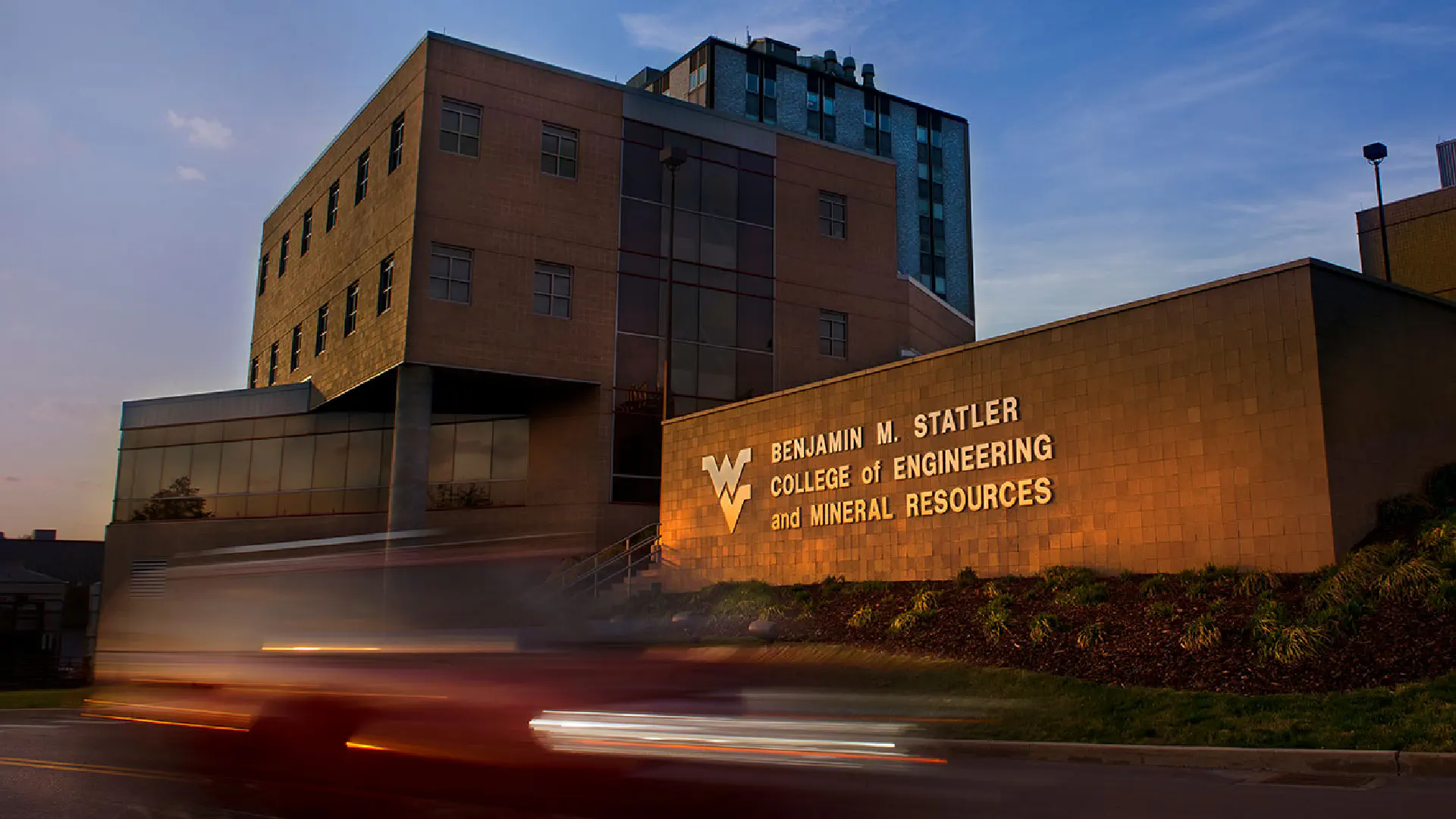
Electrical Engineering, BSEE
Your Degree Plan
Artificial Intelligence
Accelerated BSEE/MSEE Program
Electrical Engineering offers the option to earn a bachelor’s and master’s degree in an accelerated time frame.
Electrical Engineering Dual Degrees
Students can simultaneously pursue 2 bachelor’s degrees in the Lane Department of Computer Science and Electrical Engineering. The Lane Department offers degrees in:
- Computer Engineering
- Computer Science
- Cybersecurity
- Electrical Engineering
Honors
Expand your curiosity and enhance your curriculum through the WVU Honors College. Two programs are offered: Honors Foundations and Honors in Action.
The WVU Difference
What sets this program apart?
- STEM outreach opportunities in high schools and middle schools with activities such as amateur radio communications with the International Space Station.
- Opportunities to participate in interdisciplinary national competitions, such as NASA robotics competitions and the Department of Energy-sponsored EcoCAR competition.
- Complete IEEE online collection of journals and publications available to faculty and students.
- Close partnerships and internship opportunities with NASA and the FBI.
- 3D printer available for student projects.
- Cadence Design Tools available for electronics classes.
- Power plant control room simulator.
- The Bachelor of Science in Electrical Engineering program is accredited by the Engineering Accreditation Commission of ABET.
- Clean room available for electronic fabrication.
Learn by Doing
Get involved outside the classroom.
- Amateur Radio Club
- Eta Kappa Nu
- Institute of Electrical and Electronics Engineers Student Branch
- Robotics Club
- University Rover Challenge
View all of the student organizations you can join.
Before graduating, all undergraduates in this major complete an academic project (or “capstone”) to demonstrate their research, communication and critical thinking skills. Projects have included:
- Control and steering mechanisms for radio astronomy antenna array.
- Design of an automated hydroponic greenhouse.
- Low frequency through-the-Earth radio communications.
- Monitoring water quality in Decker’s Creek.
- Robotic systems for mine search and rescue.
Careers and Outcomes
How does this degree prepare students for a career?
Electrical Engineers
Has a Bright Outlook
Median Salary: $111,910
Possible Job Titles: Design Engineer, Electrical Design Engineer, Electrical Engineer, Project Engineer
Electronics Engineers
Has a Bright Outlook
Median Salary: $127,590
Possible Job Titles: Design Engineer, Integrated Circuit Design Engineer (IC Design Engineer), Product Engineer, Test Engineer
Microsystems Engineers
May Require Graduate Degree
Median Salary: $117,750
Possible Job Titles: Process Engineer, Product Design Engineer, Project Engineer, Radio Frequency Design Engineer (RF Design Engineer)
Sales Engineers
Has a Bright Outlook
Median Salary: $121,520
Possible Job Titles: Business Development Engineer, Product Sales Engineer, Sales Engineer, Technical Marketing Engineer
Potential employers
Our graduates work for companies such as:
- GM
- Eaton
- General Electric
- Toyota
- FirstEnergy
- Dominion Resources
- Pittsburgh Power and Light
- FBI
- Department of Defense
- National Security Agency
Graduate schools
Our graduates have pursued advanced degrees at institutions such as:
- Carnegie Mellon University
- Johns Hopkins
- Virginia Tech
Admission Requirements
To be admitted to the Electrical Engineering major, first-time freshmen must meet WVU's first-time freshman admission requirements. Interested in transferring? Review the transfer admission requirements.
Engineering Requirements
You must meet the following requirements:
- High School GPA: 2.5
- ACT Math: 22
- SAT Math: 540
Engineering Requirements for Test Optional Students
You must meet the following requirements:
- High School GPA: 3.0
Requirements for Engineering Technology
You must meet the following requirements:
- High School GPA: 2.5
Tuition and Aid
How much does Electrical Engineering at WVU cost? And how can you save?
Tuition and Fees
Estimated rates are available on our tuition website. Anyone who is not a current West Virginia resident, including international students, will be charged non-resident rates.
Ways to Save
Beyond scholarships, here are other ways to reduce your cost of attending WVU.
Financial Aid
The most important step toward funding your future with financial aid for the Electrical Engineering, BSEE is submitting the Free Application for Federal Student Aid, or FAFSA.
Start at Another WVU Campus
You can start your career with WVU at another campus and transfer to WVU Morgantown.
Transfer Articulation Agreements
To simplify the transfer process, we have formal agreements with certain institutions. These agreements outline the courses you should take to prepare for transferring to WVU.
Review the full list of transfer articulation agreements to see if your institution is listed.
Request Info
Want to know more about Electrical Engineering at WVU? Fill out our request form to receive more information.
Visit
Experiencing campus is the best way to see if WVU is the right fit. Choose from in-person and virtual options.