

Educational Theory and Practice, PhD
Your Degree Plan
The program includes the following course components:
- Core program coursework focused on theoretical, philosophical and sociological foundations of education research and practice.
- A research core that provides the methodological competencies to produce original research as well as the ability to critically evaluate published scholarship.
- Program electives that align with students’ interests and deepen their focus in core areas of educational research and practice.
- Mentored research and teaching experiences that promote students’ pedagogical and empirical skills.
Upon completion of the PhD in Educational Theory and Practice, graduates will be prepared to:
- Understand and interpret scholarship on theory, policy, and practice in education as the basis for growth over a professional career.
- Critically evaluate scholarship, policy, and practice in order to promote equity, access, and social justice in educational settings.
- Plan for, conduct, and report on original research that advances the field of education.
- Demonstrate skills as educators, including designing, implementing, evaluating, and revising educational experiences.
The WVU Difference
What sets this program apart?
- We offer several graduate assistantships to competitive applicants to support their doctoral work. Assurance of funding is provided to selected applicants for the first 2 years of study, with opportunities for continuation of funding.
- The EDTP program utilizes a professional mentorship model, wherein faculty work closely with doctoral students to support their progress through key milestones, including dissemination of pedagogical and empirical work and completion of the dissertation.
- The plan of study includes apprenticed research and teaching experiences that provide students with a breadth of perspectives and practices as they develop their pedagogical and empirical skills.
Learn by Doing
Get involved outside the classroom.
- The Educational Theory and Practice program will equip you with the analytical, empirical, and pedagogical skills to address practical and theoretical problems in teaching and learning, teacher education and development, and societal, cultural, and critical studies in education.
Careers and Outcomes
How does this degree prepare students for a career?
Education Administrators, Postsecondary
May Require Graduate Degree
Median Salary: $103,960
Possible Job Titles: Academic Affairs Vice President (Academic Affairs VP), Academic Dean, Dean, Registrar
Education Teachers, Postsecondary
May Require Graduate Degree
Median Salary: $72,090
Possible Job Titles: Assistant Professor, Associate Professor, Education Professor, Professor
Career pathways
Our graduates have obtained positions in a range of areas, including at colleges and universities, educational agencies, and research centers. Jobs obtained by recent graduates include teaching-based faculty positions, service-oriented faculty positions, and positions as research associates, postdoctoral scholars, and educational consultants.
Sample employers/job titles of graduates
- Carlow University, Assistant Professor, Department of Education and Liberal Studies
- UNC Charlotte, Associate Director, Undergraduate Research
- West Virginia University, Teaching Assistant Professor, School of Math and Data Science
Meet Your Community
The Educational Theory and Practice family will inspire you.
Johnna Bolyard

Professional Highlights
- Outstanding Teaching Award, College of Human Resources and Education, WVU, 2021
- Mathematics Teacher of the Year - College Level, West Virginia Council of Teachers of Mathematics, 2015
- Outstanding Teaching Award, College of Human Resources and Education, WVU, 2010
Matthew Campbell

Professional Highlights
- Research emphasis on teacher education, teacher recruitment and retention, and teacher leadership
- Principal Investigator, Mountaineer Mathematics Master Teachers (M3T)
- President, West Virginia Council of Teachers of Mathematics (WVCTM), 2022-2024
- Associate Vice President, AMTE STaR Fundraising Committee, 2023-2026
- Editorial Panel Chair, Mathematics Teacher Educator, 2021-2022
Jeffrey Carver

Professional Highlights
- 20 years' experience in the educational field
- Directs STEM Education Initiatives at the College of Applied Human Services
- Research interests focus on the improvement of teaching and learning in the STEM disciplines at all levels (p-20)
Allison Swan Dagen

Professional Highlights
- Co-Editor, Best Practices of Literacy Leaders: Keys to School Improvement, 2020
- Lead Writer, International Literacy Association Standards, 2017
- WVU Provost's Academic Fellow, 2018-2021
- WVU Assistant Provost for Graduate Academic Affairs, 2021-2023
D. Jake Follmer

Professional Highlights
- Research emphases on college student learning and success, self- and socially-regulated learning, and instructional design and supports in STEM domains
- University of Pennsylvania Data Science Methods Training Program Fellow, 2025
- Co-Principal Investigator, National Science Foundation: DUE: IUSE, Level 2, 2023-2026 (2236126)
- WVU Outstanding Teacher Award, 2024
- AERA Deeper Learning Research Fellow, 2023
Sharon Hayes

Professional Highlights
- Coordinator of Action Research Faculty, 2008-2020
- WVU National Writing Project, 2008-2011
- Program Coordinator, 5 Year Teacher Education Program, 2020-2021
- Program Coordinator, Elementary Math Specialist Master’s, 2021-2023
- Licensed teacher in New Jersey: Elementary Education, Middle School
- 10 years public school experience (K-8)
- Former preschool teacher and childcare provider
Melissa Luna

Professional Highlights
- Journal of the Learning Sciences Reviewer of the Year, 2022-2023
- CAHS Associate Dean for Research and Engagement, 2022-2023
- CEHS Associate Dean for Research, 2019-2022
- WVU CEHS Outstanding Researcher Award, 2018
- National Science Foundation CAREER Award, 2016
Erin McHenry-Sorber

Professional Highlights
- Outstanding Teaching Award, College of Applied Human Sciences, WVU, 2023
- National Rural Education Achievement Award, 2022
- National Rural Education Association Best Research Paper Award, 2022
- Howard A. Dawson Best Research Paper Award, National Rural Education Association, 2019
- Mary Catharine Buswell Award, Council for Women’s Concerns, WVU, 2019
- Editor, The Rural Educator
Aimee Morewood

Professional Highlights
- Research interests include effective professional development for literacy educators, word study instruction for elementary students, systemic change through teacher leadership, and emergent literacy practices
- Certified in Elementary Education (K-12) and as a Reading Specialist (K-12)
- Former learning support teacher
Sarah Selmer

Professional Highlights
- Research emphasis: responsive noticing of student mathematical thinking
- Completed a Fulbright specialist program in Lesotho, Africa (Summer 2023)
- Department Editor for Mathematics Teacher: Learning and Teaching PK-12
Melissa Sherfinski

Professional Highlights
- Chair, American Educational Research Association (AERA) Early Education and Child Development Special Interest Group
- Board Member, Journal of Early Childhood Teacher Education and Journal of Research in Childhood Education
- Licensed teacher in West Virginia and Wisconsin, areas: Elementary Education, Early Childhood-PK-K Special Needs, Intellectual Disabilities, Autism
- 6 years public school experience (K-5)
- Former preschool teacher and childcare provider
Courtney Shimek

Professional Highlights
- Research interests: confluence between play and literacy, multimodal responses to literature, use of nonfiction in elementary classrooms and literacy teacher preparation
Nathan Sorber

Professional Highlights
- Director, School of Education West Virginia University
- Author of multiple books on Higher Education in the United States
- Editor, Perspectives on the History of Higher Education
Sam Stack
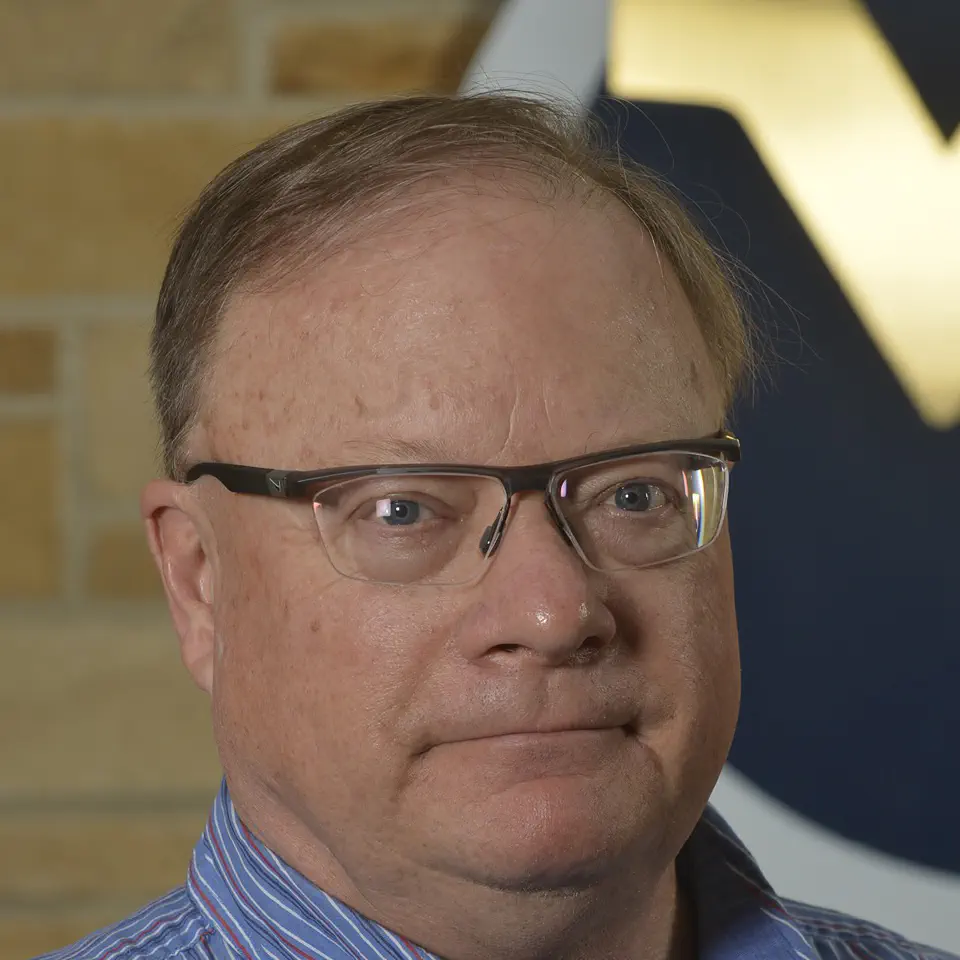
Professional Highlights
- Outstanding Teacher Award, College of Human Resources and Education, 1995-1996
- Barbara J. Howe Award for Excellent Scholarship on New Deal Homesteads, 2004
- Outstanding Researcher Award, College of Human Resources and Education, 2004-2005
- Laddie R. Bell Distinguished Service Award, College of Human Resources and Education, 2006-2007
- American Educational Studies Critics Choice Book Award, 2012. Doug Simpson and Sam F. Stack Jr., Teachers, Leaders, and Schools Essays by John Dewey (Carbondale: Southern Illinois University Press, 2011), 258 pages.

"This state and this university gave me the chance to teach, to grow, and to pursue my dreams. WVU’s program challenges you to look beyond the surface of education and understand the bigger picture — how we, as educators, can tackle systemic issues and make a real difference."
Phillip Elias Howard

"The community is extremely supportive of each other. There is collaboration and support among graduate students and also between graduate students and faculty. Faculty are excited to get involved in our research interests and that makes it a great community to be part of."
Megan Hut

"One of the best things about the Educational Theory and Practice program is that it is intentionally designed to be responsive to your needs and goals as both a scholar and a professional. Faculty are always willing to provide guidance, support, and encouragement toward those goals. This flexibility and responsiveness are especially important for someone like me who has continued to work full-time while in the program."
Eric Lemley

"The Educational Theory and Practice program played a crucial role in my professional development by offering graduate teaching assistantships. These opportunities not only equipped me with the necessary skills for program coordination but also provided hands-on experience in implementing effective teaching methods. Leveraging my decade of classroom experiences, the program recognized and valued my practical insights, enabling me to better prepare students for success as they embarked on their own teaching journeys."
Betsy DiSalvo Osborne
Requirements
To be eligible for admission into a graduate program at WVU an applicant must submit official, bachelor's degree transcripts from a regionally accredited institution and hold a GPA of at least 2.75. WVU operates decentralized admissions. Decentralized admissions allows each graduate program to set its own application requirements in addition to the University requirements.
Admission Requirements
Admission Requirements
- A baccalaureate degree with coursework in appropriate areas related to education
- A minimum undergraduate GPA of 2.75
- A completed graduate application
- A curriculum vitae (CV)
- A personal statement describing your specific goals for and interests in the program. The statement should clearly articulate the connections between our program and your interests as well as the expertise of program faculty.
- An academic writing sample showcasing your academic interests and ability to engage in research.
- 2 letters of recommendation addressing your potential as a doctoral student in education.
Additional Application Considerations
- Only completed applications can be reviewed. An application is considered complete when all associated materials, including letters of recommendation, are submitted and received by the program. Please ensure you’ve allotted enough time to have your application materials received before the deadline.
- Following the application deadline, program faculty will evaluate each application based on the quality of the materials submitted, the quality of the applicant’s academic record, and the connections between students’ expressed interests and those of the faculty.
- International applicants should also submit required materials as described in Graduate Admissions’ information for international students.
- Complete admissions information for the Educational Theory and Practice program can be found in the WVU Catalog.
Application Deadline
- The priority deadline for admission is December 15. Applicants interested in funding through graduate assistantships and related opportunities should ensure all application materials are received by this deadline.
- The final deadline for admission is March 1.
Application Deadlines
Each graduate program sets their own terms for admission and application deadlines. Applicants can only apply for admission for the terms displayed below. Any questions regarding the application deadline should be directed to the graduate program representative.
- Fall: March 1
- Fall (Priority): December 15
Request Info
Want to know more about Educational Theory and Practice at WVU? Fill out our request form to receive more information.
Visit
Experiencing campus is the best way to see if WVU is the right fit. Choose from in-person and virtual options.