
Animal and Nutritional Sciences, BS
Your Degree Plan
Principles of Animal Science
A&VS 251
A comparative study of the production of meat, milk, eggs and wool. Nutrition, physiology, genetics, hygiene and physical environment, and economics are discussed as bases for sound managerial decisions.
Companion Animal Science
A&VS 275
Basic physiology, nutrition, and genetics; economic and ethical considerations of pet ownership; benefits of companion animals in society; aspects of handling and training, behavior and common health diseases and parasite problems of pet animals.
Service Dog Training
A&VS 276
Application of current principles, theory, and practices for training service dogs.
Introduction to Equine Care and Use
A&VS 281
Survey of basic equine care, breeds, use, management, and behavior with a lab in equine safety and handling.
Dairy Heifer Management
A&VS 411
Application of current management practices for raising dairy calves from birth through establishment of pregnancy.
Animal Pathology
VETS 302
Diseases of farm animals with special emphasis on their cause, prevention, and control.
Veterinary Anatomy
VETS 401
Functional study of domestic and farm animal anatomy.
Veterinary Anatomy Laboratory
VETS 401L
Gross dissection techniques used for the study of functional anatomy in domestic animals.
Principles of Laboratory Animal Science
VETS 411
The production, genetics, physiology, nutrition, disease, and regulations of laboratory animals used in research and teaching. This course meets minimal requirements for laboratory animal technical certification programs of the American Association of Laboratory Animal Science (AALAS).
Honors
Expand your curiosity and enhance your curriculum through the WVU Honors College. Two programs are offered: Honors Foundations and Honors in Action.
The WVU Difference
What sets this program apart?
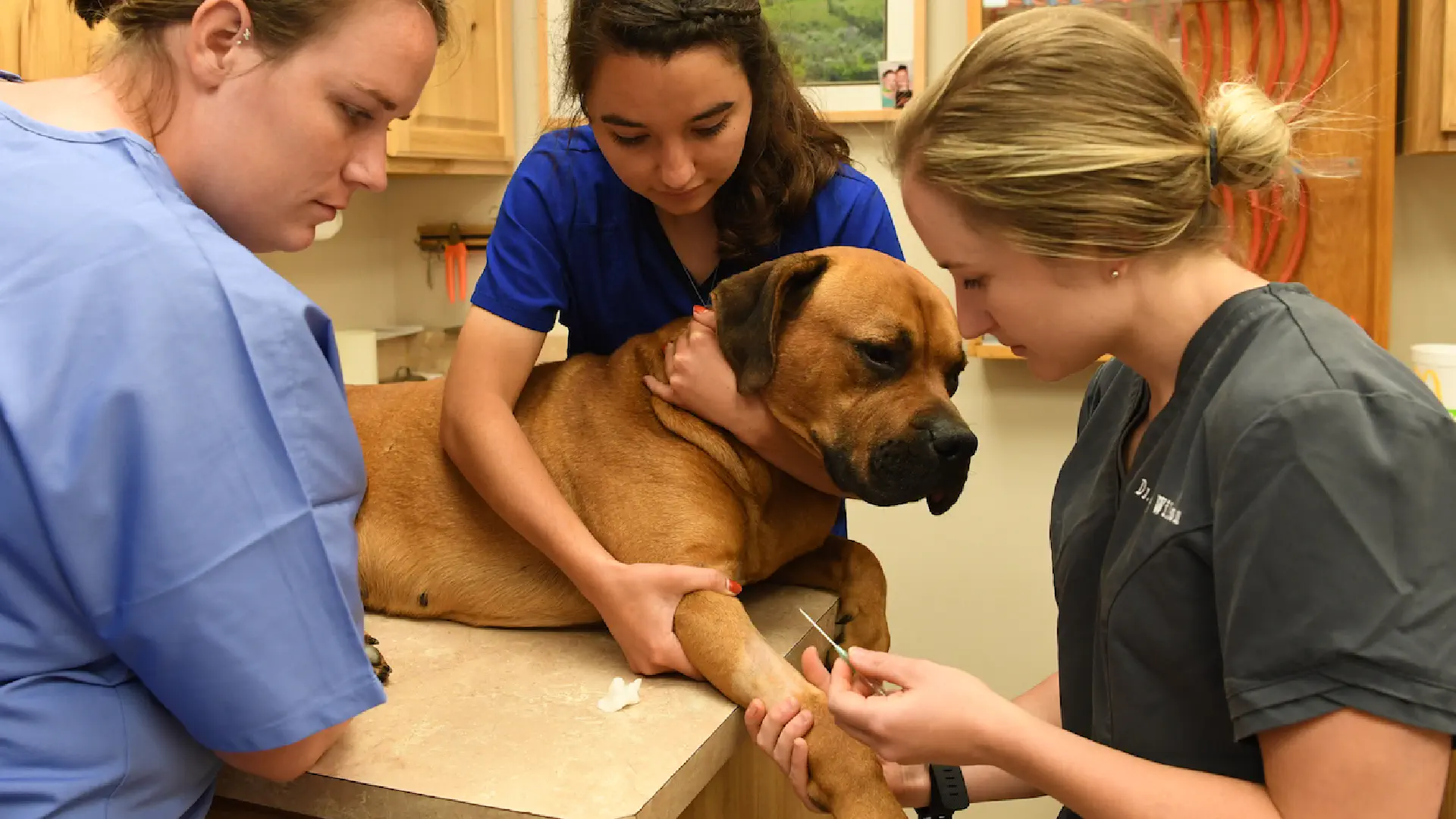
- Shadow veterinarians at local animal hospitals or through internships at the Pittsburgh Zoo and PPG Aquarium, Avian Conservation Center of Appalachia, and The Wilds.
- Animal Science Research, Education, and Outreach Center includes service dog training facility and state-of-the-art poultry feed mill.
- 73.3% veterinary school acceptance rate (compare to national average of 43%).
- 69% of the 13 contract seats (or openings) reserved for West Virginia residents at 2 out-of-state veterinary schools are awarded to WVU grads.
- The Davis-Michael Scholars Program provides enhanced learning experiences through networking and etiquette training events, tutoring opportunities, and visits to veterinary schools.
- Established in 2001, the Davis-Michael Scholars Program has provided $4.4 million in scholarships.
- Small-school environment with all the resources of a large university. You’ll benefit from 1-on-1 faculty interactions and develop a close relationship with your faculty and peers.
Learn by Doing
Get involved outside the classroom.
- Many study abroad opportunities, including opportunities to travel to Estonia and tour London Zoo.
- Train service dogs for course credit as part of WVU’s partnership with Hearts of Gold.
- Participate in livestock judging, poultry judging, Dairy Challenge, and dairy judging teams.
- Opportunities exist in areas of poultry feed research and immunology.
- Alpha Gamma Rho
- Block and Bridle Club
- Minorities in Agriculture, Natural Resources, and Related Sciences
- PAWS: Pets Are Worth Saving
- Sigma Alpha
- WVU Collegiate Horsemen's Association
- WVU English Equestrian Club
- WVU Pre-Veterinary Club
View all of the student organizations you can join.
- American Dairy Science Association
- American Poultry Association
- American Society of Animal Science
- American Veterinary Medical Association
- National Cattlemen’s Beef Association
- National FFA Organization
- Poultry Science Association
- U.S. Poultry and Egg Association
- West Virginia Veterinary Medical Association
Careers and Outcomes
How does this degree prepare students for a career?
Veterinarians
Has a Bright Outlook
May Require Graduate Degree
Median Salary: $125,510
Possible Job Titles: Doctor of Veterinary Medicine (DVM), Emergency Veterinarian (Emergency Vet), Small Animal Veterinarian (Small Animal Vet), Veterinary Medicine Doctor (DVM)
Veterinary Assistants and Laboratory Animal Caretakers
Has a Bright Outlook
Median Salary: $37,320
Possible Job Titles: Animal Care Provider, Animal Caregiver, Certified Veterinary Assistant, Veterinarian Assistant (Vet Assistant)
Animal Scientists
Has a Bright Outlook
May Require Graduate Degree
Median Salary: $79,120
Possible Job Titles: Animal Nutritionist, Animal Scientist, Beef Cattle Nutritionist, Research Scientist
Biological Technicians
Has a Bright Outlook
Median Salary: $52,000
Possible Job Titles: Biological Technician, Laboratory Technician, Research Associate, Research Technician
Agricultural Technicians
Has a Bright Outlook
Median Salary: $46,790
Possible Job Titles: Agricultural Research Technician (Agricultural Research Tech), Agricultural Technician (Agricultural Tech), Agriculture Assistant, Seed Analyst
Dentists, General
Median Salary: $172,790
Possible Job Titles: Dentist, Family Dentist, General Dentist, Pediatric Dentist
Farmers, Ranchers, and Other Agricultural Managers
Median Salary: $87,980
Possible Job Titles: Aquaculture Director, Farm Manager, Greenhouse Manager, Ranch Manager
Animal Caretakers
Has a Bright Outlook
Median Salary: $33,470
Possible Job Titles: Aquarist, Dog Groomer, Groomer, Kennel Technician (Kennel Tech)
Preventive Medicine Physicians
Median Salary: $239,200
Possible Job Titles: Occupational Medicine Physician, Physician, Public Health Officer, Public Health Physician
First-Line Supervisors of Farming, Fishing, and Forestry Workers
Median Salary: $59,330
Possible Job Titles: Farm Supervisor, Harvesting Supervisor, Hatchery Manager, Logging Supervisor
Contract schools for WV residents
Because West Virginia does not have its own veterinary school, West Virginia residents are given special consideration during application to The Virginia-Maryland College of Veterinary Medicine and Mississippi State University College of Veterinary Medicine.
Admission Requirements
To be admitted to the Animal and Nutritional Sciences major, first-time freshmen must meet WVU's first-time freshman admission requirements. Interested in transferring? Review the transfer admission requirements.
Tuition and Aid
How much does Animal and Nutritional Sciences at WVU cost? And how can you save?
Tuition and Fees
Estimated rates are available on our tuition website. Anyone who is not a current West Virginia resident, including international students, will be charged non-resident rates.
Ways to Save
Beyond scholarships, here are other ways to reduce your cost of attending WVU.
Financial Aid
The most important step toward funding your future with financial aid for the Animal and Nutritional Sciences, BS is submitting the Free Application for Federal Student Aid, or FAFSA.
Ohio Tuition Reciprocity
As the result of a special agreement, students from Ohio who are fully admitted to Animal and Nutritional Sciences can enroll at WVU and pay in-state tuition rates. Students must be admitted to both the University and this major.
Start at Another WVU Campus
You can start your career with WVU at another campus and transfer to WVU Morgantown.
Transfer Articulation Agreements
To simplify the transfer process, we have formal agreements with certain institutions. These agreements outline the courses you should take to prepare for transferring to WVU.
Review the full list of transfer articulation agreements to see if your institution is listed.
Request Info
Want to know more about Animal and Nutritional Sciences at WVU? Fill out our request form to receive more information.
Visit
Experiencing campus is the best way to see if WVU is the right fit. Choose from in-person and virtual options.